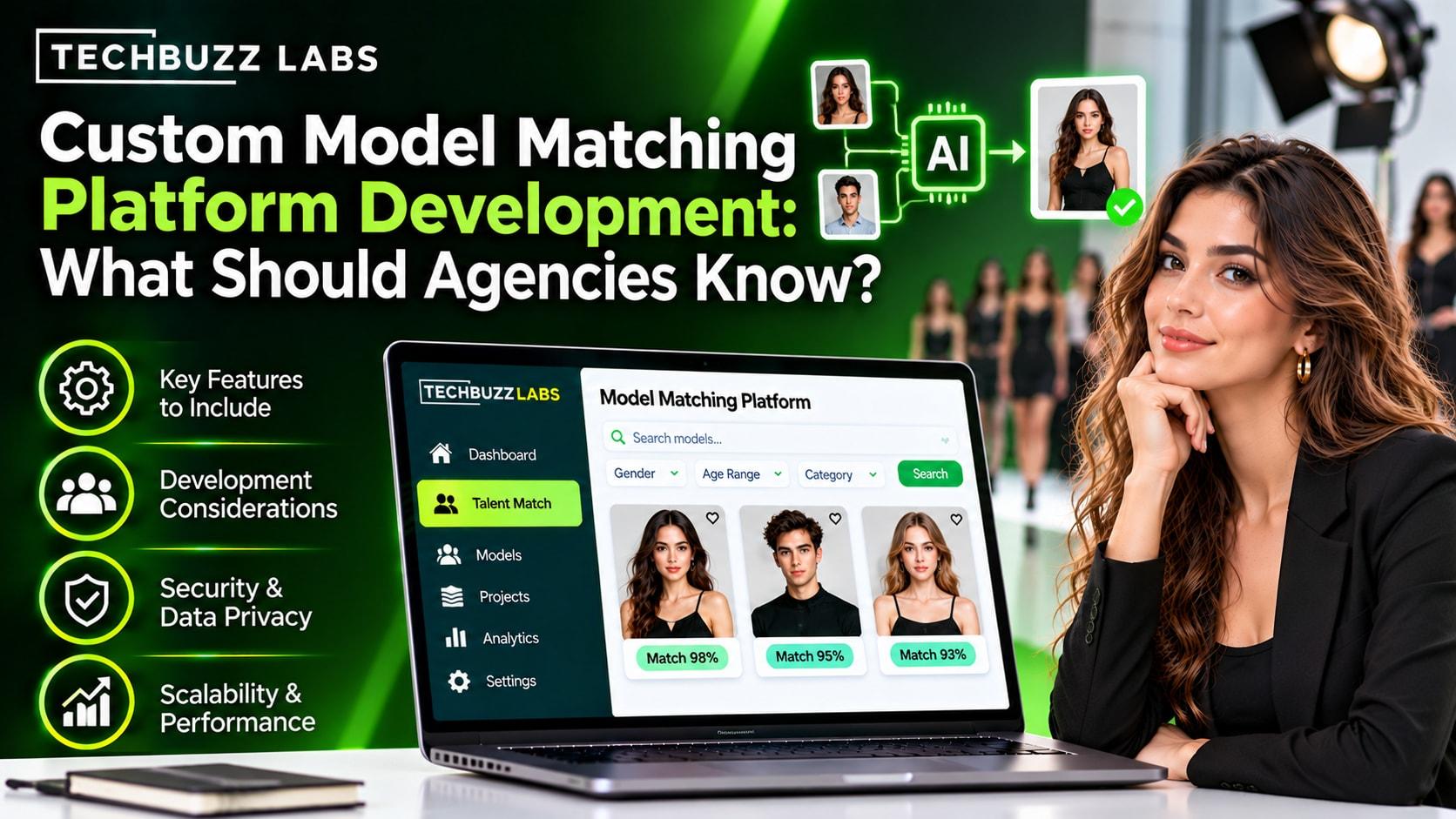
Custom Model Matching Platform Development: What Should Agencies Know?
Spreadsheets, email conversations, and disconnected portfolio folders can slow down candidate selection and create unnecessary coordination challenges.
Casting is one of the most time-consuming activities for modeling and talent agencies. Every new project requires agents to review client briefs, search talent databases, compare model profiles, check availability, prepare submissions, and coordinate feedback. When these tasks are handled manually, even a relatively simple casting request can involve hours of administrative work.
As agencies expand their talent databases and manage more client projects, traditional casting methods become increasingly difficult to maintain.
Smart talent matching software helps agencies simplify these activities through centralized databases, advanced search, automated workflows, and AI-assisted recommendations. By reducing repetitive manual tasks, agencies can spend more time evaluating talent, building client relationships, and managing successful bookings.
What Is Smart Talent Matching Software?
Smart talent matching software is a digital platform that helps agencies connect client requirements with suitable talent profiles. It combines talent database management, search and filtering, matching tools, and casting workflow management in one system.
For example, a fashion brand may need commercial models in New York with previous advertising experience and availability for a specific campaign. Instead of manually reviewing every profile, an agent can enter the requirements and use the platform to identify relevant candidates.
Depending on its functionality, the software may also support portfolio sharing, casting submissions, client feedback, scheduling, and booking coordination.
7 Ways Smart Talent Matching Software Reduces Manual Casting Work
1. Automates Talent Database Searching
Searching through hundreds or thousands of model profiles manually can consume valuable time. Agents may need to open individual records, review photographs, check experience, and compare profile details.
Smart talent matching software makes this process more organized through searchable databases and advanced filters.
Agents can search according to:
Location and travel preferences
Modeling or talent category
Professional experience
Relevant skills and qualifications
Height and other project-specific criteria
Availability and booking status
By combining multiple filters, casting teams can narrow down their results and focus on profiles that meet the client's requirements.
2. Helps Analyze Client Casting Briefs
Understanding a casting brief is an important first step in talent selection. Clients may provide requirements through emails, documents, or online forms, and agents must identify the details that matter.
Advanced software can help structure this information into searchable criteria. Some AI-enabled platforms can extract relevant details from written briefs and organize them for further review.
For instance, a client may request lifestyle models in Los Angeles for an upcoming advertising campaign. The system can help identify requirements such as location, experience, category, and project dates.
This reduces repetitive data entry and helps agents begin their search more quickly.
3. Uses AI to Recommend Relevant Candidates
AI-assisted matching can compare client requirements with information stored in talent profiles.
Rather than relying only on manual searches, the system can evaluate multiple matching factors and recommend potentially suitable candidates.
For example, an agency receiving a commercial casting request can use AI-assisted recommendations to identify models with relevant campaign experience, appropriate skills, and matching availability.
These recommendations help reduce the initial search workload. However, agents should review portfolios and make final decisions because creative suitability and client expectations require human judgment.
4. Reduces Manual Portfolio Review
Agencies frequently handle large collections of model photographs, digital portfolios, and professional profiles. Finding the correct portfolio for each project can become difficult when files are stored across separate folders or applications.
Smart talent matching software centralizes portfolio information and connects it with individual talent profiles.
Depending on the platform, features may include:
Digital portfolio organization
Image tagging and categorization
Portfolio search
Profile updates
Digital comp card management
Secure portfolio sharing
This makes it easier for agents to locate relevant visual material and prepare professional client submissions.
5. Automates Availability Checks and Casting Notifications
Contacting every potential candidate to confirm availability can create significant administrative work.
A connected talent management platform can maintain availability records and help agents identify scheduling conflicts before submitting candidates.
Automated notifications can also inform models about new casting opportunities and remind them to respond within a specified timeframe.
These features help agencies coordinate casting requests without relying entirely on individual emails and phone calls. Their effectiveness depends on models keeping availability information updated.
6. Simplifies Client Submissions and Feedback
After preparing a shortlist, agents must share candidate information with clients and track their responses.
Without a centralized system, submissions and feedback may become scattered across email threads, messages, and spreadsheets.
Smart talent matching software can organize this process through digital submissions and client portals. Clients may be able to review profiles, shortlist candidates, provide feedback, and request alternatives.
Agency teams can then track each candidate's status from submission to approval.
This reduces repeated communication and makes it easier to understand what needs attention on each casting project.
7. Connects Casting With Booking Management
Manual casting work often continues even after a client selects a model. Agents still need to confirm availability, communicate schedules, update project records, and coordinate bookings.
Integrated software connects candidate selection with booking workflows.
Useful features may include booking status updates, calendar management, confirmation notifications, project records, and automated reminders.
By connecting these stages, agencies can reduce duplicate data entry and manage projects through a more consistent process.
Key Benefits for Modeling and Talent Agencies
Implementing smart talent matching software can improve daily operations in several ways.
Less administrative work: Automated searches, notifications, and organized records reduce repetitive tasks.
Faster candidate discovery: Advanced filters and AI-assisted recommendations help agents identify relevant talent more efficiently.
Better data organization: Centralized profiles and portfolios make important information easier to access and maintain.
Improved client experience: Organized submissions and feedback tools help agencies respond to casting requests more professionally.
More efficient teamwork: Shared project records allow agents and managers to follow casting progress.
Support for business growth: Scalable systems help agencies manage larger talent databases and additional projects without depending entirely on manual processes.
How to Choose the Right Talent Matching Software
Not every agency needs an advanced platform with every available feature. Before investing, businesses should identify the activities that create the most manual work.
Consider whether the software offers centralized talent profiles, flexible search filters, portfolio management, AI-assisted matching, availability tracking, client submissions, and booking integration.
Agencies should also evaluate ease of use, data security, customization options, scalability, and ongoing maintenance costs.
For businesses with specialized casting workflows, custom talent matching software may offer greater flexibility than a standard ready-made platform.
How TechBuzz Labs Helps Agencies Reduce Casting Work
Technology should make agency operations easier rather than introduce additional complexity.
TechBuzz Labs helps businesses explore custom software solutions designed around their operational requirements. Modeling and talent agencies can consider tailored platforms that combine talent database management, intelligent matching, digital portfolios, casting automation, and booking workflows.
By prioritizing the features that address their biggest operational challenges, agencies can build a practical solution that supports their current needs and future expansion.
Conclusion
Manual casting work can become a major challenge as modeling and talent agencies grow. Searching large databases, reviewing portfolios, checking availability, preparing submissions, and managing client feedback all require time and coordination.
Smart talent matching software helps reduce this workload by bringing essential casting activities into one connected platform. With advanced search, AI-assisted recommendations, automated notifications, and booking management, agencies can create more efficient workflows.
For modeling agencies in the USA, investing in the right software can improve talent discovery, strengthen client communication, and provide a more scalable foundation for business growth.