From Casting Calls to Bookings: How Casting CRM Simplifies Agency Workflows
A traditional CRM typically focuses on managing customers and sales relationships. A casting CRM expands that concept by connecting client information with talent profiles, casting opportunities, submissions, availability, and bookings.

The modeling and talent industry moves quickly. Agencies in the United States may receive multiple casting requests, review dozens of model profiles, communicate with clients, check availability, and coordinate bookings at the same time. When these processes are managed through spreadsheets, email chains, messaging apps, and separate files, even a simple casting can become time-consuming.
A casting CRM can bring these activities together in one centralized system. Instead of treating casting, talent management, client communication, and bookings as separate tasks, a modern CRM can connect the entire workflow.
For U.S. modeling and talent agencies, this can mean faster responses, better organization, fewer administrative mistakes, and a more professional experience for both clients and talent. TechBuzzLabs focuses on custom technology for talent and casting agencies, including platforms that bring profiles, availability, bookings, and client requests into one searchable system.
What Is a Casting CRM?
A casting CRM is a customer relationship management system designed to support casting and talent-agency workflows.
For example, a client may contact an agency looking for several models for a commercial campaign. The agency can create a casting opportunity, search its talent database, identify suitable models, check availability, submit profiles, and track the client's response.
Instead of managing every stage in different tools, the information can remain connected inside one platform.
1. Creating a Casting Request
The workflow begins when a client sends a casting request.
The agency may need to record information such as the project type, location, dates, talent requirements, client details, deadline, and other relevant criteria.
A casting CRM can organize this information into a dedicated casting record.
This gives agents a clear starting point and ensures that important project requirements do not become buried in long email conversations.
2. Finding Suitable Talent Faster
Once the casting has been created, agents need to find suitable models.
A growing agency may represent hundreds or thousands of people, making manual searches increasingly difficult.
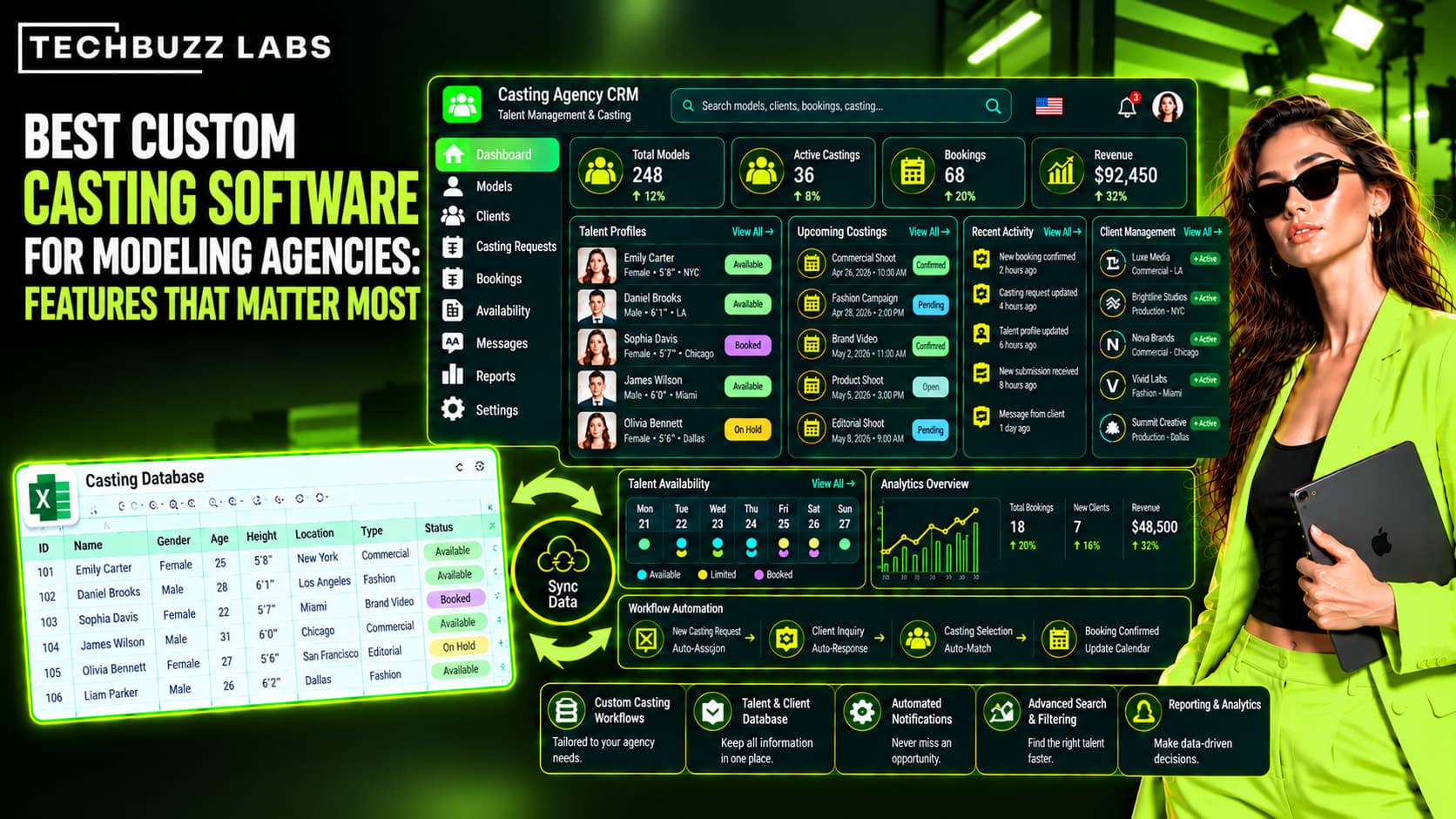
A centralized CRM can store model profiles containing information such as location, experience, skills, measurements, portfolio materials, and availability.
Agents can use search and filtering tools to narrow the talent pool based on the client's requirements. This can significantly reduce the time spent manually reviewing profiles.
TechBuzzLabs describes centralized talent databases, real-time availability tracking, advanced search filters, and automated submissions as components of modern agency technology.
3. Checking Model Availability
Finding the right model is only part of the process. The talent also needs to be available for the project.
Without a centralized system, agents may have to contact multiple models individually to determine who is free.
A casting CRM can connect model availability with casting and booking information. This gives agents better visibility when creating a shortlist.
For agencies operating across major U.S. markets such as New York, Los Angeles, Miami, and Chicago, organized availability information can be especially useful when managing large talent pools.
4. Managing Talent Submissions
After selecting potential talent, agents need to present those models to the client.
A CRM can help organize digital talent profiles and connect selected models directly to the casting record.
Instead of repeatedly gathering photographs and information from separate folders, agents can use existing profiles to prepare submissions.
This can make the submission process faster while also creating a more consistent presentation for clients.
TechBuzzLabs highlights digital talent profiles and automated talent submissions as ways modern systems can reduce the time required to prepare casting submissions.
5. Tracking Client Feedback
Once submissions are sent, the agency needs to know what happens next.
A client may approve certain models, request additional options, ask for more information, or reject the submission.
A casting CRM can track these decisions within the relevant casting record.
Agents can quickly see which models are still under consideration and which candidates have moved forward.
This eliminates the need to search through multiple email threads to determine the current status of a casting.
6. Moving From Casting to Booking
One of the biggest advantages of a connected casting CRM is the ability to move smoothly from selection to booking.
Once a client chooses a model, the agency may need to confirm dates, location, rates, availability, contracts, and other project details.
When casting and booking information are connected, agents do not have to recreate the same information from scratch.
The workflow can move from:
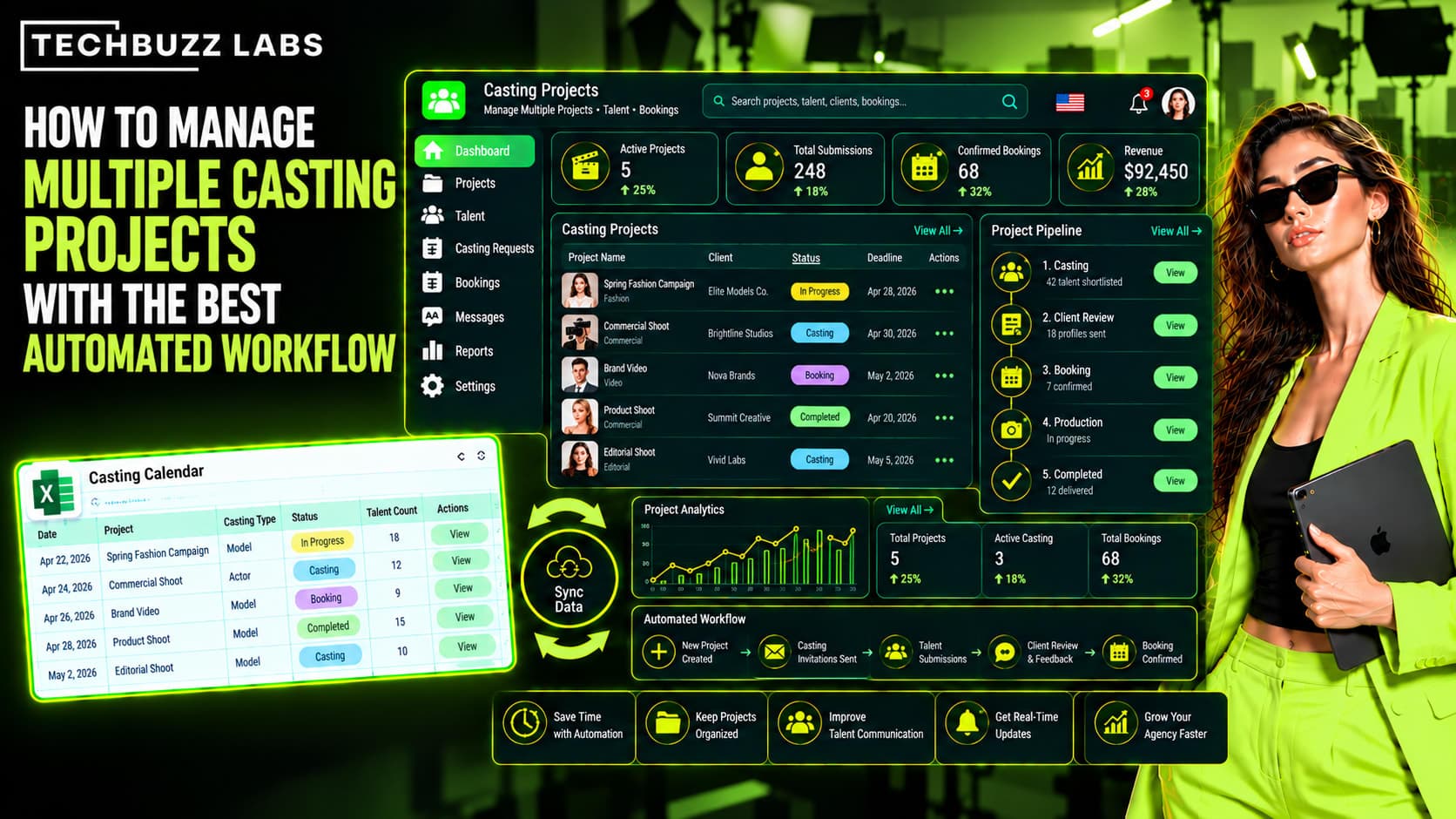
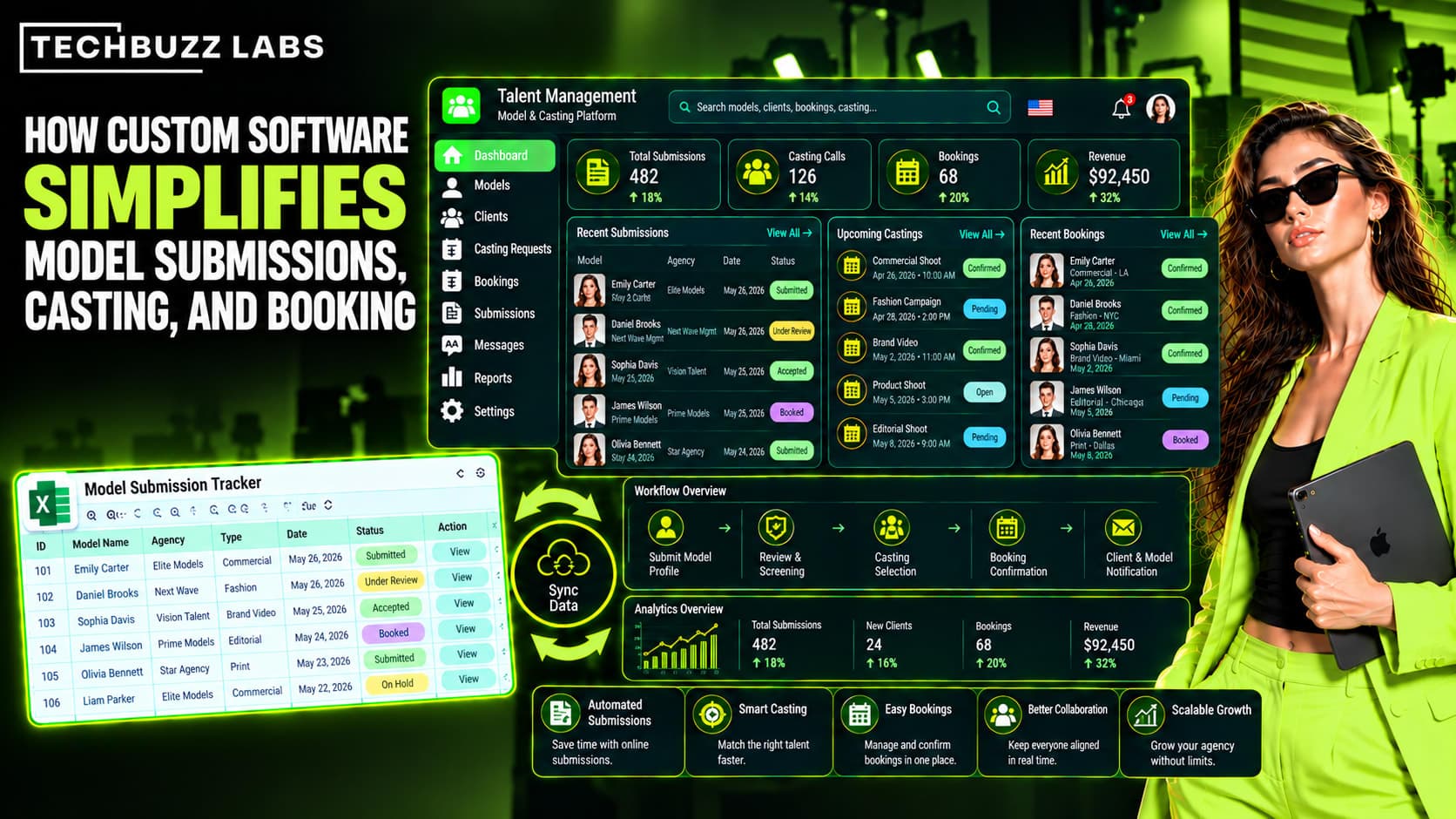
Casting Request → Talent Search → Submission → Client Approval → Booking
This creates a more structured process and reduces unnecessary administrative work.
7. Automating Repetitive Tasks
Casting involves many repetitive activities.
Agents may need to send availability requests, remind models about deadlines, follow up with clients, confirm bookings, and update project statuses.
A CRM can automate certain parts of this workflow.
For example, the system could create a reminder after a talent submission or notify an agent when a casting deadline is approaching.
Automation does not replace the agent. Instead, it reduces routine administrative work so agents can spend more time on talent relationships and client service.
8. Improving Team Collaboration
Modeling agencies often have several people working on the same projects.
One agent may manage the client while another communicates with models and another handles booking details.
When information is stored in separate spreadsheets or personal notes, team members may not have a complete picture of the project.
A centralized CRM gives authorized employees access to shared casting information.
This makes it easier for team members to understand the current status of a project and continue work without repeatedly asking colleagues for updates.
9. Managing Client Relationships
Casting is not only about individual projects. It is also about building long-term client relationships.
A CRM can store client contact information, communication history, previous projects, casting activity, and booking records.
When a client returns with another campaign, agents can review the previous relationship before responding.
This can help agencies provide more personalized service and understand client preferences over time.
10. Using Data to Improve Agency Performance
A casting CRM can also provide valuable business insights.
Agencies can potentially analyze metrics such as casting volume, submission activity, booking conversion rates, client activity, and response times.
These insights can help managers identify bottlenecks and determine which parts of the casting workflow need improvement.
For example, if an agency notices that many submissions are sent but relatively few become bookings, managers can investigate whether talent selection, client communication, or another stage of the workflow needs improvement.
How TechBuzzLabs Supports Modern Agency Workflows
TechBuzzLabs builds custom technology platforms around the actual workflows of talent and casting agencies. Its platform approach can bring talent profiles, availability updates, bookings, and client requests into one searchable system, while supporting automation, role-based access, data migration, and AI applications.
This can be particularly useful for agencies that have outgrown spreadsheets, WhatsApp conversations, shared folders, and manual administrative processes.
Rather than forcing an agency to completely change how it works, a custom platform can be designed around the agency's existing processes and then improve them through automation and connected data.
Conclusion
A casting CRM can simplify the complete journey from casting calls to bookings by connecting talent databases, client information, submissions, availability, communication, and booking workflows.
For modeling and talent agencies in the USA, this can lead to faster talent searches, more organized submissions, better client communication, fewer scheduling issues, and reduced administrative work.
The biggest benefit is not simply having another software tool. It is creating one connected workflow where information moves efficiently from the initial client request to the final booking.
As agencies continue to compete in a fast-moving U.S. casting market, technology can become an important competitive advantage. With solutions such as those offered by TechBuzzLabs, agencies can move beyond disconnected spreadsheets and manual processes toward more organized, scalable, and efficient casting operations.