How to Manage Multiple Casting Projects With the Best Automated Workflow
For growing modeling agencies across the USA, building an efficient casting workflow is an important step toward sustainable growth.
Modeling agencies in the United States often manage several casting projects simultaneously. One client may need models for a fashion campaign, another may request talent for a commercial photoshoot, while a third may require candidates for an upcoming runway show. Managing all these projects manually can create scheduling conflicts, missed deadlines, and unnecessary administrative work.
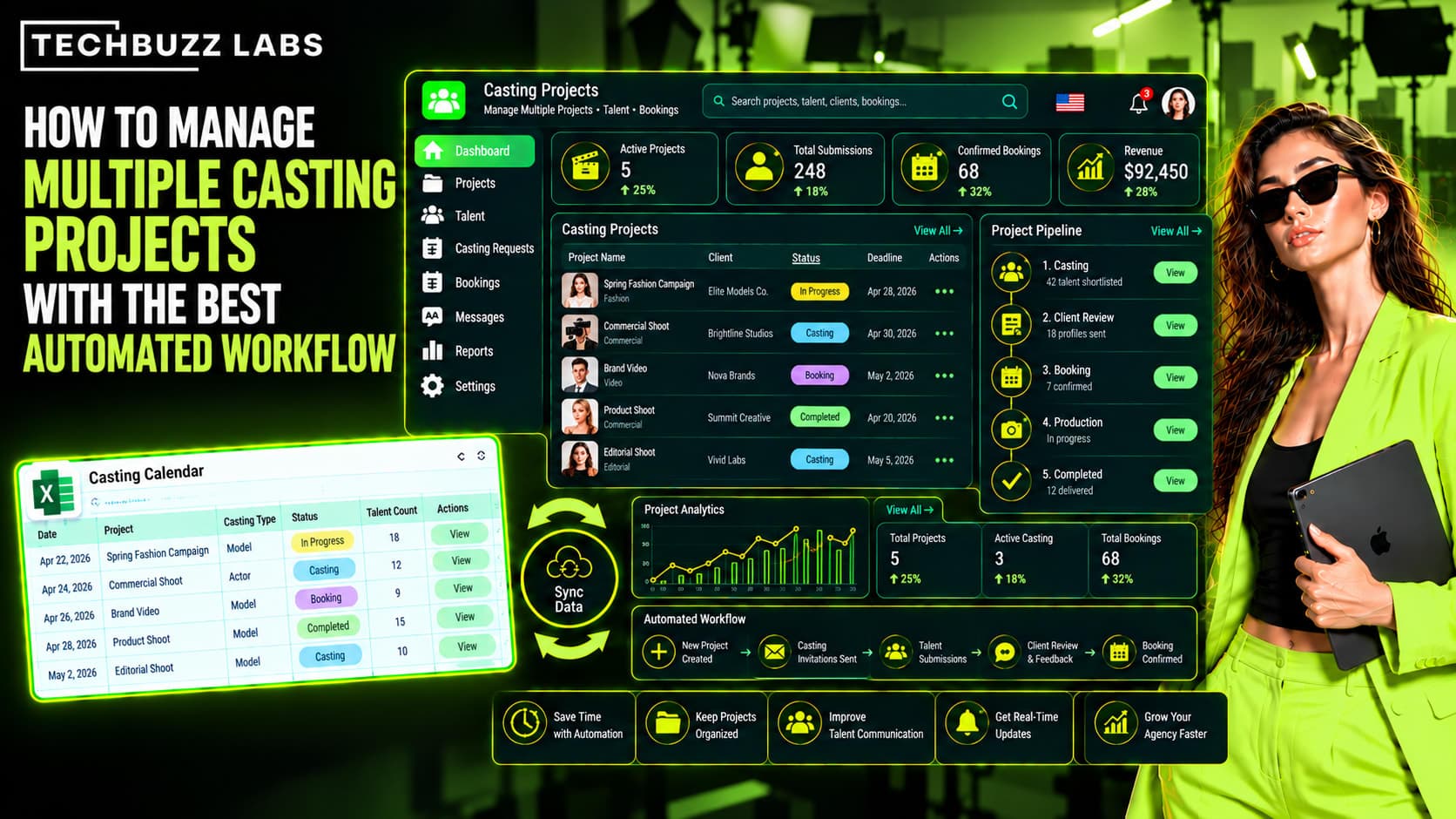
The best automated workflow helps modeling agencies organize casting requests, manage talent submissions, track client feedback, and coordinate bookings through a centralized system. With the right combination of custom software, CRM tools, and workflow automation, agencies can improve productivity and handle more projects without adding unnecessary complexity.
Why Managing Multiple Casting Projects Is Challenging
Every casting project has its own requirements, deadlines, clients, and talent selection process. When an agency handles several opportunities at once, keeping everything organized becomes increasingly difficult.
Common challenges include:
Missed deadlines: Agents may overlook submission dates or client follow-ups.
Talent availability conflicts: Models may be considered for overlapping projects.
Scattered information: Project details remain spread across emails, spreadsheets, and messaging applications.
Duplicate work: Staff repeatedly enter the same client and model information.
Limited project visibility: Managers struggle to identify which castings require immediate attention.
An automated workflow addresses these challenges by creating a consistent process for managing each project while giving the team a centralized view of its responsibilities.
7 Ways to Manage Casting Projects With an Automated Workflow
1. Centralize All Casting Projects
The first step is to manage every casting opportunity within one system. Each project should have its own record containing the client brief, campaign details, location, required talent, submission deadline, assigned agent, and current status.
A centralized dashboard helps team members distinguish between new requests, active castings, pending client approvals, and confirmed bookings.
For example, an agency working with clients in New York and Los Angeles can monitor multiple projects without maintaining separate spreadsheets for each client.
Custom agency software can also provide project-specific views so agents see the information most relevant to their responsibilities.
2. Standardize Client Briefs and Requirements
Incomplete client briefs can delay the entire casting process. Before searching for talent, agencies should collect essential information such as the campaign type, shoot dates, location, budget, usage requirements, and submission deadline.
Automated intake forms and standardized templates help ensure that important details are captured consistently.
Once the brief is approved, the system can create a project record and assign tasks to the appropriate team members.
This approach reduces repeated questions and helps agents begin the talent search with a clearer understanding of the client's expectations.
3. Use a Centralized Talent Database
Searching for suitable models across multiple folders and spreadsheets wastes time. A centralized talent database allows agents to access portfolios, professional experience, location, availability, and other relevant profile details in one place.
Search filters can help identify candidates who match a project's requirements.
For instance, if a brand needs commercial models for a campaign in Miami, the agency can filter its database by location, relevant experience, and availability before preparing a shortlist.
AI-assisted recommendations may provide additional support, but agents should review candidates and make final decisions using appropriate professional criteria.
4. Automate Model Invitations and Submissions
Contacting candidates individually for every project can become a significant administrative burden.
Casting workflow software can help agents send invitations, request availability, communicate deadlines, and remind selected models to submit the required materials.
The system can also track responses and organize submissions by project.
Useful status categories include:
Invitation sent
Awaiting response
Availability confirmed
Submitted to client
Shortlisted
Selected or declined
Booking confirmed
These stages make it easier to monitor progress across multiple castings and identify tasks that need attention.
5. Coordinate Schedules and Prevent Booking Conflicts
Managing talent availability is especially important when several clients request models for overlapping dates.
A shared calendar can display auditions, tentative holds, confirmed bookings, and upcoming assignments. Automated reminders can notify agents about approaching deadlines and scheduled appointments.
For agencies working across different US time zones, the system should handle time-zone differences accurately.
Agencies should also distinguish between tentative availability and confirmed commitments. Automated calendar alerts can flag potential conflicts, but agents should verify availability before finalizing a booking.
6. Connect Client Feedback With Project Status
After receiving model submissions, clients may request additional candidates, schedule callbacks, or approve selected talent. When feedback remains scattered across email conversations, it becomes difficult to determine the next step.
An integrated CRM can keep client communications, submission records, and casting statuses connected.
For example, when a client approves a shortlist, the system can notify the assigned agent and create a follow-up task to confirm the selected models.
Automated reminders can also help agents follow up when client feedback is overdue.
This creates a clearer process and reduces the likelihood of promising opportunities being forgotten.
7. Connect Casting With Booking and Reporting
The workflow should continue after a client selects a model. Booking details, rates, assignment dates, contract status, and other relevant information need to be coordinated.
A connected agency management system can transfer information from the casting record into the booking workflow, reducing duplicate data entry.
Reporting dashboards can then help managers monitor active castings, pending submissions, upcoming bookings, overdue tasks, and other operational indicators.
By reviewing these reports, agencies can identify bottlenecks and improve how work is distributed across their teams.
How to Build the Best Automated Casting Workflow
The best workflow depends on the agency's size, project volume, and existing tools. A practical implementation process includes five steps.
Step 1: Map your current process. Document how projects move from client inquiry to final booking.
Step 2: Identify repetitive tasks. Prioritize invitations, reminders, status updates, and follow-up scheduling.
Step 3: Choose suitable software. Compare casting platforms, CRM systems, and custom agency software according to your requirements and budget.
Step 4: Set clear responsibilities. Assign project owners, define approval stages, and standardize communication templates.
Step 5: Measure performance. Track response times, missed deadlines, administrative effort, and booking conversion rates to evaluate whether the workflow is improving operations.
Agencies should also consider data security, user permissions, software integrations, and ongoing maintenance before selecting a platform.
How Techbuzz Labs Can Help Modeling Agencies
Techbuzz Labs is a technology partner agencies can explore for custom software development, CRM solutions, and business workflow automation.
For modeling agencies managing multiple casting projects, a tailored platform could connect client briefs, talent profiles, model submissions, availability calendars, client approvals, and booking records within one centralized system.
The objective should be to build a solution around the agency's real operational requirements rather than introduce features that create additional complexity.
When evaluating Techbuzz Labs, agencies should discuss essential features, integration needs, project scope, budget, security requirements, implementation timelines, and ongoing support.
A well-planned software solution can help agencies organize daily activities and establish a scalable foundation for managing a growing number of casting projects.
Conclusion
Managing multiple casting projects becomes easier when modeling agencies replace disconnected manual processes with a structured, automated workflow. Centralized project records, searchable talent databases, automated invitations, scheduling tools, CRM integration, and connected booking management can help teams work more efficiently.
For modeling agencies across the United States, the goal is not simply to automate more tasks. It is to create a reliable process that keeps projects organized, deadlines visible, and communication consistent.
By identifying workflow bottlenecks and exploring suitable solutions with technology partners such as Techbuzz Labs, agencies can improve coordination, reduce administrative effort, and prepare their operations for future growth.