How Custom Software Simplifies Model Submissions, Casting, and Booking
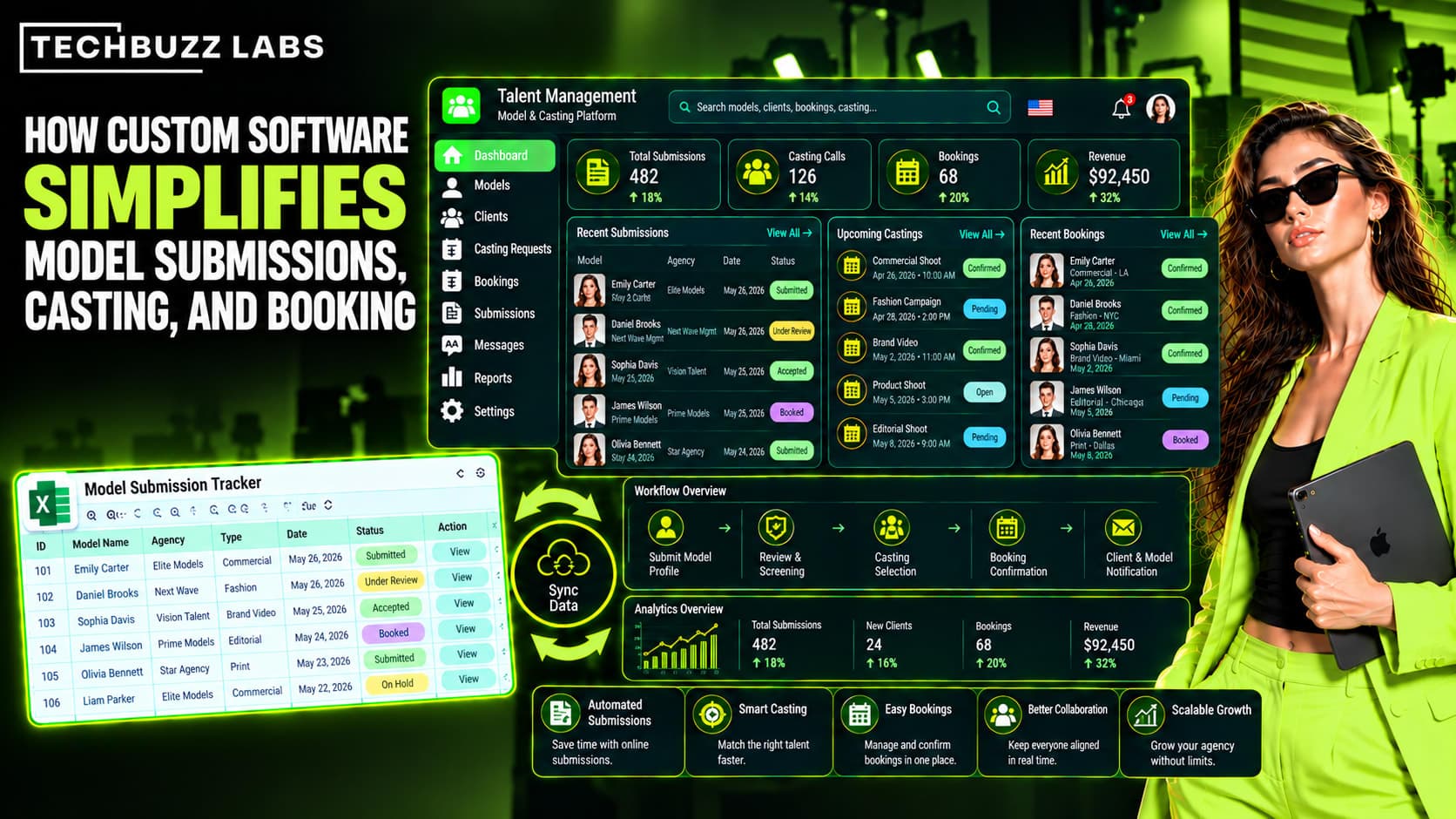
Depending on the project scope, the system may include talent databases, digital portfolios, casting management, client relationship management (CRM), submission tracking, availability calendars, booking records, and automated notifications.
Modeling agencies in the United States handle multiple responsibilities every day, from managing talent profiles and responding to client requests to organizing casting submissions and confirming bookings. As an agency grows, coordinating these activities through spreadsheets, emails, and disconnected applications can become time-consuming and difficult to manage.
Custom software for modeling agencies provides a way to connect these essential operations within one centralized system. By bringing model submissions, casting management, client communication, and booking schedules together, agencies can reduce repetitive administrative work and create a more organized workflow.
For growing agencies across the USA, investing in software designed around their business processes can improve efficiency, support better client relationships, and create a foundation for long-term growth.
What Is Custom Software for Modeling Agencies?
Custom agency software is a digital platform developed around the specific needs of a modeling or talent management business. Unlike generic tools, it can be tailored to the agency's existing processes, team structure, and operational requirements.
For example, when a US fashion brand requests models for an advertising campaign, an agency can record the brief, identify suitable talent, check availability, submit portfolios, track client feedback, and move selected candidates into the booking process.
Connecting these activities reduces the need to transfer information manually between separate tools.
1. Simplifying Model Submissions
Preparing model submissions often requires agents to collect photographs, portfolio links, measurements, experience, and availability information before presenting candidates to clients.
When this information is stored across different folders and spreadsheets, preparing submissions can take longer than necessary.
Custom software simplifies the process by maintaining centralized model profiles. Agents can search for relevant talent, select approved portfolio images, and prepare organized submissions using information already available in the system.
Useful features include:
Centralized digital model profiles
Searchable talent databases
Digital comp card generation
Portfolio sharing and submission tracking
Client-specific shortlists
Submission history and status updates
These capabilities help agencies present talent more consistently while reducing duplicate data entry.
2. Streamlining Casting Management
Casting involves more than finding suitable models. Agencies must understand client requirements, coordinate candidates, track responses, and manage deadlines throughout each project.
Custom casting software can organize these activities in one place. Each casting project can have its own brief, submission deadline, candidate list, feedback records, and progress status.
For example, an agency managing a commercial campaign in Los Angeles can track which models have been invited, which candidates are available, and which profiles have been shortlisted by the client.
Automated reminders and status updates can help staff identify pending tasks before deadlines are missed.
Advanced search and matching tools can also help agents find candidates who meet relevant project requirements. However, professional casting decisions should remain under human supervision.
3. Connecting Casting With Booking Management
One of the biggest operational challenges for modeling agencies is transferring information from a successful casting into a confirmed booking.
After a client selects a model, the agency may need to verify availability, confirm rates, agree on usage terms, coordinate contracts, and communicate the assignment details.
When casting and booking systems operate separately, staff may need to enter the same information several times. This increases administrative effort and creates opportunities for errors.
Custom agency software can connect these stages through a structured workflow:
Client Request → Talent Search → Model Submission → Client Approval → Booking Confirmation
Once a candidate is approved, relevant information can move into the booking record. Agents can then manage dates, locations, project details, and confirmation tasks without rebuilding the record from scratch.
A shared booking calendar can further help agencies monitor assignments and identify potential scheduling conflicts.
4. Improving Client Communication With CRM
Strong client relationships are essential for repeat business. However, managing conversations across multiple email threads and messaging applications can make it difficult to maintain a complete history of each project.
An integrated CRM helps agencies organize client details, casting requests, communication records, follow-up tasks, and booking history.
For instance, when a retail brand requests models for a new seasonal campaign, agents can record the requirements, track the submitted portfolios, document feedback, and schedule follow-ups within the same system.
This improves visibility across the team and helps agencies provide more consistent service.
For agencies working with clients across New York, Miami, Chicago, and other US markets, centralized client records can also make collaboration easier.
5. Automating Repetitive Administrative Tasks
Custom software can automate routine activities that otherwise consume valuable time.
Depending on the system's capabilities, automation may support casting invitations, availability requests, deadline reminders, booking notifications, and internal task assignments.
For example, when a client approves a model, the software could notify the responsible agent and create a task to confirm the booking details.
Automation should be configurable so that agencies maintain control over important communications and business decisions.
The objective is to reduce repetitive work while allowing agents to focus on evaluating talent, developing careers, and strengthening client relationships.
6. Supporting Growth With Reporting and Data Security
As an agency expands, management needs better visibility into its operations. Custom dashboards can help track active castings, submission activity, confirmed bookings, outstanding tasks, and other relevant business indicators.
These insights can help managers identify delays, improve workflows, and understand where additional resources may be needed.
Security should also be a priority. Modeling agencies manage photographs and personal information that require appropriate protection. Agencies should evaluate user permissions, secure portfolio sharing, backup procedures, data retention, and applicable privacy obligations when selecting a solution.
A scalable system should accommodate a growing talent roster and client base without introducing unnecessary operational complexity.
How Techbuzz Labs Helps Modeling Agencies
Techbuzz Labs is a technology partner modeling agencies can explore when considering custom software development, CRM solutions, and workflow automation.
For agencies that have outgrown spreadsheets and disconnected tools, a tailored platform could bring model profiles, portfolio submissions, casting opportunities, client communication, availability tracking, and booking management into one connected environment.
The most effective solution starts with understanding how an agency currently operates. Before development begins, agencies should identify their main challenges, prioritize essential features, and establish a clear project scope.
When evaluating Techbuzz Labs, discuss customization options, integrations, data security, implementation timelines, costs, and ongoing maintenance to determine whether the proposed solution fits your business needs.
A well-planned platform can help agencies simplify daily operations while supporting their long-term growth strategy.
Conclusion
Custom software simplifies model submissions, casting, and booking by connecting processes that are often managed through separate tools. Centralized talent profiles, organized casting projects, integrated CRM functionality, automated notifications, and connected booking records can reduce administrative work and improve team coordination.
For modeling agencies across the USA, the right software should support existing workflows, provide reliable access to information, and scale as the business grows.
By exploring customized solutions with technology partners such as Techbuzz Labs, modeling agencies can build a more efficient operating system that helps agents spend less time managing paperwork and more time developing talent and building valuable client relationships.