Best Custom Casting Software for Modeling Agencies: Features That Matter Most
For growing modeling agencies across the USA, choosing the right features can improve team productivity, strengthen client communication, and support long-term business growth.
Modeling agencies in the United States manage a wide range of activities, including talent profiles, client requests, casting submissions, auditions, and booking schedules. As an agency expands, coordinating these tasks through spreadsheets, emails, and separate applications can create delays, increase administrative work, and make it harder to maintain accurate information.
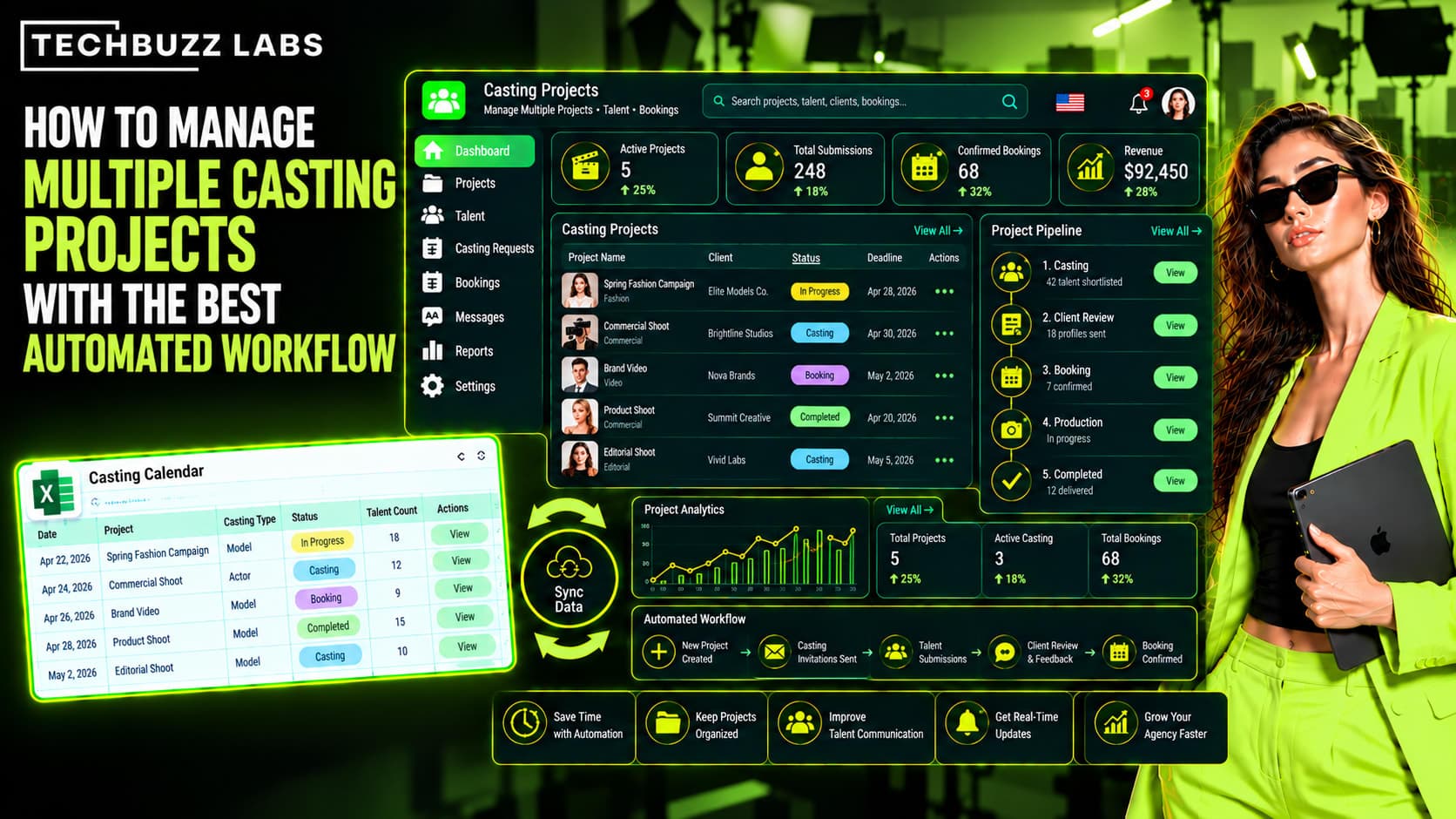
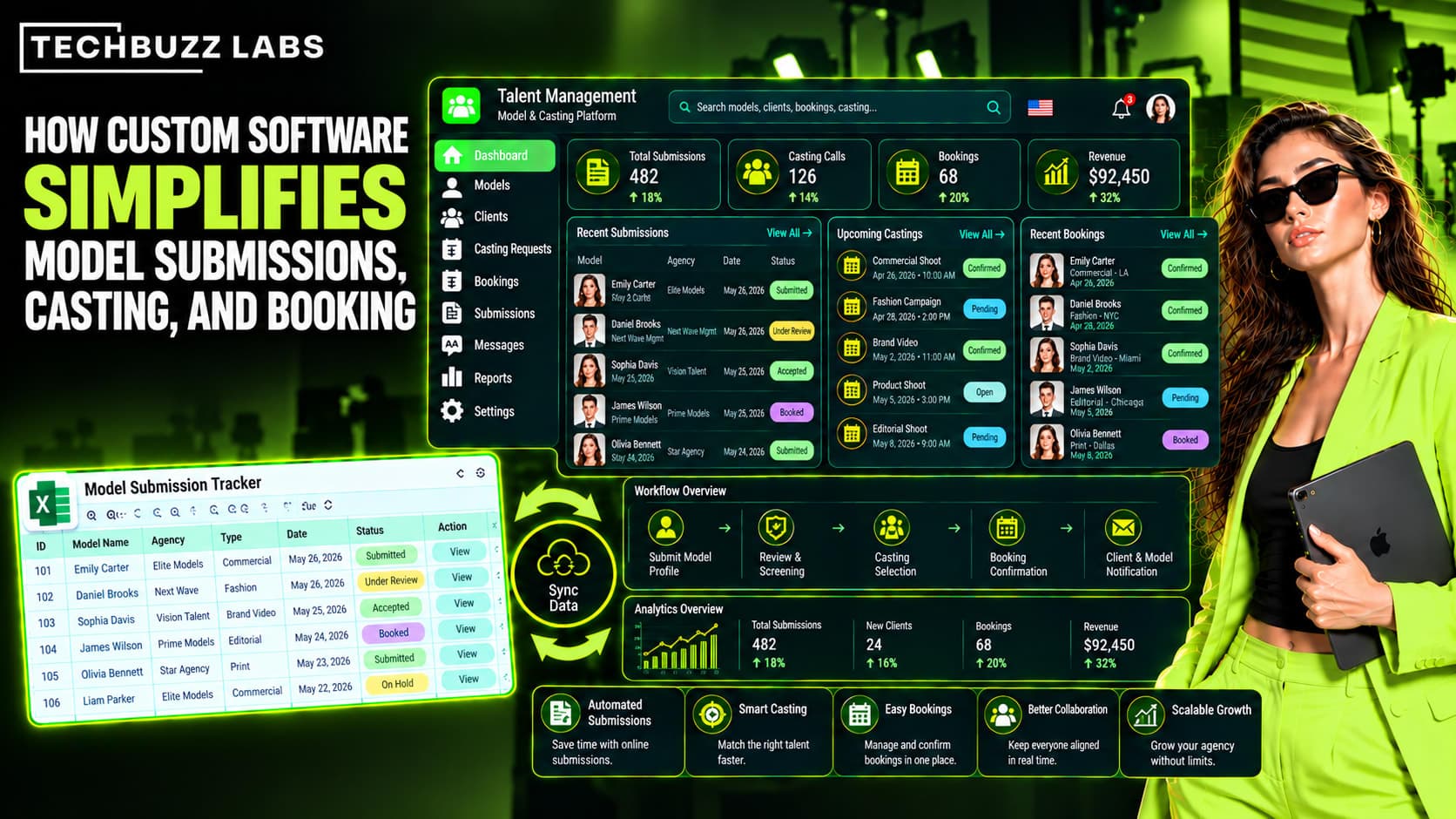
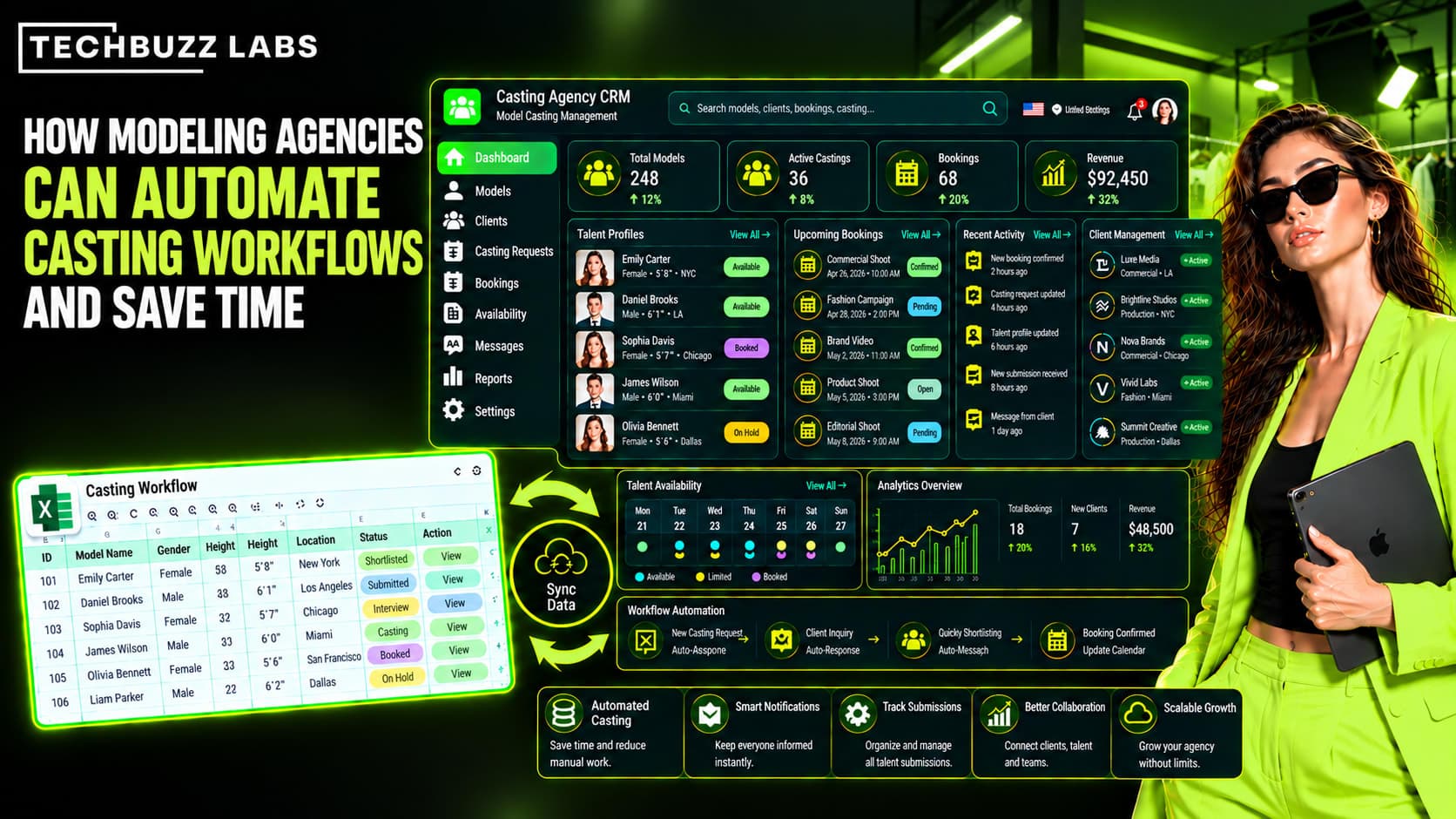
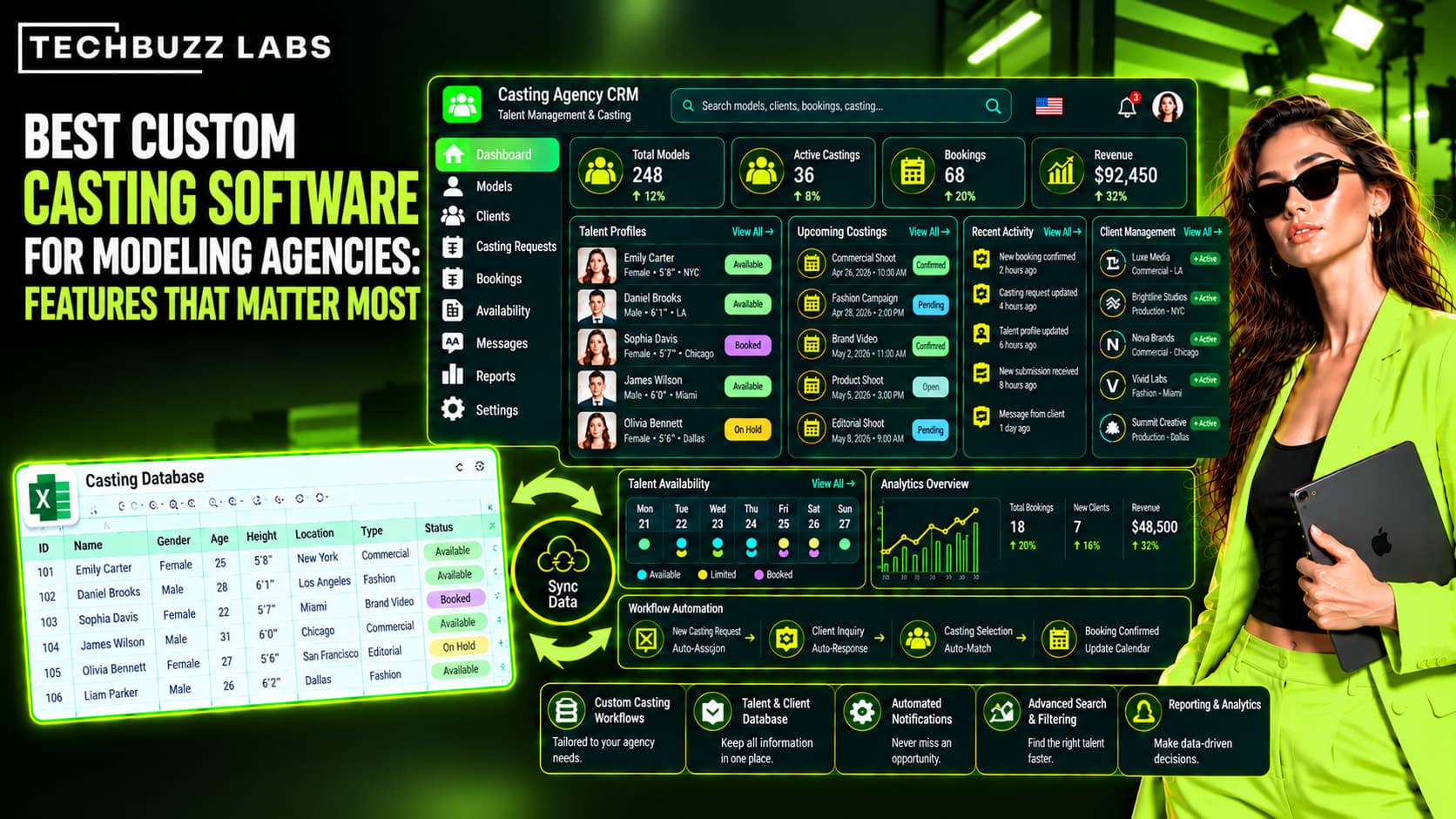
Custom casting software for modeling agencies helps bring these operations together in one centralized platform. Instead of adapting business processes to generic tools, agencies can invest in software designed around their casting requirements, talent database, and booking workflows.
What Is Custom Casting Software?
Custom casting software is a digital platform developed or configured to support an agency's specific casting and talent management processes. Depending on the agency's requirements, it may include searchable model profiles, digital portfolios, casting project management, client submissions, audition scheduling, CRM functionality, and booking automation.
For example, a fashion brand in New York may request talent for a seasonal advertising campaign. With a connected casting platform, an agency can record the client brief, search its talent database, shortlist suitable models, collect feedback, and manage the final booking through a structured workflow.
This centralized approach helps teams reduce duplicate data entry and maintain better visibility throughout each project.
7 Essential Features of Custom Casting Software
1. Centralized Model Profile Management
A well-organized talent database is the foundation of effective casting management. Agencies need a reliable place to maintain model photographs, portfolios, professional experience, location, availability, and other relevant information.
Custom software can organize these records into searchable profiles that authorized team members can update and access.
For agencies working across Los Angeles, Miami, Chicago, and New York, centralized profiles make it easier to coordinate talent and locate candidates for projects in different markets.
The system should also support regular profile updates to help ensure that clients receive accurate and relevant information.
2. Advanced Search and Talent Filtering
Finding the right model for a casting brief can take considerable time when an agency manages a large roster.
Advanced search capabilities allow agents to filter profiles using relevant criteria, such as location, experience, availability, portfolio category, and client requirements.
Some platforms can also incorporate AI-assisted matching to recommend potentially suitable candidates.
For instance, an agency handling a commercial shoot in California could search for models who meet the project's requirements and are available on the requested dates.
Automated recommendations should support human judgment, with casting professionals reviewing profiles and making final selections based on appropriate project criteria.
3. Casting Call and Submission Management
Managing casting calls requires agencies to track client briefs, submission deadlines, shortlisted candidates, and feedback.
Custom casting software can organize these details within individual project records. Teams can monitor each candidate's progress and quickly identify which submissions need attention.
Useful capabilities include:
Casting brief creation and management
Model invitations and submission tracking
Digital portfolio and comp card sharing
Candidate shortlists
Client feedback and approval tracking
Deadline reminders and status updates
These features help agencies maintain a consistent process and reduce the risk of overlooking important casting opportunities.
4. Client Relationship Management (CRM)
Casting is closely connected to client relationships. Agencies need to manage contacts, understand client preferences, track previous campaigns, and follow up on new opportunities.
An integrated CRM keeps client information and communication histories connected to casting projects.
When a returning client requests models for another campaign, agents can review previous bookings, project requirements, and feedback before preparing a new shortlist.
This can improve response times and support stronger long-term relationships with brands, photographers, advertising agencies, and production companies.
5. Booking Calendars and Availability Tracking
Once a client selects a model, the agency must confirm availability and coordinate the assignment.
A booking calendar can help teams manage tentative holds, confirmed bookings, auditions, and upcoming projects. Availability tracking also helps agents identify possible scheduling conflicts before confirming an assignment.
For agencies operating across multiple US time zones, accurate time-zone support is especially useful.
Custom workflows can also connect casting approvals with booking records, reducing the need to enter project details multiple times.
6. Workflow Automation and Notifications
Many casting tasks are repetitive, including sending invitations, requesting availability, following up with clients, and reminding models about appointments.
Custom software can automate selected activities through predefined rules and notifications.
For example, when a client shortlists a model, the system could notify the assigned agent and create a task to confirm availability. When a submission deadline approaches, the platform could remind staff about outstanding responses.
Automation should remain configurable, allowing agencies to control important communications and review sensitive decisions before taking action.
7. Reporting, Security, and Scalability
As agencies grow, managers need insight into casting activity and business performance.
Custom dashboards can display active projects, pending submissions, booking activity, and overdue tasks. These reports help identify bottlenecks and provide a clearer picture of daily operations.
Security is equally important. Model profiles and portfolio images may contain personal information, so agencies should evaluate access controls, secure sharing, backup procedures, and data retention practices.
The platform should also accommodate additional talent profiles, team members, client accounts, and workflows as the business expands.
Custom Casting Software vs. Generic Tools
Generic CRM platforms and project management applications may be suitable for agencies with straightforward requirements. However, they may need significant configuration to support specialized casting and booking processes.
Custom software can be designed around the agency's existing workflow, connecting talent management, casting submissions, client communication, and booking records.
The main considerations are cost, implementation time, maintenance, integrations, and scalability. Agencies should identify their most important operational challenges before deciding whether custom development offers sufficient value over an existing platform.
How Techbuzz Labs Can Help Modeling Agencies
Techbuzz Labs is a technology partner agencies can explore when considering custom software development, CRM solutions, and workflow automation.
For modeling agencies managing complex casting operations, a tailored solution could connect model profiles, client briefs, submissions, availability, approvals, and bookings within one system.
Before selecting Techbuzz Labs, agencies should discuss their business requirements, essential features, integration needs, data security expectations, project timeline, and ongoing support arrangements.
A clearly defined project scope can help ensure the proposed software addresses actual operational challenges instead of adding unnecessary complexity.
Agencies can also explore related resources from Techbuzz Labs, including its guide to the best CRM for modeling agencies and its article on custom CRM software for modeling agencies.
Conclusion
The best custom casting software for modeling agencies is not necessarily the platform with the largest feature list. It is the solution that supports the agency's actual workflow and helps its team manage talent, submissions, clients, and bookings efficiently.
Centralized model profiles, advanced search, casting management, CRM integration, scheduling, automation, reporting, and security are among the most important capabilities to evaluate.
For modeling agencies across the USA, the right technology can reduce manual work, improve coordination, and create a stronger foundation for growth. By defining their requirements carefully and exploring suitable solutions with technology partners such as Techbuzz Labs, agencies can build a casting workflow that supports their business today and as it expands.