How a Modeling CRM Simplifies the Journey From Model Application to Booking
A modeling CRM can bring applications into a structured database. Once a candidate is approved, their information can be converted into a centralized talent profile.
The journey from a model's first application to a confirmed booking involves many different steps. Modeling agencies need to review applications, organize talent profiles, manage portfolios, respond to casting requests, communicate with clients, check availability, prepare submissions, and coordinate bookings.
When these activities are handled through spreadsheets, emails, folders, and separate messaging platforms, the workflow can quickly become difficult to manage. A modeling CRM can simplify this process by connecting the different stages in one centralized system.
For modeling agencies in the USA, where competition is high and clients often expect quick responses, an organized CRM can help agencies manage growing talent pools while reducing repetitive administrative work. TechBuzzLabs provides technology solutions for modeling and talent agencies, helping agencies build more connected workflows for talent, casting, clients, and bookings.
From Application to an Organized Talent Profile
The process begins when a prospective model applies to an agency.
Applications can come through a website, referral, social media, scouting, or other channels. The agency may need to review photographs, location, experience, measurements, skills, and other professional information.
Without a centralized system, agents may have to organize this information manually.
A modeling CRM can bring applications into a structured database. Once a candidate is approved, their information can be converted into a centralized talent profile.
This creates a smoother transition from application to active talent.
Simplifying Model Onboarding
After accepting a model, an agency needs to complete its onboarding process.
This may involve collecting additional information, photographs, portfolio materials, professional details, and required documentation.
A CRM can help agents track the onboarding process and identify what information has already been collected and what still needs attention.
Instead of relying on personal notes or email reminders, the agency can maintain a clear record of the model's progress.
This becomes increasingly valuable when an agency is onboarding many new models at the same time.
Creating Centralized Model Profiles
Once onboarding is complete, the model's information can be maintained in a centralized profile.
A professional profile may include:
Portfolio images and videos
Measurements and sizes
Location
Experience
Skills
Modeling categories
Availability
Contact information
Previous bookings
The exact information collected should depend on the agency's legitimate business needs.
A centralized profile allows agents to quickly access current information when a client requests talent.
Matching Models With Casting Opportunities
The next major stage is finding suitable opportunities.
When a client sends a casting request, agents need to identify models who match the project's requirements.
A modeling CRM can make this process easier through searchable databases and filtering tools.
Agents can search by relevant criteria such as location, experience, category, skills, and availability.
For example, a client looking for commercial talent in Los Angeles can be matched with potentially suitable models from the agency's database without manually reviewing every profile.
This can significantly reduce the time required to build a shortlist.
Checking Availability Before Submission
A model may meet all of a client's requirements but still be unavailable.
This makes availability an essential part of the casting workflow.
A modeling CRM can connect availability information with talent profiles, castings, and bookings.
Agents can check scheduling information before submitting a model, reducing unnecessary communication and potential conflicts.
For agencies operating across U.S. markets such as New York, Los Angeles, Miami, and Chicago, centralized availability can make coordination much easier.
Preparing Client Submissions
After identifying suitable models, the agency needs to present them to the client.
A manual process may require agents to search for photographs, measurements, portfolio links, and other information from different locations.
With a modeling CRM, these details can already be connected to the model's profile.
Agents can select suitable talent and prepare a submission using existing information.
This saves time and can also help agencies present their talent consistently across different casting opportunities.
Tracking Client Feedback
After submissions are sent, the agency needs to know what happens next.
Clients may shortlist certain models, request additional options, ask questions, or select talent.
A CRM can track these updates within the relevant casting record.
Agents can see which models have been submitted, shortlisted, rejected, or selected.
This prevents important information from becoming buried in email threads and makes it easier for teams to understand the current status of each casting.
Moving From Casting to Booking
When a client selects a model, the process moves toward booking.
The agency may need to confirm the project date, location, rate, usage requirements, contract information, and other details.
A connected CRM can link the booking to the original casting and model profile.
The workflow can therefore become:
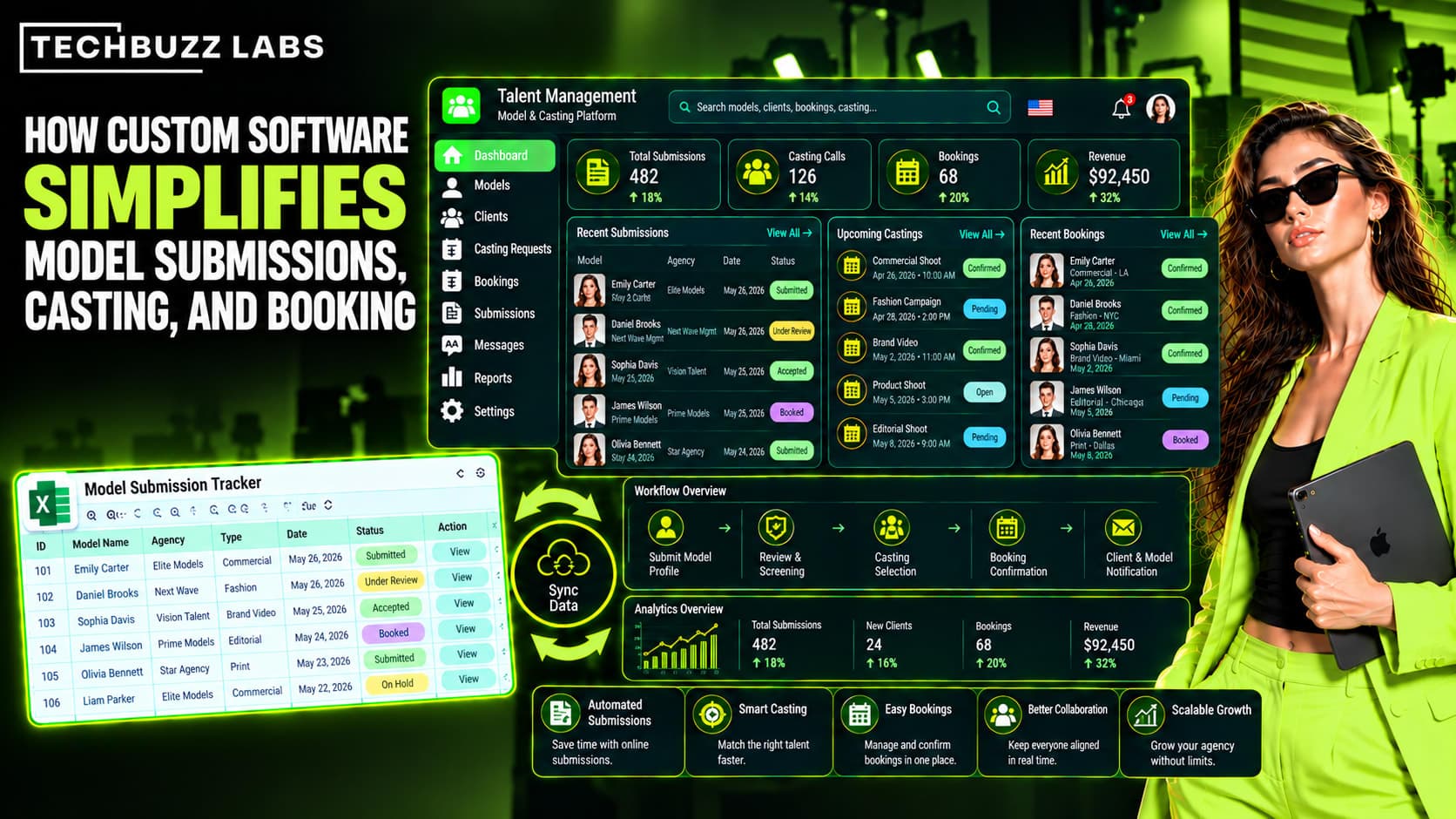
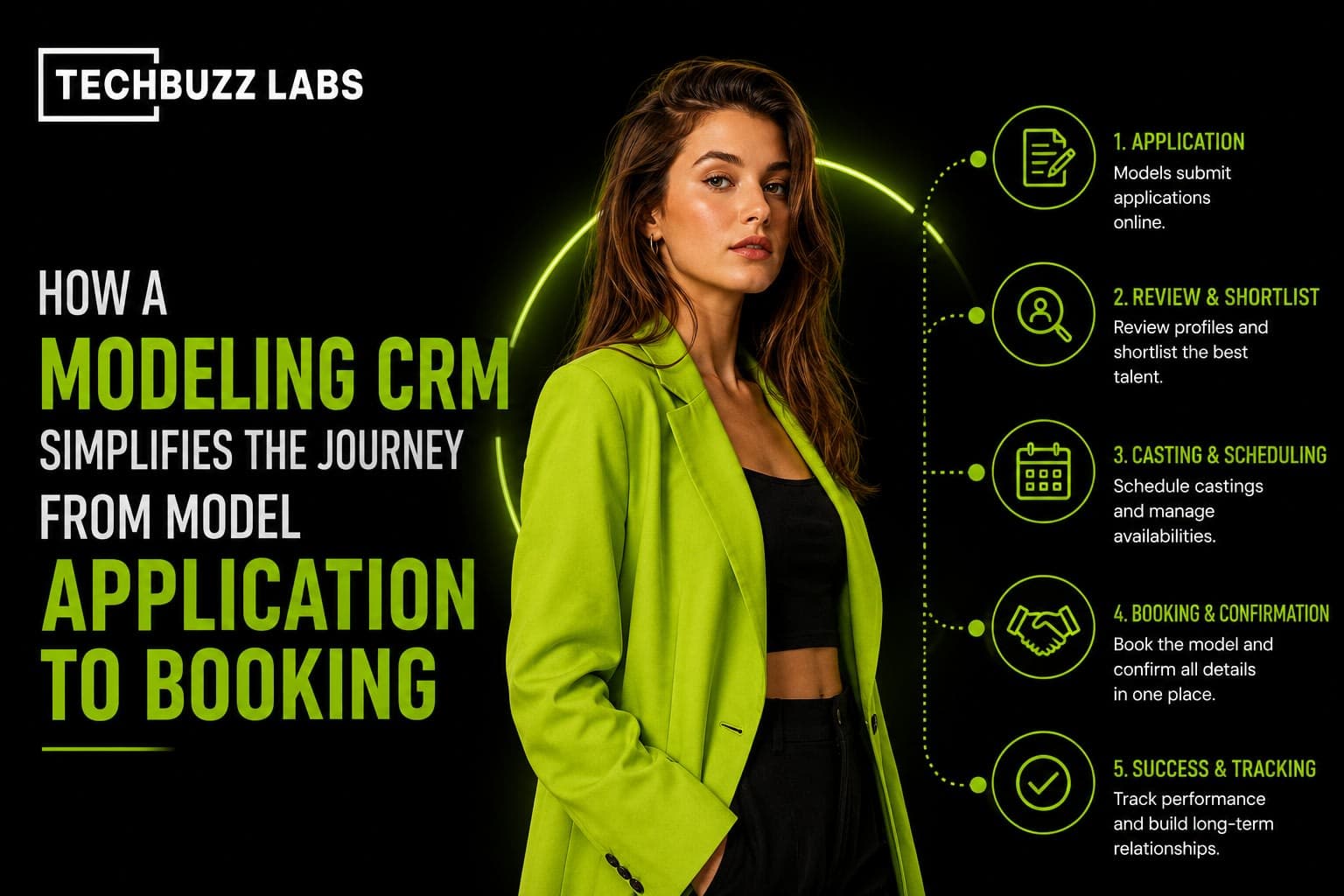
Application → Onboarding → Talent Profile → Casting → Submission → Client Selection → Booking
Because information is connected, agents may not need to recreate the same data at every stage.
This can reduce administrative work and improve visibility across the entire project.
Automating Repetitive Tasks
A modeling CRM can also help automate routine activities.
Agents may regularly need to send availability requests, follow up with clients, remind models about deadlines, update casting statuses, and confirm booking details.
Automation can handle some of these repetitive tasks.
For example, an agent could receive a reminder when a client has not responded to a submission or when a casting deadline is approaching.
This gives agents more time to focus on talent development and client relationships.
Improving Team Collaboration
A growing modeling agency may have several agents working on the same clients and models.
Without centralized software, important information can become isolated within individual spreadsheets or inboxes.
A CRM provides authorized team members with access to shared records.
An agent can review a model's profile, casting history, availability, client feedback, and booking status without having to ask another team member for updates.
This can improve collaboration and reduce communication delays.
How TechBuzzLabs Supports Modeling Agencies
TechBuzzLabs focuses on technology solutions for modeling and talent agencies, helping businesses create centralized systems around their unique workflows.
For agencies that have outgrown spreadsheets and disconnected tools, a technology platform can bring together talent profiles, casting opportunities, client information, availability, submissions, and bookings.
A customized CRM approach can also allow the software to reflect an agency's specific processes rather than forcing the agency to completely change how it operates.
By connecting talent management, CRM, casting, automation, and booking workflows, agencies can create a more scalable operational system.
Conclusion
A modeling CRM can simplify the complete journey from model application to booking by connecting the information and activities involved at every stage.
Instead of managing applications, profiles, castings, client communication, availability, submissions, and bookings through separate tools, agencies can create one connected workflow.
For modeling agencies in the USA, this can lead to faster talent searches, better organization, improved client communication, fewer scheduling issues, and less repetitive administrative work.
As agencies grow, having a centralized system becomes increasingly important. With technology solutions from TechBuzzLabs, modern modeling agencies can move toward smarter and more scalable workflows that allow teams to spend less time managing scattered information and more time building relationships with talent and clients.