How Casting Management Software Helps Modeling Agencies Save Time
The main advantage is not simply having more software. It is reducing the amount of manual work required to move a casting from the initial client request to a completed booking.

The modeling industry moves quickly. Agencies may receive multiple casting requests in a single day while managing model profiles, client relationships, availability, submissions, bookings, and follow-ups at the same time. When these activities are handled through spreadsheets, email threads, messaging apps, and separate folders, even simple tasks can take much longer than necessary.
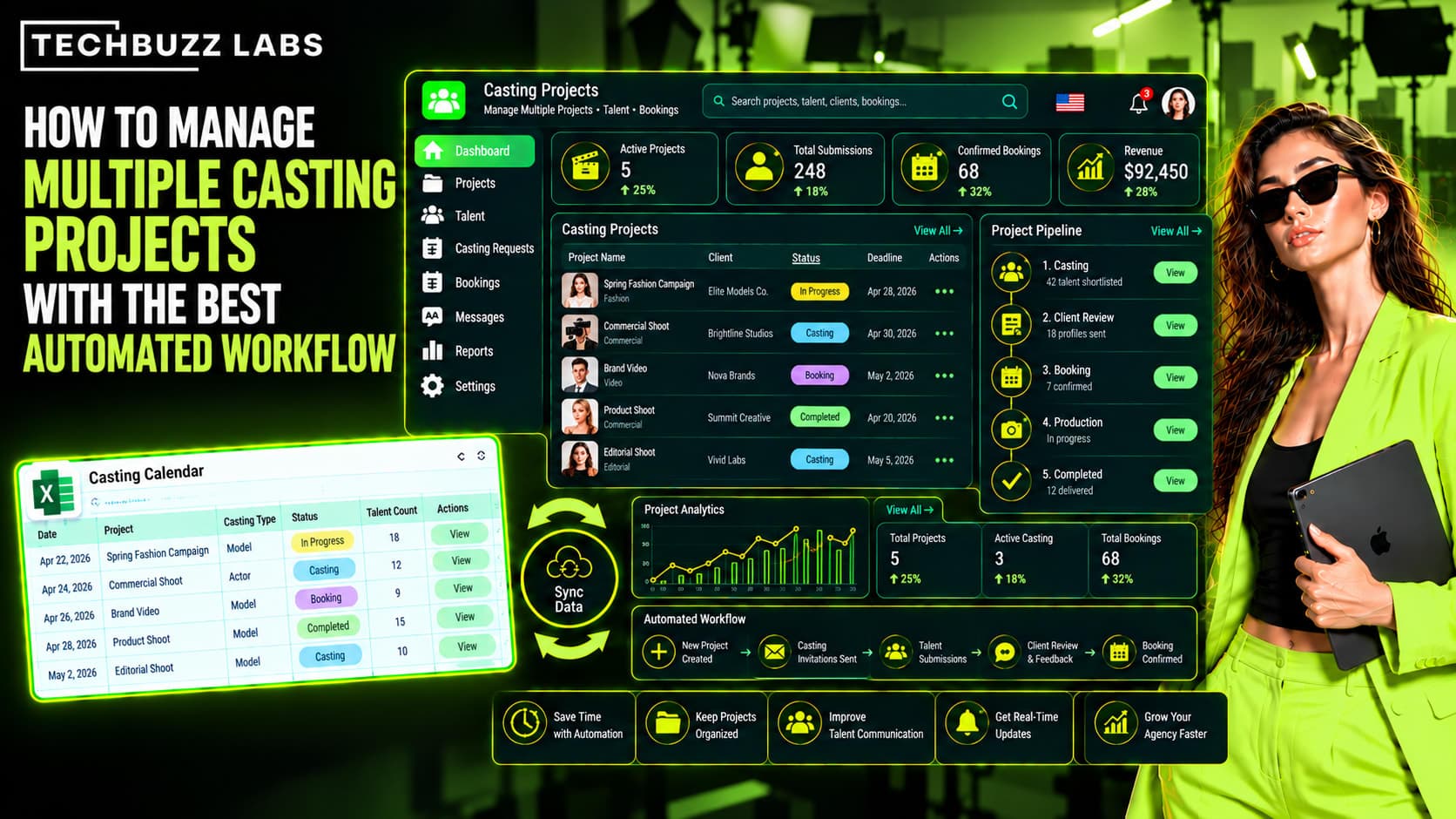
This is where casting management software can make a major difference. A centralized digital platform can help modeling agencies organize talent information, manage casting opportunities, communicate with clients, and coordinate bookings from one place. For agencies in the USA, especially those operating in competitive markets such as New York, Los Angeles, Miami, and Chicago, saving time can help teams respond to opportunities faster and manage more projects efficiently.
What Is Casting Management Software?
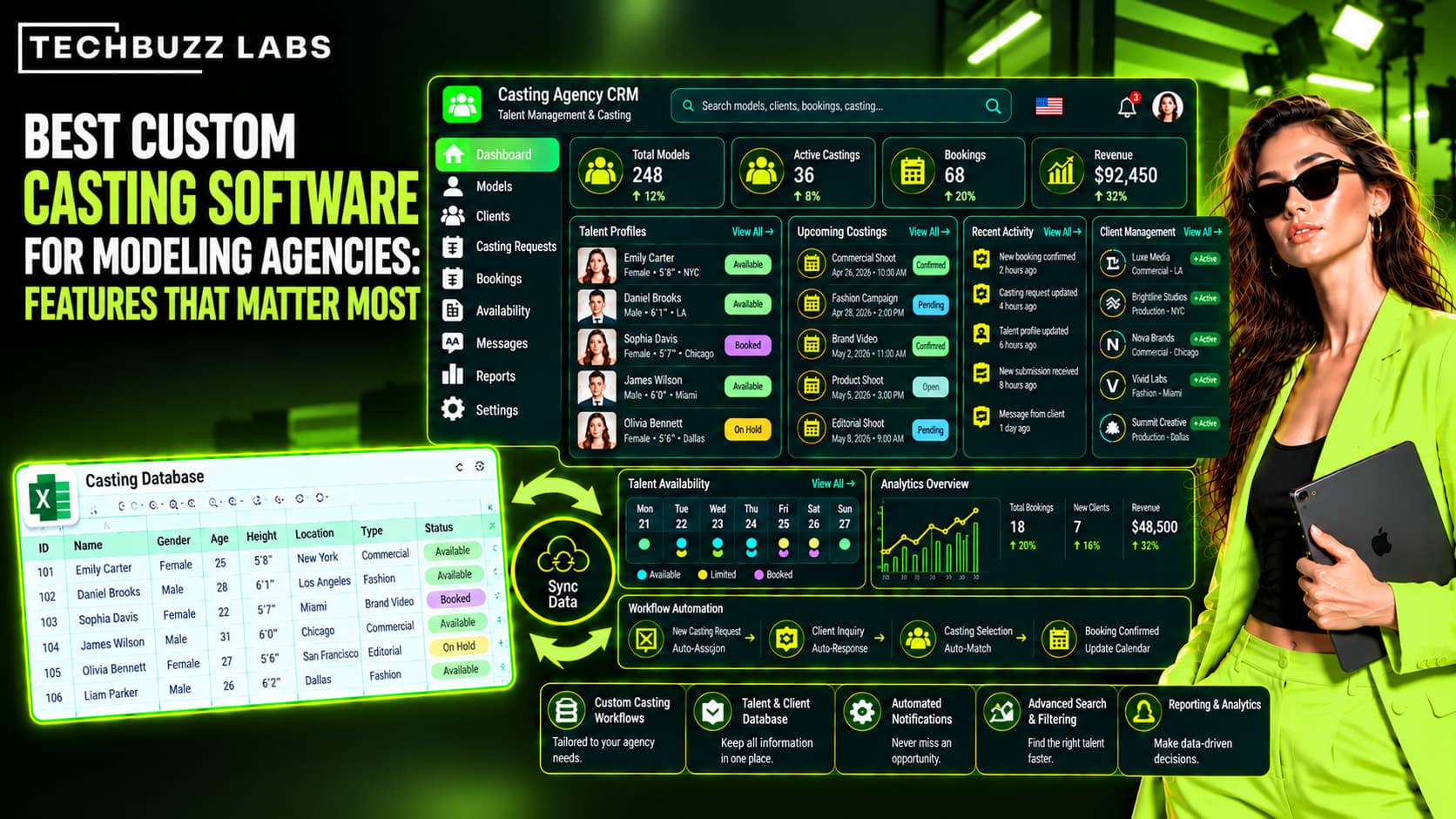
Casting management software is a digital platform designed to organize the casting process and related agency operations. Depending on the system, it can help agencies manage talent profiles, portfolios, casting requirements, submissions, client feedback, availability, schedules, and bookings.
Modern casting platforms can connect multiple stages of a project rather than forcing agents to move information between different tools. Some systems, for example, allow agencies to manage talent databases, search profiles, communicate with clients, schedule talent, and track bookings in one workspace.
1. Faster Access to Model Information
One of the biggest time-consuming tasks for modeling agencies is finding the right talent.
An agency may represent hundreds or thousands of models, with each profile containing photographs, measurements, experience, location, skills, and availability.
If this information is stored across spreadsheets and folders, agents may spend significant time searching for suitable candidates.
Casting management software can provide a centralized talent database with search and filtering capabilities. This allows agents to narrow their talent pool based on relevant requirements instead of manually reviewing every profile.
For example, if a client needs commercial models in Los Angeles who are available on specific dates, an agent can use relevant filters to create a shortlist more efficiently.
2. Reduces Repetitive Data Entry
Agents often enter the same information multiple times.
A model's information might need to appear in a spreadsheet, casting document, client presentation, email, and booking record. Repeating this work wastes time and increases the possibility of errors.
A centralized platform can connect these records so that information entered into a model's profile can be reused throughout the casting workflow.
This means agents can spend less time copying information and more time reviewing talent and communicating with clients.
3. Makes Casting Submissions Easier
Preparing model submissions can also take considerable time.
Agents may need to collect photographs, profile information, measurements, and other details before presenting talent to a client.
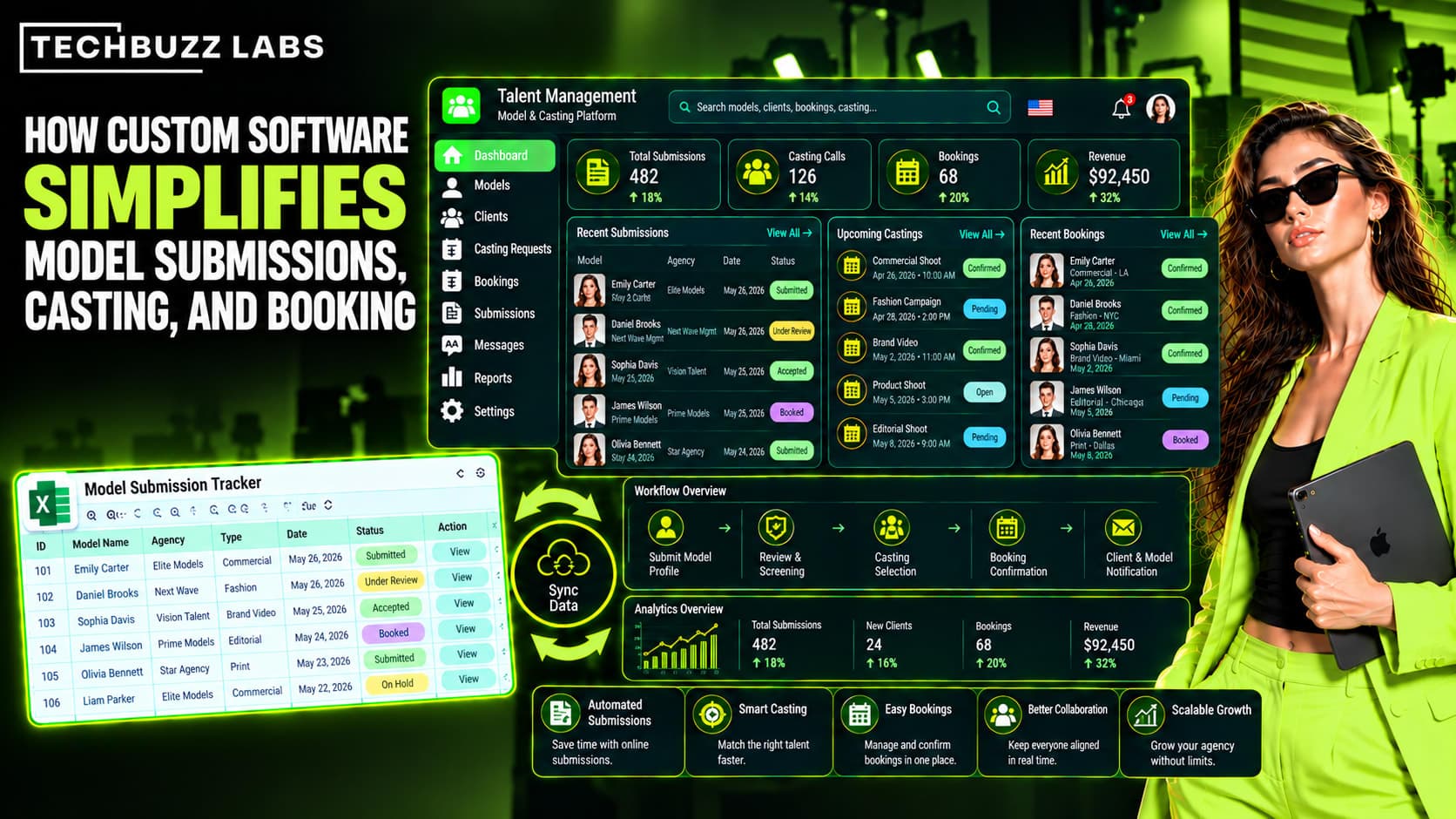
Casting management platforms can help agencies create organized talent presentations and send submissions through the same system. Some platforms also allow clients to review submissions and provide feedback directly within the platform.
This reduces the need to create separate documents or maintain long email chains.
4. Simplifies Client Communication
Client communication is another area where agencies can lose valuable time.
Casting projects may involve multiple emails, messages, feedback rounds, and follow-ups. When conversations are scattered across different channels, agents can struggle to find previous information.
Centralized casting software can keep project-related communication and decisions connected to the relevant casting.
This gives agents better context and makes it easier to understand what the client has requested, which models have been reviewed, and what action needs to happen next.
5. Improves Availability Management
Checking model availability manually can be frustrating, particularly when an agency manages a large roster.
A model may appear suitable for a project but already have another booking. Agents then need to contact the model, check calendars, and update the client.
Casting software can connect model schedules with casting and booking information. Some agency platforms specifically provide calendar and scheduling features designed to help reduce double bookings and identify scheduling conflicts.
This can save agents time while reducing avoidable scheduling problems.
6. Automates Reminders and Follow-Ups
Not every agency task requires an agent to manually remember it.
Casting management software can help create reminders for important deadlines, client follow-ups, model confirmations, auditions, and booking activities.
For example, after submitting models to a client, an agent can receive a reminder to follow up if no response has been received.
Automation is especially useful for agencies managing multiple projects simultaneously because it reduces the risk of small administrative tasks being forgotten.
7. Connects Casting With Bookings
The casting process does not end when a client selects a model.
Agents still need to confirm availability, finalize booking information, coordinate schedules, manage contracts, and track project details.
Modern casting platforms can connect approved talent with booking workflows. Some systems allow agencies to move from client approvals into holds, bookings, contracts, usage information, and invoicing.
Having these stages connected can eliminate unnecessary duplicate work.
8. Helps Teams Work Together
Large modeling agencies often have multiple agents, bookers, and administrative employees working with the same talent and clients.
When everyone uses separate spreadsheets or personal notes, team collaboration becomes difficult.
A centralized system gives authorized team members access to the same information. An agent can see casting progress, model availability, client decisions, and booking information without repeatedly asking another employee for updates.
This can make the entire agency more responsive.
9. Makes Growing Agencies More Efficient
Time savings become even more important as an agency grows.
An agency managing 20 models may be able to operate using spreadsheets and email. An agency managing hundreds of models and multiple casting projects needs a more structured workflow.
Casting management software can provide a scalable system for organizing larger talent pools and higher project volumes.
Instead of adding more manual administrative work every time the agency grows, the agency can use technology to handle increasing amounts of information more efficiently.
How TechBuzzLabs Can Help Modern Modeling Agencies
Technology is becoming an important part of modern talent and modeling agency operations. TechBuzzLabs provides custom-built systems for talent and casting agencies, designed around their existing workflows. Its platform approach can bring model profiles, availability, bookings, and client requests into one searchable system, while also supporting automation, role-based access, data migration, and AI applications.
For agencies that have outgrown spreadsheets, WhatsApp, and manual administrative processes, a customized technology solution can provide a workflow designed specifically around how the agency operates rather than forcing the agency to change everything to fit generic software.
Choosing the Right Casting Management Software
Before choosing a platform, modeling agencies should consider their specific needs.
Important features may include a centralized talent database, advanced search, casting management, client submissions, availability tracking, scheduling, communication tools, booking management, automation, reporting, and secure data access.
Agencies should also consider scalability. The software should be able to support the agency as its number of models, clients, and casting projects increases.
Ease of use is equally important. If agents find the system complicated, the potential time savings may disappear.
Conclusion
Casting management software can help modeling agencies save time by centralizing information and simplifying repetitive workflows. Instead of searching through spreadsheets, preparing manual submissions, checking availability through messages, and tracking bookings across different systems, agencies can manage more of the process from one connected platform.
For modeling agencies in the USA, faster workflows can mean quicker responses to clients, more efficient talent searches, fewer scheduling problems, and better team collaboration.
The goal is not simply to replace spreadsheets with another piece of software. The real benefit comes from creating a connected workflow that allows agents to spend less time on administration and more time building relationships with models and clients.
As modeling agencies continue to grow and adopt digital technology, solutions such as TechBuzzLabs can help agencies move toward more organized, scalable, and technology-driven operations.