How Modeling Agencies Can Automate Casting Workflows and Save Time
Instead of coordinating every step manually, agencies can use a centralized platform to monitor projects and trigger routine actions automatically.
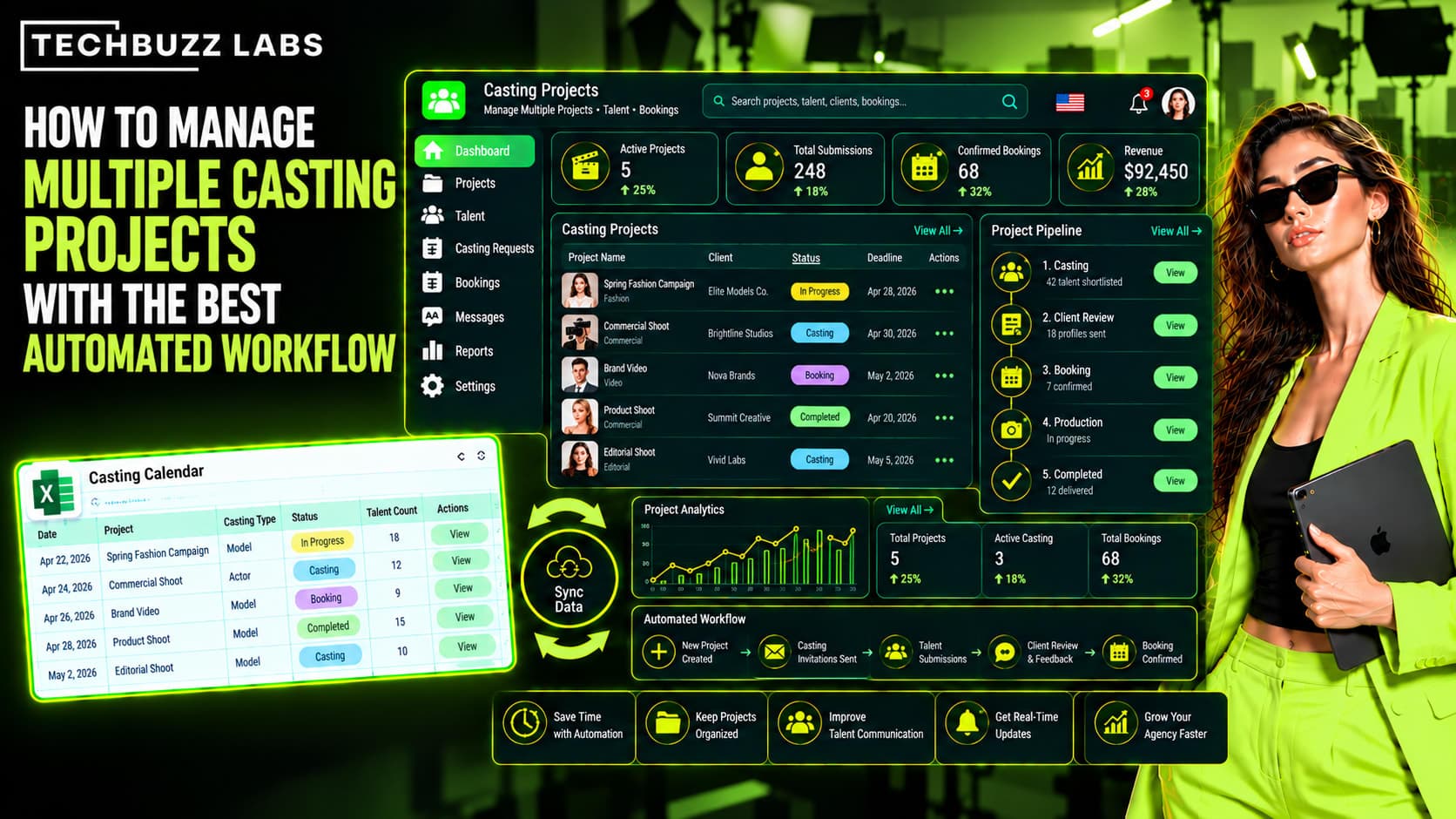
Modeling agencies in the United States manage numerous casting requests, model profiles, client communications, auditions, and booking schedules. As an agency grows, handling these responsibilities manually can consume valuable time and create unnecessary administrative challenges. Spreadsheets, email threads, and disconnected applications often make it difficult to track casting opportunities and coordinate talent efficiently.
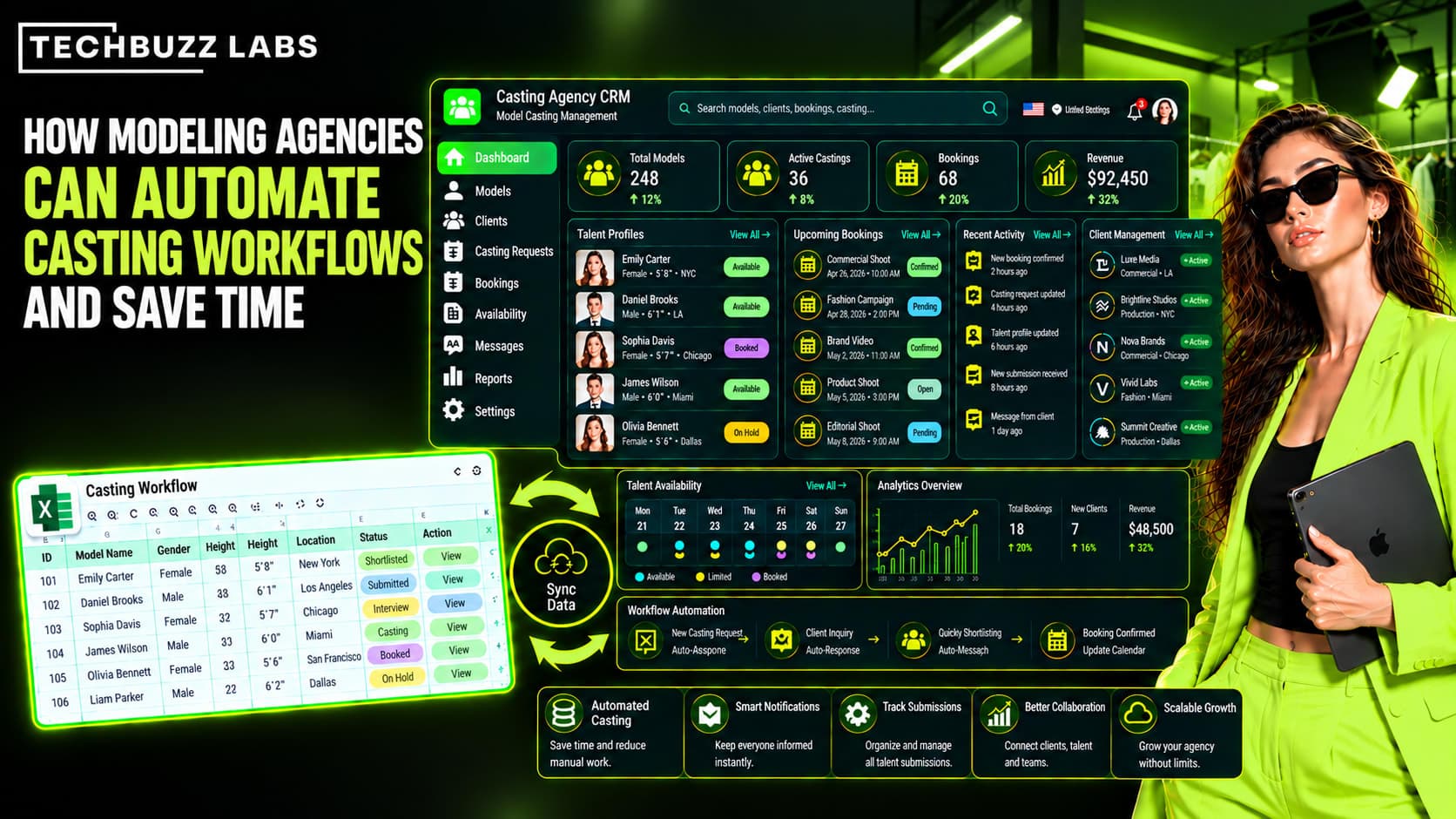
Casting workflow automation helps modeling agencies simplify repetitive tasks, organize information, and improve communication throughout the casting process. With the right CRM software or custom agency management system, agencies can reduce manual work, respond to clients faster, and manage more casting projects without unnecessarily complicating their operations.
For growing modeling agencies across the USA, automation can become an important part of building a more efficient and scalable business.
What Is Casting Workflow Automation?
Casting workflow automation involves using software to organize and automate repetitive activities associated with casting and talent management. These activities may include receiving client briefs, searching model databases, sending casting invitations, tracking submissions, scheduling auditions, collecting feedback, and managing booking confirmations.
For example, when a fashion brand requests models for a campaign in New York, an agency can record the requirements, search its talent database, contact suitable candidates, track their responses, and organize submissions through a connected workflow.
Automation does not replace professional casting decisions. It helps agents spend less time managing administrative tasks and more time evaluating talent and building client relationships.
Why Modeling Agencies Need Automated Casting Workflows
Manual processes may work for small agencies, but they can become difficult to maintain as the number of models, clients, and projects increases.
Common challenges include:
Time-consuming talent searches: Agents manually review numerous profiles to find suitable candidates.
Missed deadlines: Casting invitations, client follow-ups, and submission dates can be overlooked.
Scattered communication: Important project details remain spread across emails, spreadsheets, and messages.
Scheduling conflicts: Availability changes can create confusion during auditions and bookings.
Repeated data entry: Staff enter the same information into multiple systems.
Limited visibility: Managers struggle to determine which projects require immediate attention.
Automating repetitive processes can help agencies address these problems while creating a consistent approach to managing casting opportunities.
7 Ways to Automate Casting Workflows and Save Time
1. Centralize Model Profiles and Talent Information
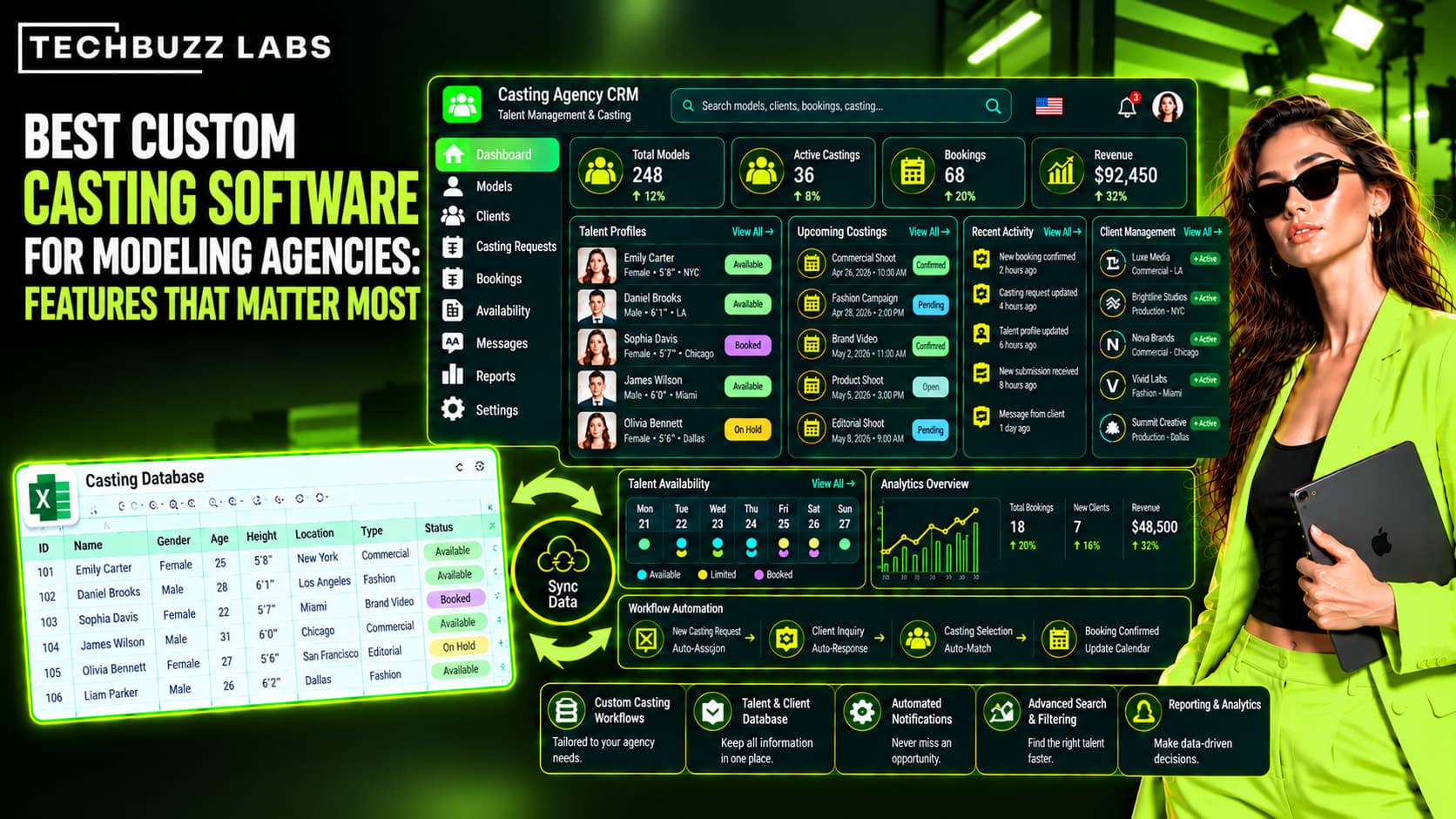
A centralized talent database is the foundation of an efficient casting workflow. It allows agencies to maintain model photographs, portfolios, experience, location, relevant professional details, and availability in one place.
When a new casting request arrives, agents can search the database instead of checking multiple folders or spreadsheets.
For agencies operating across Los Angeles, New York, Miami, and Chicago, centralized records can also improve collaboration between teams working in different locations.
Keeping profiles accurate and regularly updated is essential. Automation works best when the information supporting it is reliable.
2. Automate Casting Invitations and Reminders
Contacting models individually can consume considerable time, particularly when a project requires a large number of submissions.
Casting management software can send invitations and reminders to selected candidates using predefined templates. Messages can include project requirements, deadlines, locations, submission instructions, and audition details.
Automated reminders can also notify models about upcoming appointments or alert agency staff when responses are still pending.
Agencies should personalize communications when necessary and ensure that notifications are sent only to relevant recipients.
3. Simplify Talent Matching and Shortlisting
Finding the right models for a client's campaign can be one of the most demanding parts of casting.
Advanced search tools allow agents to filter talent according to relevant criteria, such as experience, location, availability, portfolio category, and project requirements.
Some platforms also offer AI-assisted recommendations that help identify potentially suitable candidates.
For example, an agency working with a California-based clothing brand could use search filters to identify models who meet the campaign requirements and are available during the requested dates.
Agents should still review the shortlisted profiles carefully. Automated matching should support professional judgment rather than make final casting decisions without human oversight.
4. Organize Client Feedback and Follow-Ups
After submitting model profiles, agencies often need to follow up with clients, collect feedback, arrange callbacks, and confirm selections.
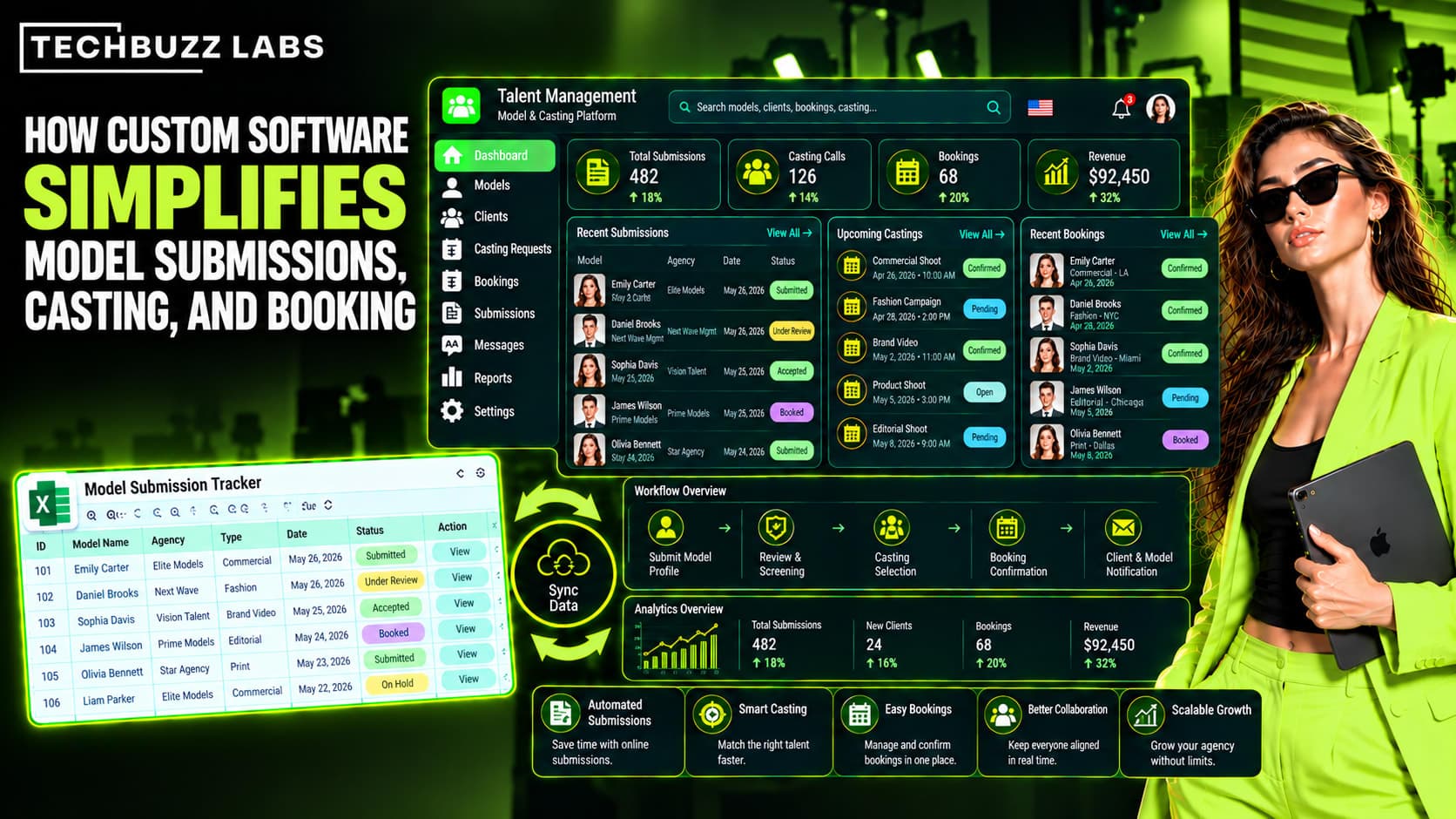
A CRM system can record client interactions and create reminders when a response is expected. Team members can also track whether a submission is awaiting review, shortlisted, declined, or approved.
This reduces the need to search through old email conversations to understand a project's status.
Consistent follow-ups can help agencies maintain professional communication and avoid leaving promising casting opportunities unattended.
5. Automate Audition Scheduling
Scheduling auditions becomes more complicated when agencies coordinate multiple models, clients, photographers, and production teams.
Booking calendars and scheduling integrations can help identify available time slots, send appointment confirmations, and distribute reminders. Time-zone support is particularly useful when coordinating projects across different US markets.
When schedules change, the system can help staff update appointment details and notify affected participants.
These capabilities reduce repetitive coordination while helping agencies maintain a clearer view of upcoming auditions and casting deadlines.
6. Connect Casting With Booking Management
Casting workflows should continue beyond the selection stage. Once a client chooses a model, the agency may need to confirm availability, agree on rates, coordinate contracts, and record the final booking details.
A connected agency management system can transfer relevant information from the casting record into the booking workflow.
For example, when a candidate is approved, the team can update the project status, create follow-up tasks, and begin booking confirmation without entering the same information again.
Connecting casting and booking operations reduces administrative duplication and helps ensure that important project details remain accessible.
7. Track Performance With Reporting and Dashboards
Automation can also help agency managers understand how efficiently their teams operate.
Dashboards may display active castings, pending submissions, overdue follow-ups, confirmed bookings, and other operational indicators.
Agencies can use these insights to identify bottlenecks and improve their processes. For example, if client approvals regularly delay bookings, management can review its follow-up procedures or improve how submissions are presented.
Tracking results before and after implementation helps agencies determine whether automation is genuinely saving time.
How to Implement Casting Automation Successfully
Agencies do not need to automate every process at once. A phased approach can reduce disruption and make it easier to evaluate results.
Step 1: Review existing workflows. Identify how casting requests move from the initial client inquiry to the final booking.
Step 2: Identify repetitive tasks. Prioritize activities such as sending reminders, updating statuses, and scheduling follow-ups.
Step 3: Choose the right software. Compare CRM platforms, casting management tools, and custom agency software according to your requirements and budget.
Step 4: Standardize information. Create consistent client brief templates, talent profile fields, and casting stages.
Step 5: Train the team. Ensure agents understand the system and know when human review is required.
Step 6: Measure performance. Monitor administrative time, response speed, missed deadlines, and booking conversion rates.
Agencies should also assess data security, access permissions, privacy practices, integration costs, and ongoing maintenance before committing to a platform.
How Techbuzz Labs Can Help Modeling Agencies
Techbuzz Labs offers a technology-focused option for modeling agencies exploring custom software development, CRM solutions, and workflow improvements.
For agencies managing growing talent databases and increasingly complex casting operations, a tailored platform could connect model profiles, client requests, casting submissions, automated notifications, scheduling, and booking management.
Rather than investing in unnecessary features, agencies should first identify their biggest operational challenges and define the capabilities they need.
When evaluating Techbuzz Labs, agencies should discuss project scope, integration requirements, expected costs, implementation timelines, security measures, and ongoing support. These discussions can help determine whether a customized solution fits the agency's operational goals.
A well-planned system can help agencies replace disconnected processes with a more organized workflow designed around their specific business needs.
Conclusion
Modeling agencies can automate casting workflows and save time by centralizing talent information, automating invitations, simplifying model searches, organizing client feedback, streamlining audition scheduling, and connecting casting with booking management.
For agencies across the United States, these improvements can reduce repetitive administrative work, strengthen client communication, and create better visibility into daily operations.
The most effective approach combines suitable technology with accurate data, clear processes, and professional human judgment. By identifying workflow bottlenecks and exploring appropriate solutions with technology partners such as Techbuzz Labs, modeling agencies can build more efficient operations and establish a stronger foundation for sustainable growth.