How Modeling Agencies Can Improve Talent Profile Data Accuracy With CRM Software
Accurate data helps agents make better decisions and allows agencies to present reliable information to clients. It can also reduce the need to repeatedly contact models or search through different files to confirm basic details.
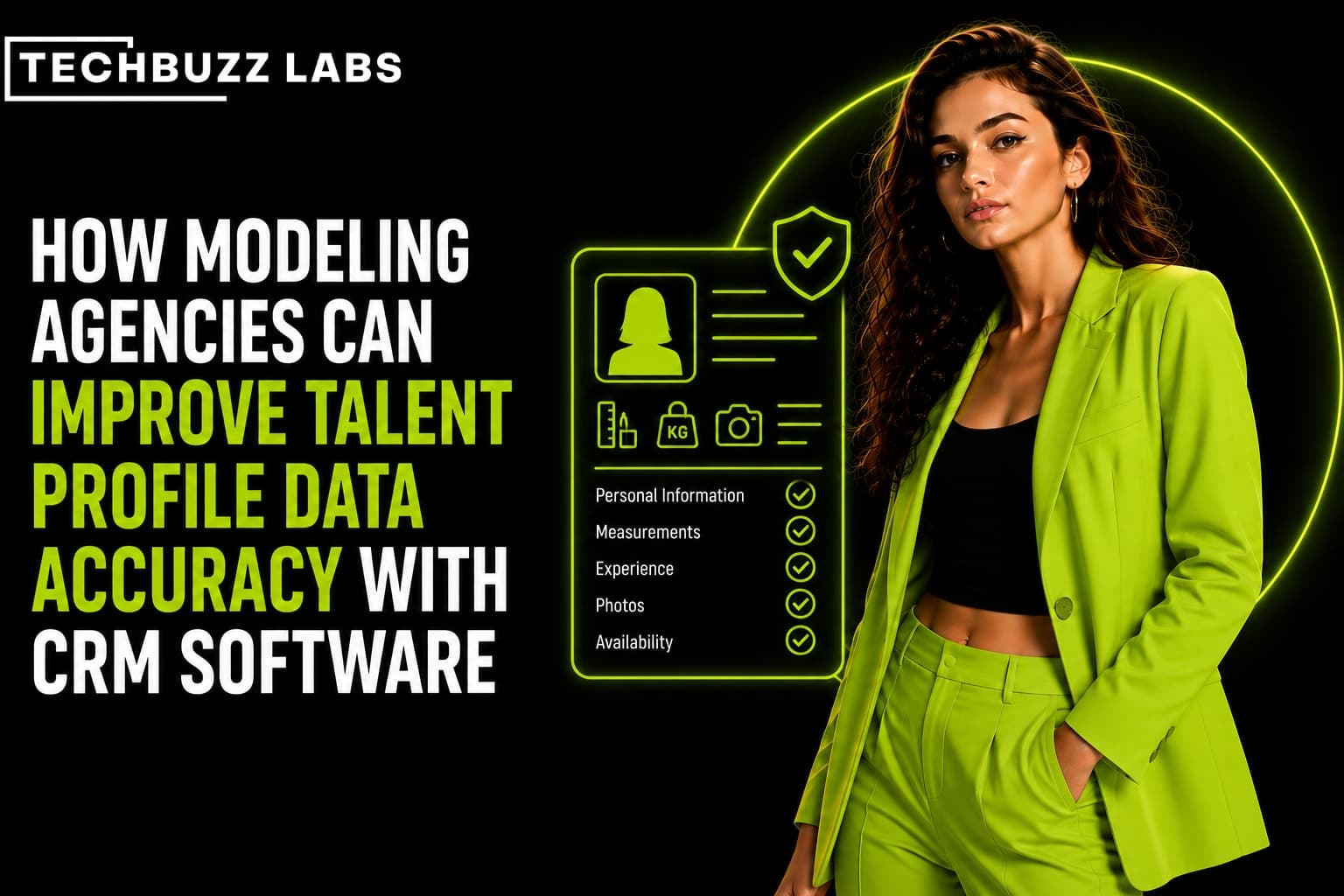
For a modeling agency, accurate talent information is essential for making the right decisions. Agents and clients rely on model profiles to review experience, measurements, skills, availability, portfolio information, and other professional details. When this information is outdated or incorrect, it can lead to unsuitable submissions, missed opportunities, scheduling problems, and unnecessary communication.
For modeling agencies in the USA, particularly those managing large talent rosters in markets such as New York, Los Angeles, Miami, Chicago, and San Francisco, maintaining accurate data can become increasingly challenging. CRM software can help agencies create a more organized system for collecting, updating, and managing talent information.
Why Accurate Talent Data Matters
A model's profile is often the first source of information an agent reviews when matching talent with a client request. If the profile contains outdated measurements, an old location, incorrect availability, or incomplete experience details, the agency may recommend talent who does not actually meet the project's requirements.
Accurate data helps agents make better decisions and allows agencies to present reliable information to clients. It can also reduce the need to repeatedly contact models or search through different files to confirm basic details.
As an agency grows, maintaining this accuracy manually becomes more difficult. A centralized CRM can provide a more structured approach.
Centralizing Model Information
One of the biggest advantages of CRM software is the ability to keep talent information in one centralized database.
Instead of storing model information across spreadsheets, email conversations, documents, and separate applications, agencies can maintain profiles within a single system. Each profile can contain relevant professional information, portfolio details, measurements, skills, experience, location, availability, and booking history.
Centralization makes it easier for agents to access the latest available information and reduces the risk of working with different versions of the same profile.
Allowing Models to Update Their Information
Talent information can change frequently. A model may move to another city, gain new experience, update their portfolio, change their measurements, or become available for different types of assignments.
A CRM system can support structured profile updates so that agencies have a consistent way to collect new information.
Instead of receiving updates through random emails or messages and manually changing several records, agencies can create a defined process for keeping profiles current.
This can significantly reduce administrative work while improving data consistency.
Using Required Fields and Standardized Information
Data accuracy also depends on how information is entered into the system.
A CRM can use standardized fields for important talent information. Instead of allowing every agent to record details differently, the agency can establish consistent formats for locations, measurements, skills, experience levels, availability, and other profile attributes.
Required fields can also help prevent important information from being left incomplete.
For example, before a model profile becomes active, an agency may require essential contact, professional, and portfolio information to be completed. This creates a more consistent database that is easier for agents to search and manage.
Reducing Duplicate Talent Profiles
Duplicate records can create another data accuracy problem.
A model might accidentally be added to the database more than once, especially when several team members are responsible for onboarding new talent. Multiple profiles can lead to conflicting information and make it difficult to determine which record is current.
A centralized CRM can help agencies establish processes for identifying and managing duplicate records. Maintaining one primary profile for each model gives agents a clearer source of truth.
Connecting Availability With Talent Profiles
Availability is one of the most important pieces of information when responding to client requests.
A model who looks perfect for a campaign may not be available on the required dates. If availability information is outdated, agents may submit unsuitable talent or need to contact models repeatedly to confirm their schedules.
Connecting availability information with the talent profile can give agents a more complete picture when searching for models.
This is particularly useful for U.S. agencies handling multiple castings and bookings simultaneously.
Improving Search and Filtering
Accurate information becomes much more valuable when agents can easily search it.
CRM software can allow agencies to filter talent based on different profile attributes. Agents may be able to search by location, experience, skills, availability, measurements, or other criteria relevant to a particular casting.
The quality of search results depends heavily on the quality of the underlying data. Keeping profiles accurate therefore helps agencies get more useful results when looking for suitable talent.
Creating a Regular Data Update Process
Agencies should not wait until information becomes obviously outdated before updating talent profiles.
A regular data review process can help identify profiles that need attention. Agencies can periodically ask models to confirm their information or use reminders to prompt agents to review important records.
CRM automation can make this process easier by generating reminders, notifications, or follow-up tasks for profiles that require updates.
This creates a proactive approach to data management rather than relying entirely on manual checks.
How TechBuzzLabs Can Help
TechBuzzLabs develops custom technology solutions for talent and casting agencies. A customized CRM or agency management system can be designed to organize talent profiles, availability, client requests, casting workflows, bookings, and other agency operations in one connected platform.
For U.S. modeling agencies managing growing talent databases, this type of system can provide a structured way to collect and maintain profile information. Agencies can build workflows around their specific requirements, including profile updates, data fields, search functionality, availability management, and internal processes.
The benefit of a custom solution is that the technology can be adapted to the agency's workflow instead of forcing the agency to work around a generic system.
Conclusion
Accurate talent profile data is essential for modern modeling agencies. Outdated or incomplete information can affect casting decisions, client communication, submissions, and bookings.
CRM software can help agencies improve data accuracy by centralizing talent information, standardizing profile fields, reducing duplicate records, connecting availability with profiles, and creating structured update processes.
For modeling agencies across the USA, investing in a reliable CRM workflow can make talent management more organized and efficient. With a system such as a customized platform from TechBuzzLabs, agencies can create a stronger foundation for managing accurate talent data as their roster and business continue to grow.