How Modeling Agencies Can Replace Multiple Tools With One Agency Management System
While each tool may serve a useful purpose, managing multiple disconnected platforms can create unnecessary complexity. Agents may need to enter the same information more than once, switch constantly between applications, and search through different systems to find important details.

Modern modeling agencies rely on technology to manage a wide range of daily activities. They may use spreadsheets for talent data, email for client communication, calendars for scheduling, cloud storage for portfolios, separate tools for casting, and additional software for bookings and internal collaboration.
While each tool may serve a useful purpose, managing multiple disconnected platforms can create unnecessary complexity. Agents may need to enter the same information more than once, switch constantly between applications, and search through different systems to find important details.
An agency management system can help solve this problem by bringing essential workflows into one centralized platform. For modeling agencies in the USA, a connected system can combine talent management, client relationship management, casting, submissions, availability, bookings, communication, and reporting.
TechBuzzLabs focuses on technology solutions for modeling and talent agencies, helping agencies explore more connected approaches to managing their operations.
The Problem With Using Multiple Disconnected Tools
Many agencies start by using simple tools because they are easy to access. A spreadsheet may manage talent information, while email handles client communication and a calendar tracks bookings.
As the agency grows, this approach can become harder to manage.
The same model information may exist in several places. An agent may update a talent profile in one system but forget to update it elsewhere. Important client feedback may remain inside an email inbox, while availability information is stored in a separate calendar.
This can lead to duplicate work, outdated records, communication gaps, and difficulty understanding the current status of a project.
An agency management system aims to create one central location for this information.
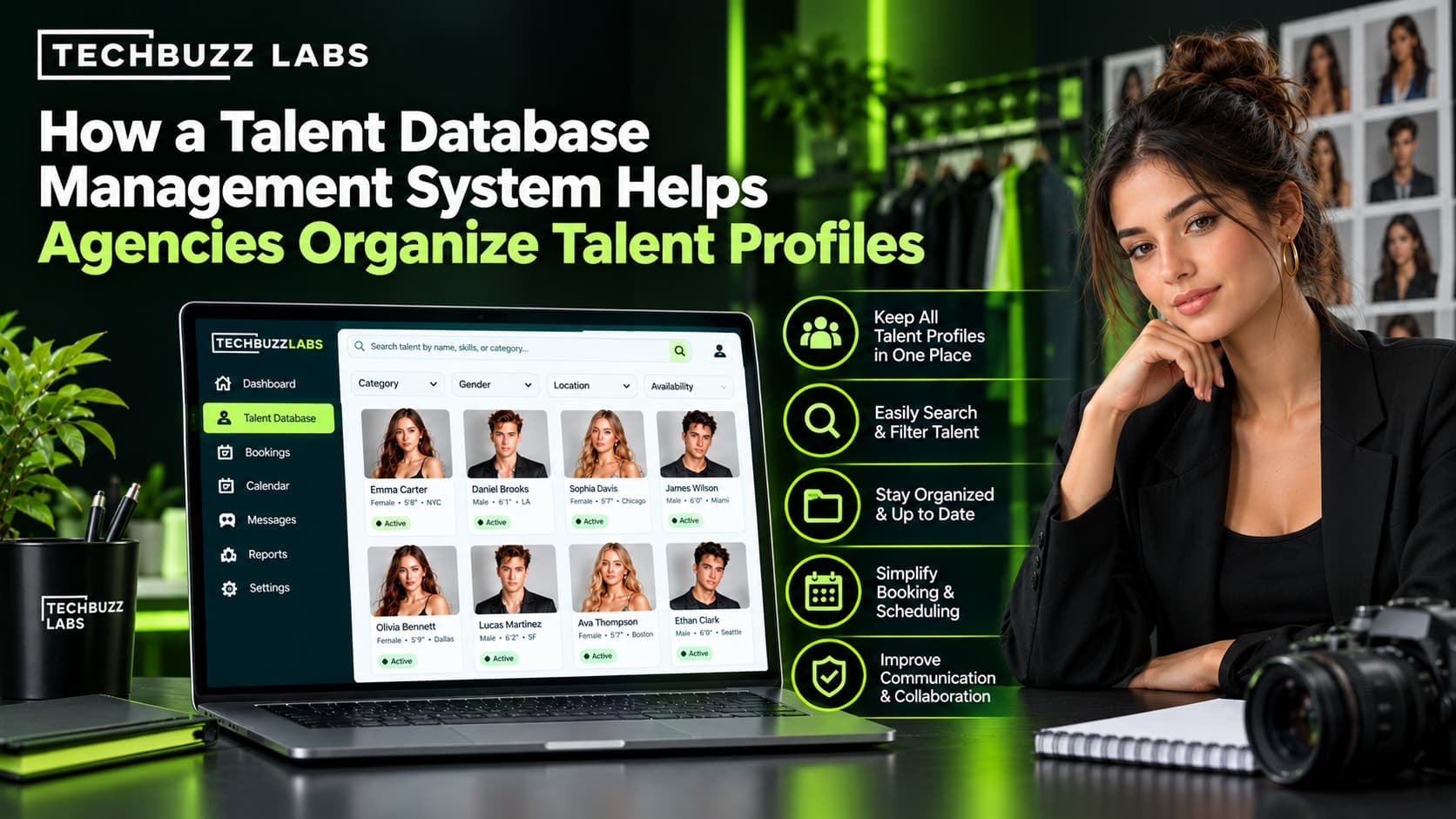
1. Replace Spreadsheets With a Centralized Talent Database
Spreadsheets are commonly used to manage model information, but they can become difficult to maintain as a talent roster grows.
A centralized agency management system can create individual digital profiles for each model.
These profiles may include information such as portfolio materials, professional experience, skills, location, availability, measurements, categories, and other agency-specific details.
Instead of maintaining multiple spreadsheets, authorized team members can access and update information within one system.
This can help agencies maintain more organized and consistent talent records.
2. Connect Client Management With Agency Operations
Modeling agencies manage relationships with brands, advertising agencies, photographers, production companies, retailers, and other clients.
When client information is stored only in email inboxes or personal contact lists, other team members may not have access to the complete history of the relationship.
An agency management system can include CRM functionality that connects client records with communication history, casting requests, submissions, and bookings.
When a returning client sends a new request, agents can review previous activity and gain useful context before responding.
This creates a more connected approach to client relationship management.
3. Bring Casting Into the Same System
Casting is closely connected to both talent and clients.
A client submits a request, the agency searches for suitable models, checks availability, prepares submissions, receives feedback, and may eventually secure a booking.
When these stages are managed through separate tools, agents may need to manually transfer information from one platform to another.
A centralized system can connect the entire workflow:
Client Request → Casting → Talent Search → Submission → Client Feedback → Selection → Booking
This can reduce duplicate data entry and provide better visibility into the progress of each opportunity.
4. Manage Model Availability in One Place
Availability is an important part of every modeling agency's workflow.
A model may be the perfect match for a campaign but unavailable on the required dates.
If availability is managed separately from talent profiles and bookings, agents may need to check several tools before responding to a client.
An agency management system can connect availability with talent records, castings, and bookings.
This gives agents a clearer view of schedules and can help reduce potential booking conflicts.
5. Simplify Model Submissions
Preparing model submissions can involve collecting photographs, portfolio materials, professional information, and other details.
When these files are spread across different folders and platforms, the process can take additional time.
A centralized system can connect relevant information directly to the talent profile.
When a new casting request arrives, agents can search for suitable talent and prepare submissions using information already available in the system.
This can help reduce repetitive administrative work and make submissions more consistent.
6. Connect Casting With Bookings
A successful casting usually leads to a booking workflow.
Once a client selects a model, the agency may need to manage dates, locations, rates, contracts, usage details, and other booking information.
With disconnected tools, agents may have to create a new record and manually transfer information.
An integrated agency management system can connect the booking to the original client, casting, and talent records.
The workflow can move naturally from:
Casting → Submission → Client Selection → Booking
This creates a more complete history of the opportunity and reduces duplicate work.
7. Reduce Internal Communication Gaps
Agencies often have several employees working with the same models, clients, or projects.
When information is stored across personal inboxes and individual files, team members may need to repeatedly ask each other for updates.
A centralized agency management system allows authorized users to access shared information.
Agents can review talent profiles, casting statuses, client feedback, availability, and booking details from one location.
This can improve collaboration and make it easier for another team member to continue work when someone is unavailable.
8. Automate Repetitive Tasks
Another advantage of using one agency management system is the ability to automate selected workflows.
Agencies may regularly send casting notifications, availability requests, client follow-ups, internal reminders, and booking confirmations.
Automation can reduce the amount of manual effort required for these repetitive activities.
For example, a system could remind an agent about an upcoming casting deadline or prompt a follow-up when a client has not responded.
Automation can help teams spend more time on talent development, client relationships, and other high-value work.
9. Improve Reporting and Business Visibility
When agency data is spread across several tools, creating reports can become difficult.
Managers may need to collect information from spreadsheets, calendars, email records, and booking systems before understanding overall performance.
A centralized agency management system can make reporting easier by keeping related information connected.
Agencies may analyze casting activity, submissions, bookings, client engagement, and other relevant operational data.
This can help managers identify workflow bottlenecks and make more informed business decisions.
10. Create a Scalable Technology Foundation
Using several tools may work when an agency is small, but the complexity can increase as more talent, clients, employees, and projects are added.
A centralized system can provide a stronger foundation for growth.
Instead of adding another application every time the agency develops a new requirement, the agency can use a connected platform that supports multiple workflows.
This can make technology easier to manage as operations expand.
How TechBuzzLabs Supports Connected Agency Workflows
TechBuzzLabs focuses on technology solutions for modeling and talent agencies, including talent management, CRM, casting management, workflow automation, and agency operations.
For agencies that have outgrown spreadsheets and disconnected applications, a centralized system can bring essential information into a more organized environment.
Talent profiles, client records, casting opportunities, availability, submissions, feedback, and bookings can be connected instead of managed separately.
This approach can help agencies reduce administrative complexity while creating workflows that are easier to manage and scale.
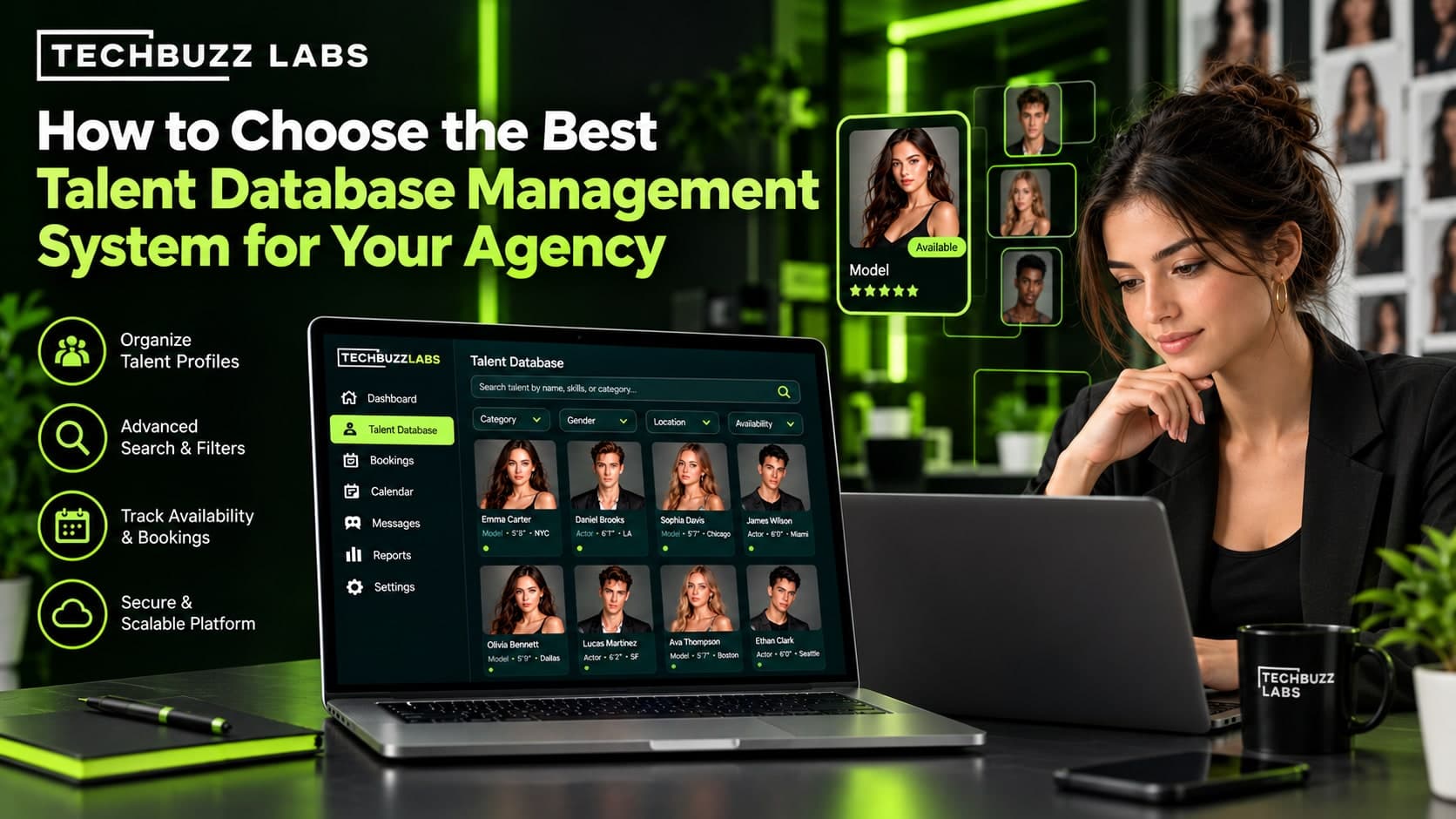
What Should an Agency Management System Include?
When evaluating an agency management platform, modeling agencies should consider whether it supports their complete workflow.
Important features may include:
Centralized talent profiles and databases
Client relationship management
Advanced talent search and filtering
Casting and submission management
Model availability tracking
Booking and scheduling tools
Client feedback tracking
Workflow automation and reminders
Team collaboration
Reporting and analytics
Role-based access and data management
The goal should not simply be to replace multiple tools with one complicated platform. The right system should make daily operations simpler and help information move smoothly between different stages of the agency workflow.
Conclusion
Using multiple disconnected tools can create unnecessary administrative work for modeling agencies. Agents may spend valuable time switching between platforms, updating duplicate records, searching for information, and trying to understand the latest status of a project.
A centralized agency management system can bring together talent management, client relationships, casting, submissions, availability, bookings, automation, and reporting.
For modern modeling agencies in the USA, this connected approach can improve organization, support faster workflows, strengthen team collaboration, and provide better visibility across agency operations.
With technology solutions from TechBuzzLabs, agencies can move toward a more unified digital environment where essential workflows are connected in one place. By replacing disconnected tools with a centralized agency management system, modeling agencies can spend less time managing software and more time managing talent, clients, and opportunities.