Mobile First Web Design in 2026 Why 70 Percent of Your Visitors Are Judging You on Their Phone First
In 2026, mobile first design is no longer a trend. It is the standard.
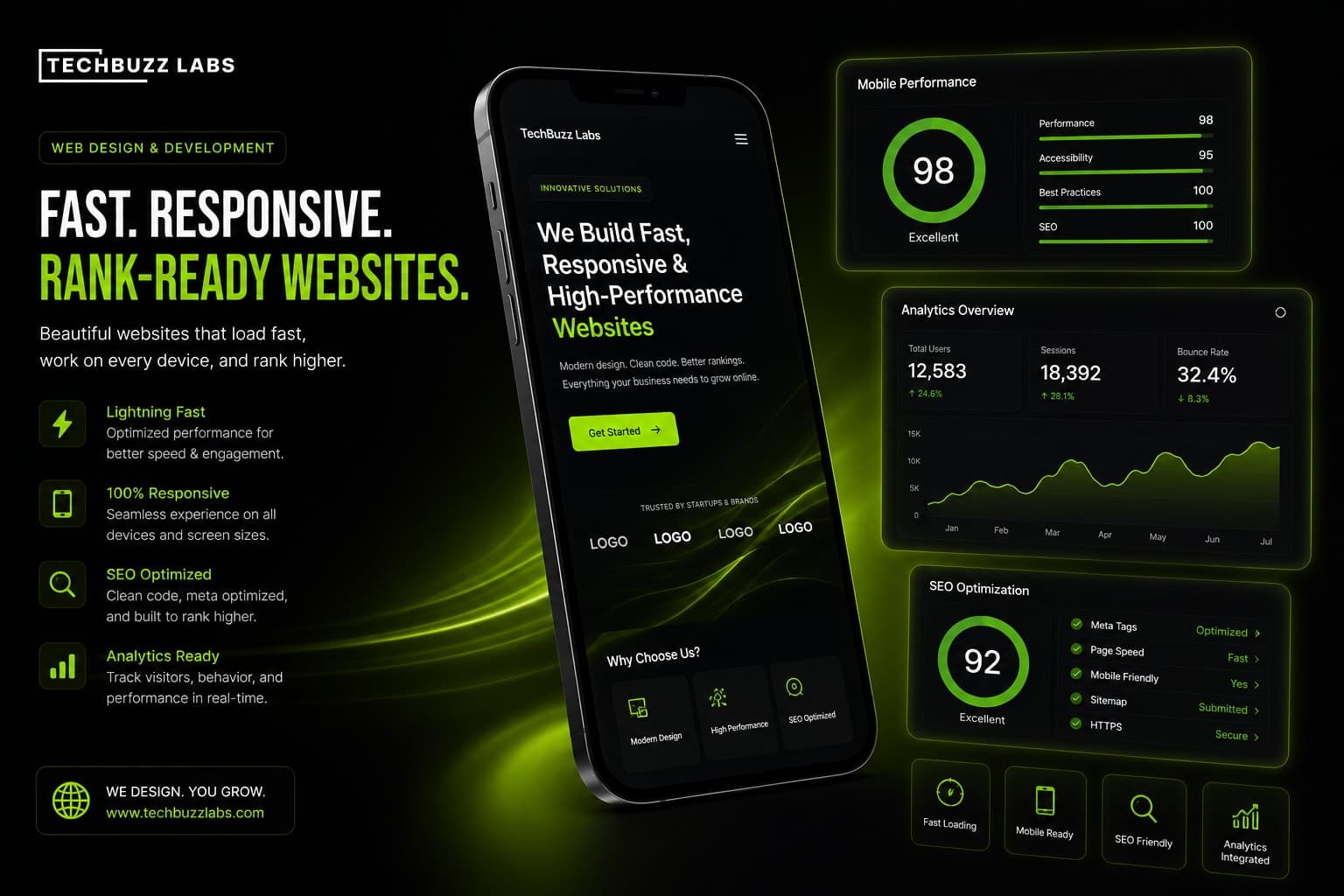
In 2026, mobile first design is no longer a trend.
It is the standard.
Across the United States, most website traffic now comes from smartphones. This means the majority of visitors experience your business for the first time on a mobile screen instead of a desktop computer.
Businesses that ignore this shift are losing traffic, engagement, and conversions.
The first reason mobile first design matters is user behavior.
People browse quickly on their phones. If a website loads slowly or feels difficult to navigate, users leave almost immediately.
The second reason is SEO.
Google prioritizes mobile performance heavily when ranking websites. Poor mobile optimization directly impacts visibility in search results.
The third reason is trust.
Modern users associate clean mobile experiences with professionalism and credibility.
A slow or outdated mobile interface damages confidence instantly.
The fourth reason is conversion performance.
Forms, booking systems, and call to action buttons must function smoothly on smaller screens. If users struggle to interact with the website, conversion rates drop significantly.
Another major factor is speed optimization.
Large images, cluttered layouts, and inefficient code hurt mobile performance.
High performing websites in 2026 focus on lightweight structure, fast loading times, and simple navigation.
Accessibility also matters.
Mobile first design improves usability across different devices and user behaviors.
The businesses winning online today are not simply building attractive websites.
They are building mobile experiences designed around how people actually browse.
In 2026, your website is often your first impression.
And most users are seeing it from their phone first.