Model Management Software: A Complete Guide for Modeling Agencies
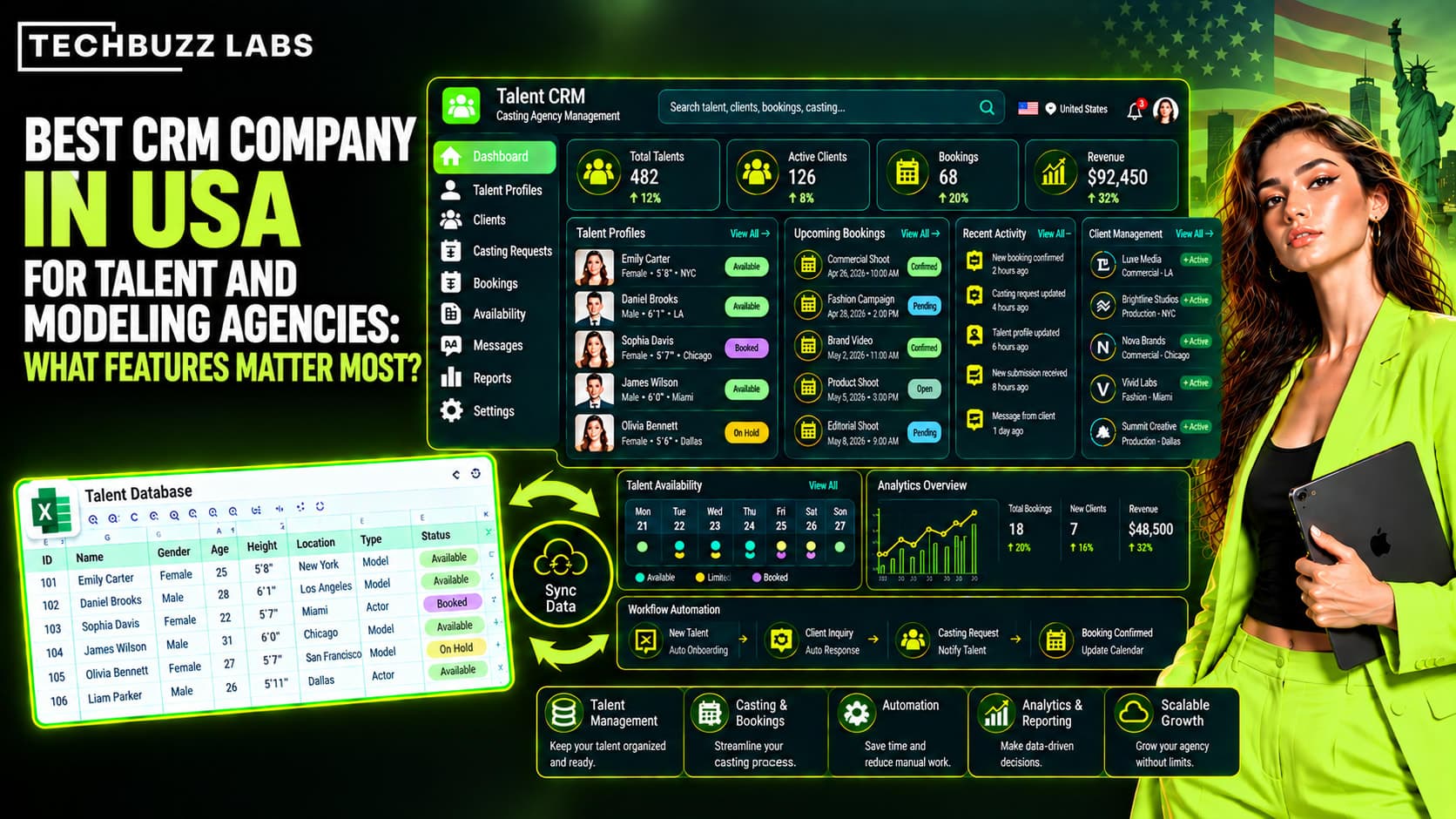
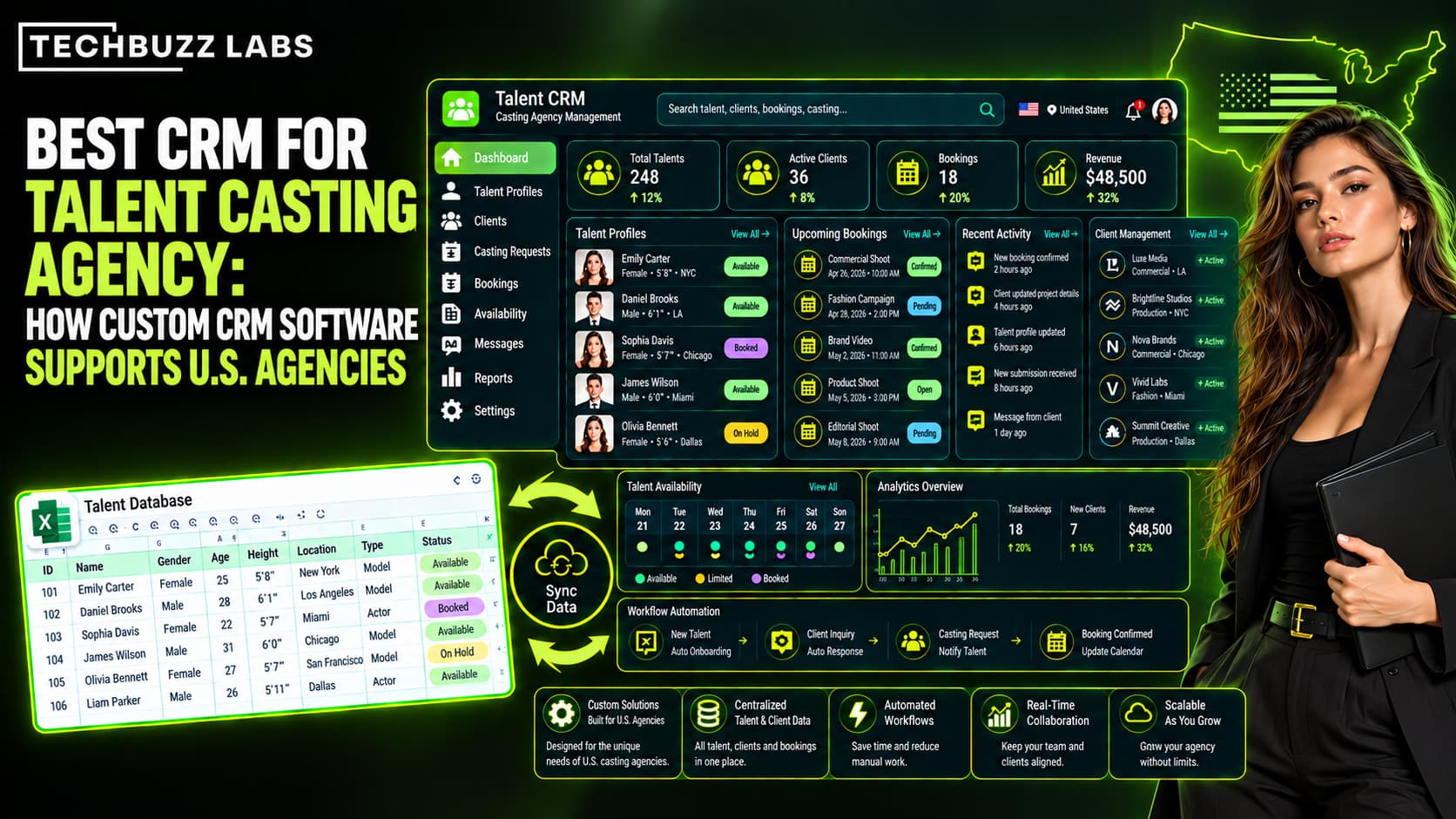
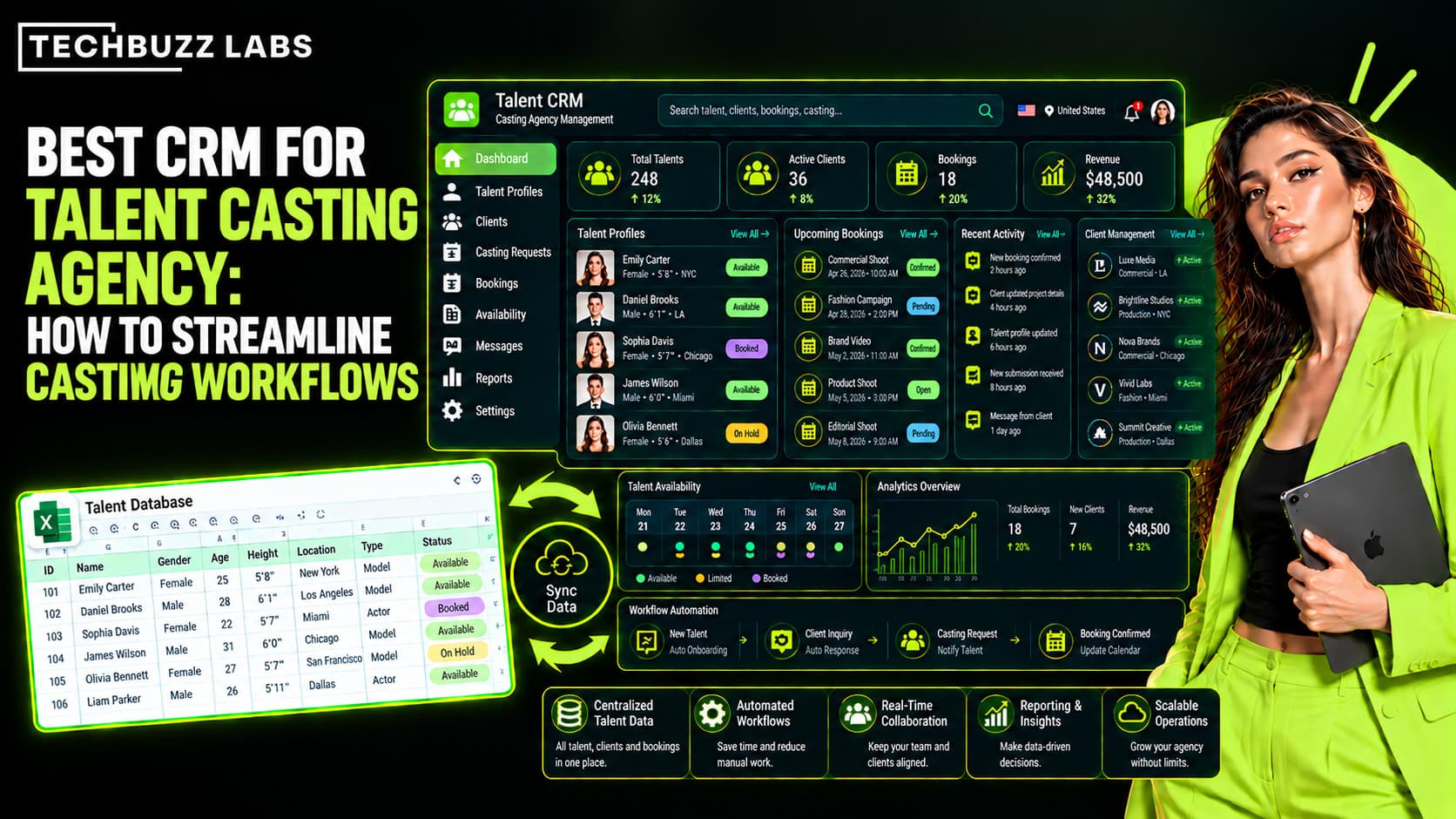
Instead of storing model information in separate spreadsheets and folders, agencies can maintain detailed digital profiles in one system.
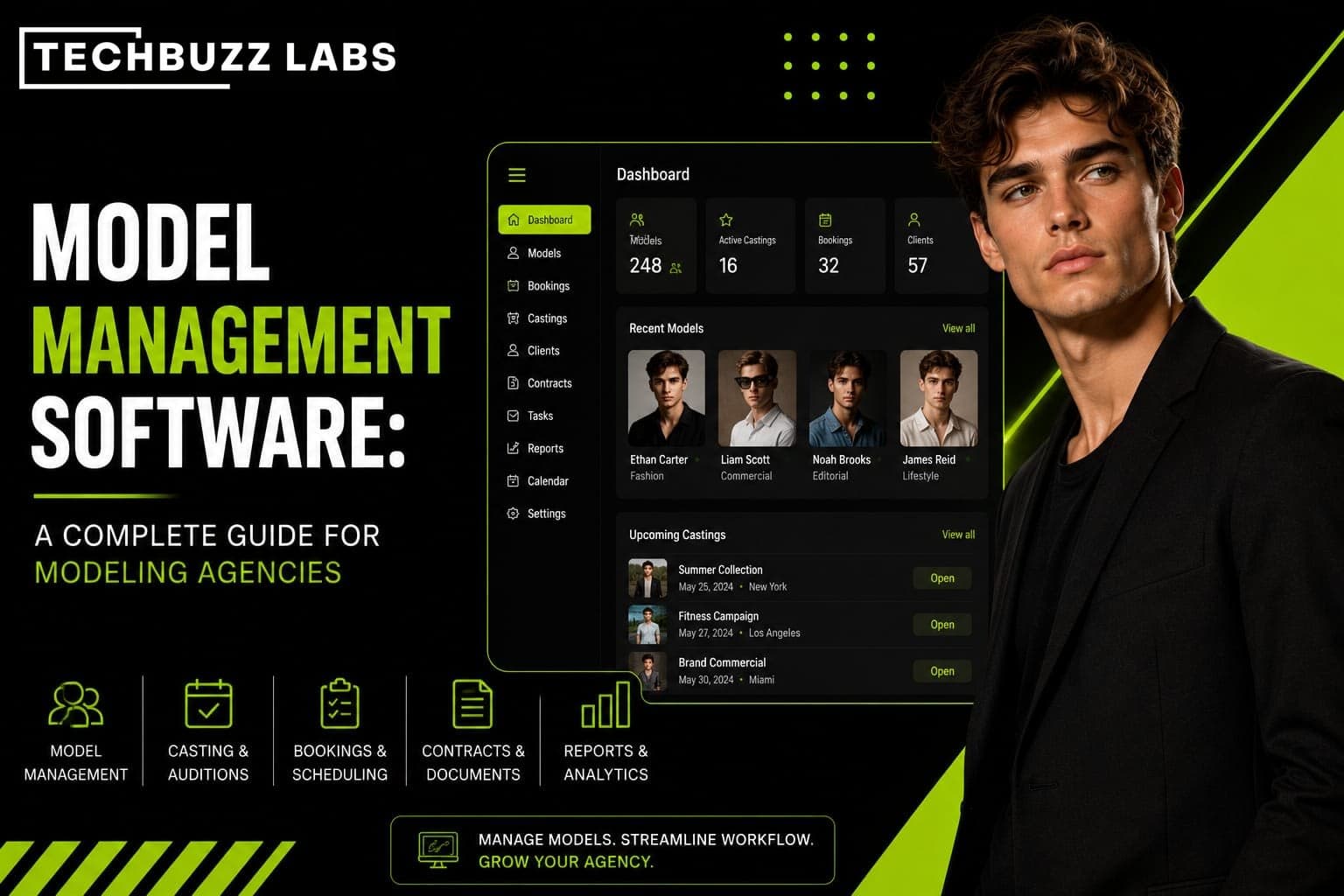
Managing a modeling agency involves much more than discovering talented models. Agencies must organize model profiles, portfolios, measurements, availability, castings, bookings, clients, schedules, contracts, and communications. As an agency grows, handling these tasks through spreadsheets, emails, and separate files can become time-consuming and difficult to maintain.
This is where model management software can make a significant difference. Designed specifically to organize talent and agency operations, model management software gives agencies a centralized platform for managing their models and day-to-day workflows. For modeling agencies in the USA, the right software can improve efficiency, reduce administrative work, and make it easier to manage relationships with both models and clients.
At TechBuzzLabs, we recognize how technology is transforming the modeling and talent industry. Modern software can help agencies move away from disconnected systems and create a more organized, scalable approach to model management.
What Is Model Management Software?
Model management software is a digital platform designed to help modeling agencies manage their talent and business operations. It can centralize information about models, clients, castings, bookings, availability, portfolios, and other important agency activities.
Depending on the platform, model management software may also include CRM capabilities, casting management, scheduling, communication tools, financial tracking, reporting, and workflow automation.
Why Do Modeling Agencies Need Model Management Software?
A growing agency can manage hundreds or even thousands of models. Each model may have different measurements, skills, experience, locations, availability, portfolios, and booking histories.
At the same time, clients may have specific requirements for every project.
Manually searching through large amounts of information can slow down the agency's response time. Model management software helps agents quickly access and organize the information they need.
For example, an agent working with a U.S. fashion brand may need models in a specific city who meet certain requirements and are available on particular dates. With centralized software, the agent can use search and filtering tools instead of manually checking multiple spreadsheets.
Key Features of Model Management Software
Centralized Model Profiles
A strong model management platform should provide detailed profiles for every model. These profiles can include photographs, measurements, skills, experience, location, contact information, availability, and portfolio details.
Having everything in one place allows agents to quickly review and present suitable talent to clients.
Portfolio Management
Photography is central to the modeling industry. Agencies need an organized way to store and manage model portfolios.
Software can allow teams to upload, update, categorize, and access model images from a central location. This makes it easier to prepare talent submissions for clients and casting opportunities.
Casting Management
Model management and casting are closely connected. Agencies can use software to create casting calls, define client requirements, review potential talent, and track submissions.
A centralized casting workflow can make it easier to manage multiple projects without losing important information.
Booking Management
After a model is selected, agencies need to coordinate the booking process. Model management software can help track booking dates, clients, locations, project details, fees, and booking status.
This can also help agencies reduce scheduling conflicts when models are involved in multiple projects.
Model Availability
Knowing when a model is available is essential for successful bookings.
A centralized availability calendar can help agents determine which models are free for a particular assignment. Models and agency staff can also update availability as schedules change.
Client Relationship Management
Modeling agencies depend on strong relationships with brands, photographers, advertising agencies, retailers, production companies, and other clients.
Software with CRM capabilities can organize client contact information, communication history, project details, and previous bookings.
This allows agents to understand client relationships and follow up more effectively.
Benefits of Model Management Software
One of the biggest advantages is better organization. Agencies can keep model, client, casting, and booking information in a centralized system.
Another benefit is time savings. Agents can search for talent, access portfolios, check availability, and manage bookings without switching between multiple applications.
Software can also improve communication. Centralized records make it easier for teams to see important updates and maintain consistent information.
For growing agencies, scalability is equally important. A software platform can help an agency manage an increasing number of models and clients without relying entirely on manual processes.
Model Management Software vs. Spreadsheets
Spreadsheets can be useful for small agencies or early-stage operations. However, they can become difficult to manage as the amount of data increases.
Multiple spreadsheets may contain duplicate or outdated information, while different employees may maintain separate versions of the same records.
Model management software provides a more structured environment where model profiles, portfolios, castings, bookings, and client information can be connected.
For agencies managing a growing talent database, this centralized approach can provide better visibility and efficiency.
How to Choose the Right Software
Before selecting model management software, agencies should identify their most important requirements.
Consider the number of models you represent, the size of your team, the number of clients you manage, your casting process, booking workflow, reporting needs, integrations, security requirements, and budget.
Ease of use should also be a major consideration. A platform with extensive features will not be effective if agents and models struggle to use it.
Agencies should also consider whether the software can scale as the business grows.
Data Security and Privacy
Modeling agencies handle significant amounts of personal and professional information. Model profiles may contain photographs, contact information, measurements, contracts, and availability details.
When choosing software, agencies should evaluate security features such as user permissions, access controls, backups, and data protection.
For U.S. agencies working with talent and clients across different states or internationally, understanding applicable privacy and data-handling requirements is also important.
The Future of Model Management
The modeling industry is becoming increasingly digital. Online portfolios, digital casting, virtual communication, automated workflows, and centralized talent databases are changing how agencies operate.
Modern model management software can bring these processes together and help agencies respond more quickly to clients while maintaining accurate information about their talent.
At TechBuzzLabs, we understand the growing connection between technology and modeling operations. Digital solutions can help agencies create efficient workflows, improve talent management, and build stronger relationships with clients.
Conclusion
Model management software can help modeling agencies organize their talent, clients, castings, bookings, portfolios, schedules, and communications from a centralized platform.
For agencies in the USA, adopting the right software can reduce administrative work, improve productivity, and make it easier to scale operations as the agency grows.
Whether an agency represents a small group of emerging models or manages a large professional talent database, the right technology can provide a more efficient foundation for daily operations. By combining strong talent management with modern digital tools, agencies can spend more time developing models, serving clients, and building long-term business relationships.