No Code MVPs vs Traditional Development A Real Cost Breakdown for 2026
In 2026, founders across the United States are faced with a critical decision when building a product. Should they choose no code tools or invest in traditional development?
In 2026, founders across the United States are faced with a critical decision when building a product.
Should they choose no code tools or invest in traditional development?
The answer often comes down to cost, speed, and long term goals.
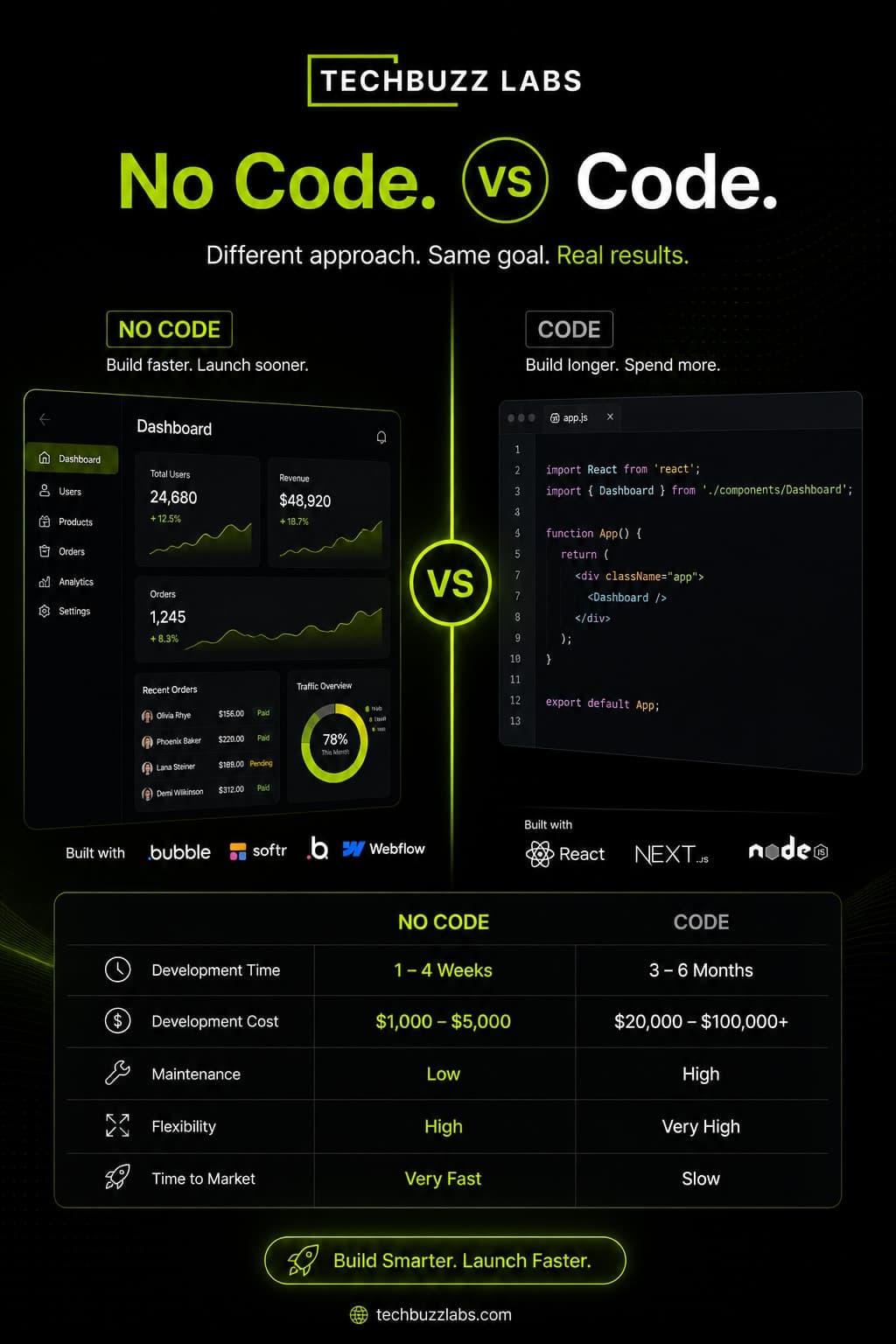
Traditional development involves hiring developers, designers, and possibly a full team. This approach offers deep customization and scalability, but it comes with high upfront costs.
Building even a simple MVP can take months and require significant investment.
No code development offers a different path.
Using visual platforms, founders can build functional applications without writing code. This dramatically reduces both cost and development time.
A no code MVP can often be launched in weeks instead of months.
The cost difference is substantial.
Traditional development can cost thousands or even tens of thousands of dollars depending on complexity. No code tools typically require a much smaller investment, often limited to platform subscriptions and setup time.
Speed is another major advantage.
In fast moving markets, launching quickly allows founders to test ideas, gather feedback, and adjust before competitors.
However, traditional development still has its place.
For complex applications that require advanced performance, custom architecture, or large scale systems, custom development may be necessary.
The key is choosing the right approach for your stage.
In early stages, no code is ideal for validation and rapid testing.
As the product grows, transitioning to custom development becomes more relevant.
In 2026, the smartest founders in the USA are not choosing one over the other.
They are using both strategically.