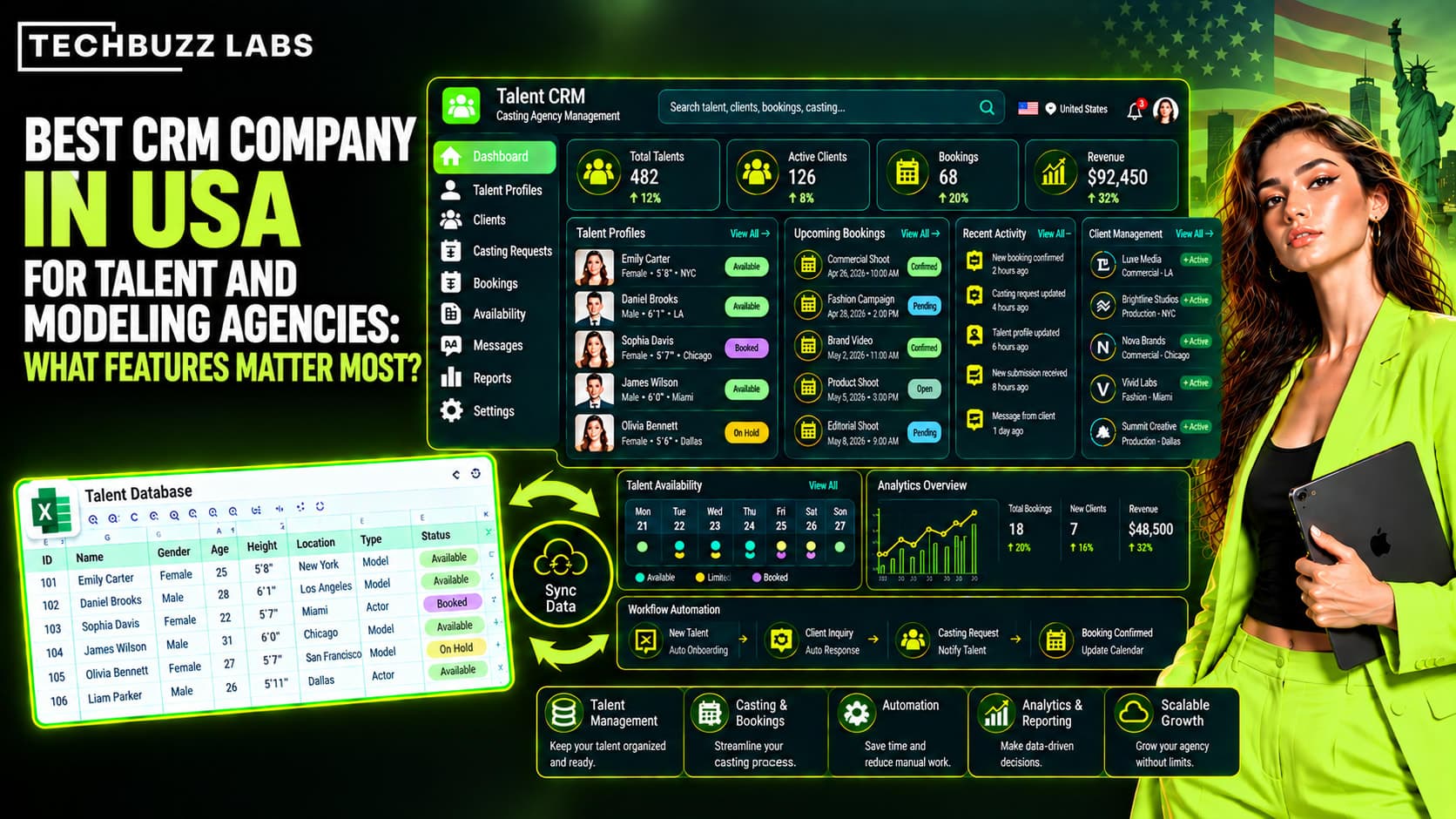
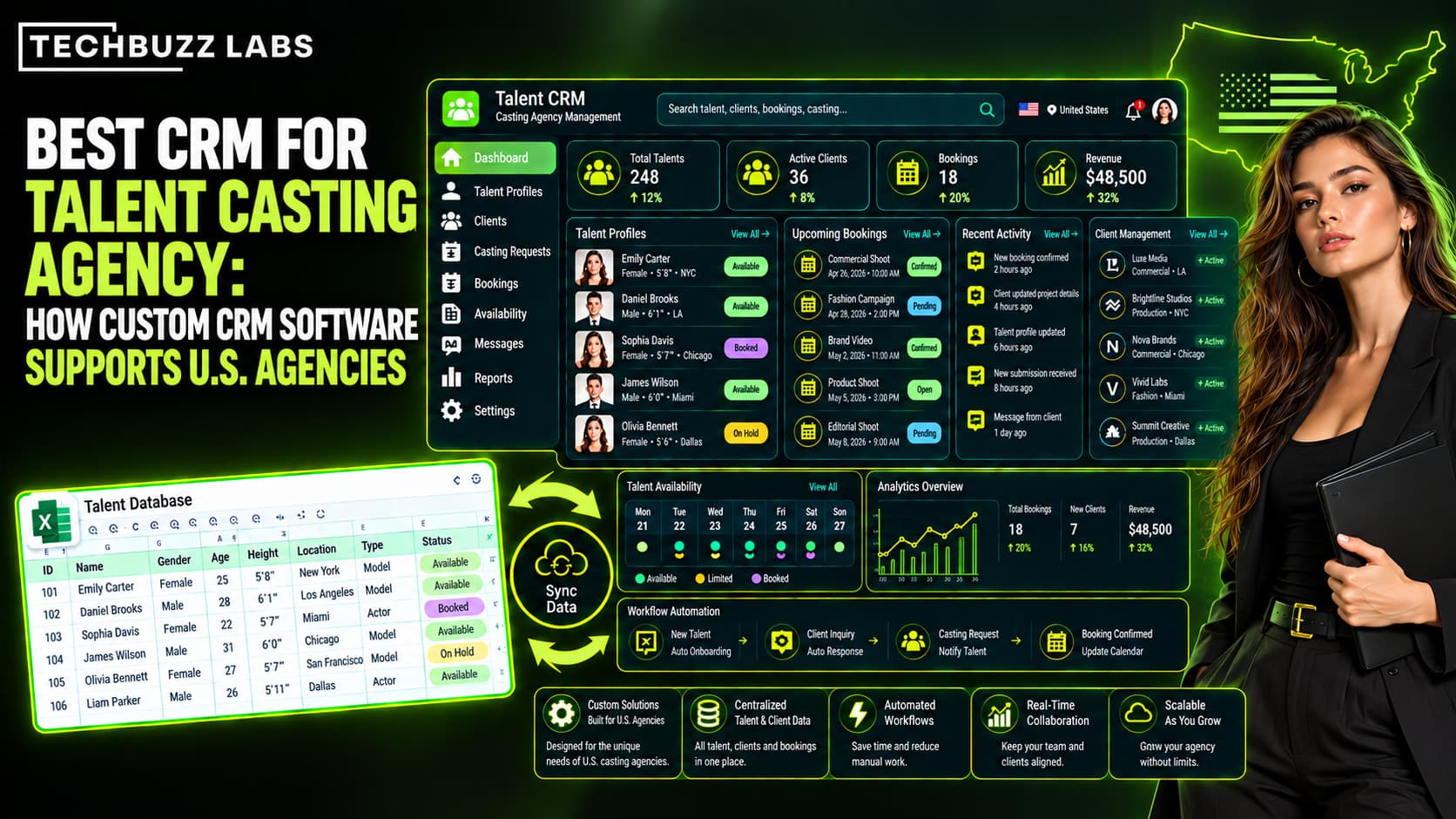
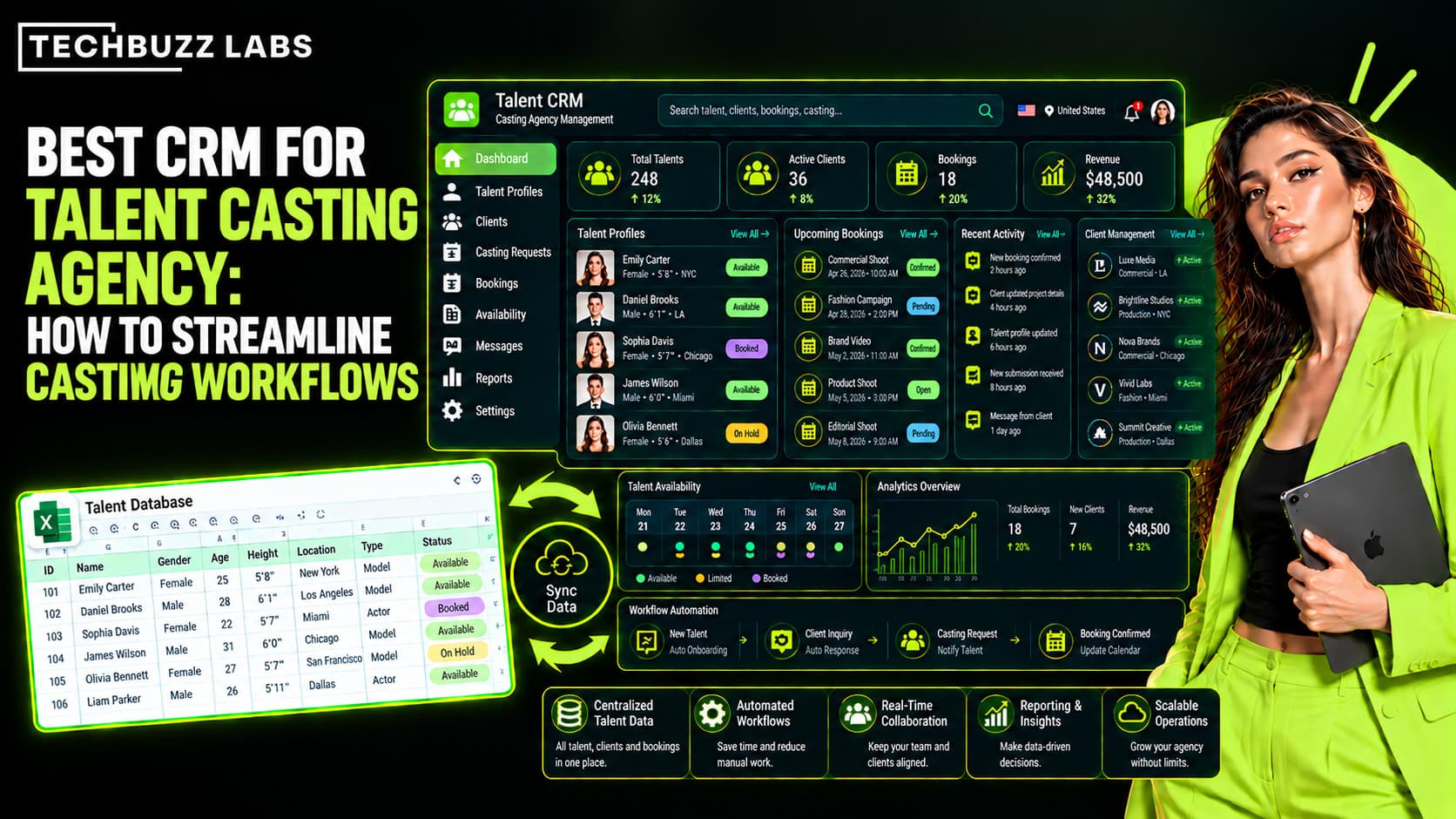
Talent Agency CRM: How to Manage Models, Clients, and Bookings
These systems may allow agencies to manage model profiles, portfolios, client information, casting calls, bookings, availability, communications, and project details from one platform.
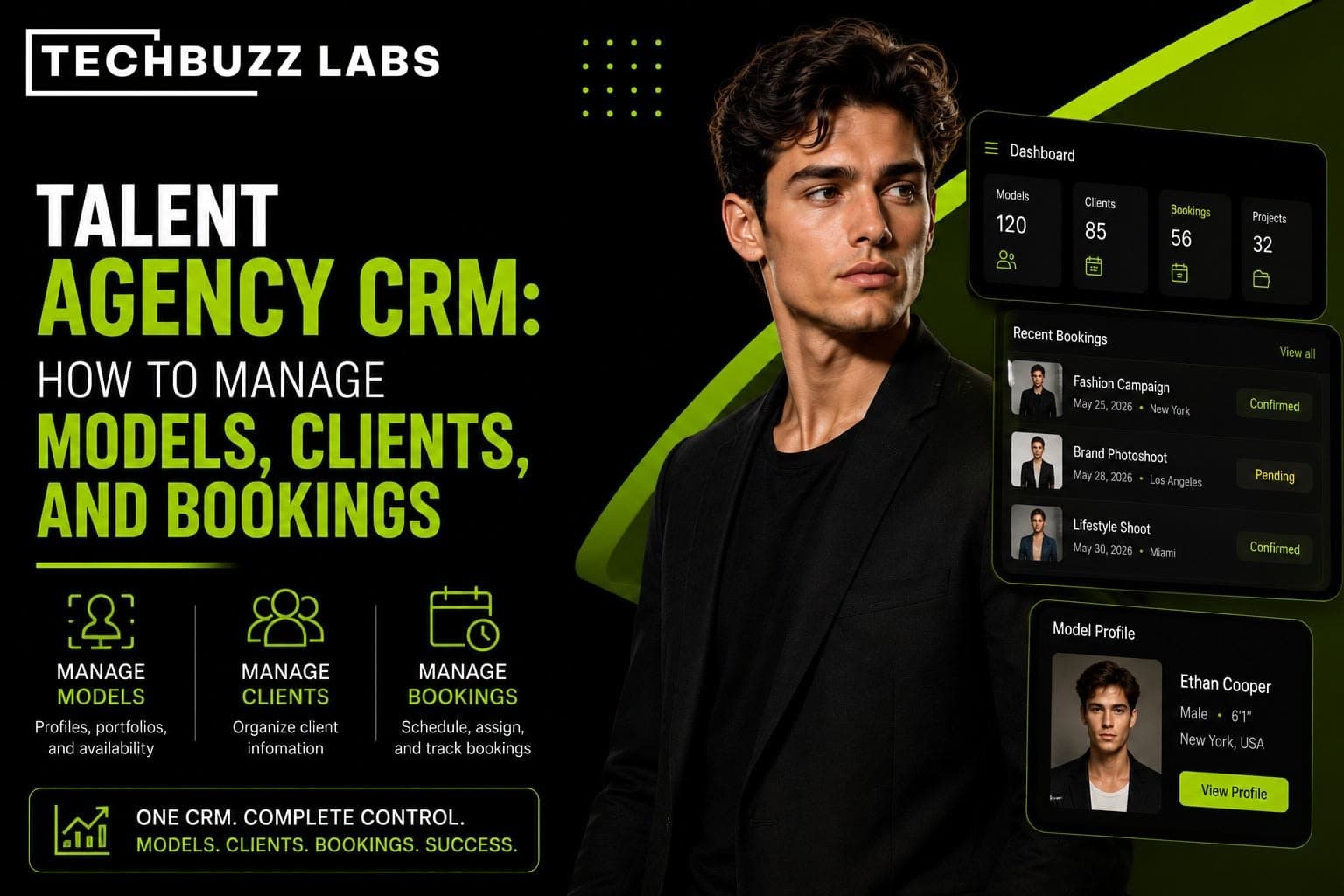
Managing a talent agency requires much more than finding talented models and connecting them with clients. Agencies need to organize model profiles, client relationships, casting opportunities, bookings, schedules, payments, communications, and contracts. When this information is managed through spreadsheets, emails, and disconnected applications, daily operations can quickly become complicated.
A Talent Agency CRM can help solve these challenges by bringing important information into one centralized system. For modeling and talent agencies in the USA, CRM technology can improve organization, simplify workflows, and help teams manage growing numbers of models and clients more efficiently. TechBuzzLabs highlights the importance of digital solutions in helping modern agencies adapt to an increasingly technology-driven modeling industry.
What Is a Talent Agency CRM?
A Talent Agency CRM is software designed to help agencies manage relationships with both talent and clients. While traditional CRM platforms are primarily focused on customer relationships, a talent-focused CRM can include features specifically designed for agencies.
Instead of searching through multiple spreadsheets or email conversations, agents can access relevant information from a centralized database.
Why Do Talent Agencies Need a CRM?
A growing U.S. modeling agency may represent dozens, hundreds, or even thousands of models. At the same time, it may work with fashion brands, advertising agencies, photographers, retailers, production companies, and other clients.
Managing all these relationships manually can create several challenges. Information may become outdated, duplicate records may appear, and important communications can get lost.
A CRM provides a structured way to organize information and connect related records. This can help agents respond to client requests faster and spend more time developing talent and building business relationships.
Managing Model Profiles
One of the most important functions of a talent agency CRM is model management.
A centralized profile can include information such as:
Professional photographs
Measurements
Location
Modeling categories
Skills and experience
Contact information
Availability
Portfolio details
Previous bookings
When a client requests specific talent, agents can search the database instead of manually reviewing separate files.
For agencies operating across U.S. markets such as New York, Los Angeles, Miami, Chicago, and San Francisco, organized model profiles can make it easier to identify suitable talent in different locations.
Managing Client Relationships
Client relationships are essential to the success of a talent agency. A CRM can store information about brands, photographers, advertising companies, retailers, production teams, and other organizations.
Agents can record contact details, previous projects, communication history, preferences, and booking information.
Having this information available can help agencies personalize their communication and identify opportunities for repeat business.
For example, if a fashion brand has previously booked several models from an agency, the agency can review the client's history before recommending talent for a new campaign.
Streamlining Casting Management
Casting is another major area where a talent agency CRM can provide value.
Agents can organize casting requirements, project information, deadlines, model submissions, and selection status. Search and filtering features can help identify models who match the client's requirements.
Instead of reviewing hundreds of profiles manually, agents can narrow the database using relevant criteria such as location, availability, experience, modeling category, or other project requirements.
This can make the casting process more efficient and organized.
Managing Bookings and Schedules
Once a model is selected, the agency needs to coordinate the booking.
A CRM can help track project dates, locations, clients, booking status, fees, and other relevant information. Calendar tools can also help agents monitor model availability and prevent scheduling conflicts.
For agencies managing multiple bookings simultaneously, having a centralized schedule can make daily operations much easier.
Models can also benefit when booking details and updates are communicated through an organized system.
Improving Communication
Talent agencies communicate constantly with models and clients. Emails, phone calls, messages, casting invitations, reminders, and booking updates can quickly become difficult to track.
A CRM can help centralize communication and create follow-up reminders. This allows agents to keep track of important conversations and ensure that tasks are completed on time.
Automation can also be used for routine notifications, although important client and model relationships should still receive personalized communication.
Reporting and Business Insights
A talent agency CRM can also provide valuable business insights.
Agencies can track information such as the number of bookings, active clients, casting activity, revenue, and project history. These reports can help managers understand which clients generate the most business and which areas of the agency are growing.
Data can also help agencies identify operational problems and make more informed decisions about future investments.
Data Security and Privacy
Talent agencies handle personal and professional information about models and clients. This may include photographs, contact details, measurements, contracts, payment information, and other business records.
For this reason, agencies should consider security when choosing a CRM. Important features can include user permissions, access controls, secure backups, and appropriate data protection measures.
Agencies should also understand the privacy and data-handling requirements that apply to their operations, particularly when working with talent across different states or internationally.
How to Choose the Right Talent Agency CRM
The best CRM depends on an agency's specific needs. Before choosing a platform, consider the number of models and clients you manage, the size of your team, your casting process, booking workflow, reporting requirements, integrations, security needs, and budget.
Ease of use is also important. A system may offer many advanced features, but it will not be effective if agents and other team members find it difficult to use.
Scalability should also be considered. The CRM should be capable of supporting the agency as its model database, client base, and booking volume increase.
The Role of TechBuzzLabs
Technology is becoming an increasingly important part of modern talent management. TechBuzzLabs recognizes how CRM platforms, model management systems, and casting software can help agencies organize their operations and improve digital workflows.
By adopting suitable technology, agencies can reduce repetitive administrative work while creating a more organized experience for models, clients, and internal teams.
Conclusion
A Talent Agency CRM can help modeling agencies manage models, clients, castings, bookings, schedules, and communications from one centralized platform. For agencies in the USA, this can be especially valuable as they expand into competitive markets and manage increasingly large talent databases.
The right CRM can reduce administrative complexity, improve client relationships, prevent scheduling issues, and provide useful business insights. However, technology should support—not replace—the personal relationships and professional judgment that are essential to the talent industry.
With an effective CRM strategy and modern technology solutions, agencies can create more efficient workflows, provide better service to models and clients, and build a stronger foundation for long-term growth.