Talent Agent Software Features Every Modern Agency Should Look For
Agents need quick access to model and talent information, including professional profiles, photographs, portfolios, experience, skills, locations, and other relevant details.

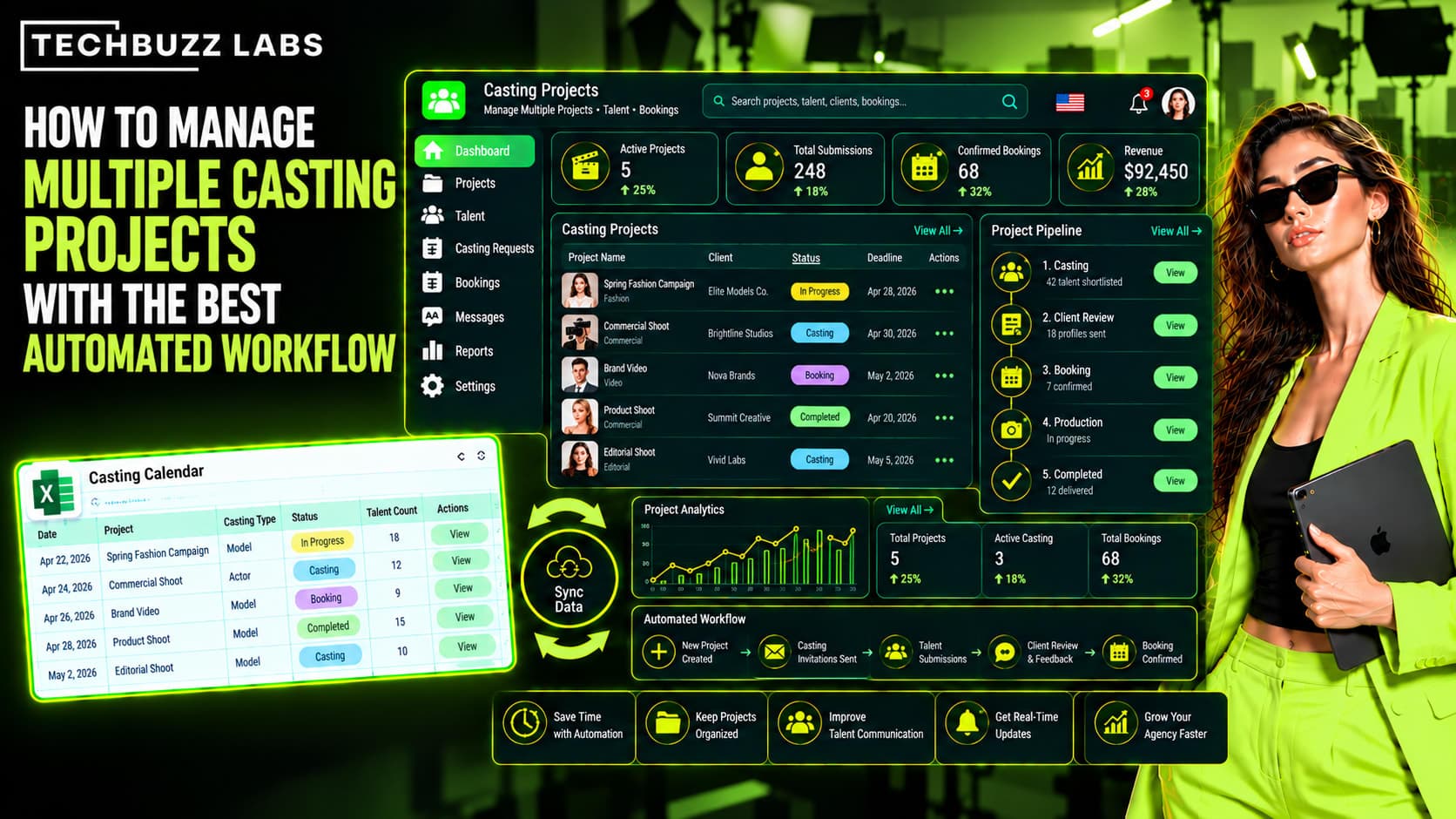
The talent industry is becoming increasingly digital, and modern agencies need more than spreadsheets and email to manage their daily operations. Talent agents may handle model profiles, casting requests, client relationships, availability, submissions, bookings, and follow-ups all at the same time. Without the right technology, these processes can become difficult to coordinate as an agency grows.
Talent agent software can centralize these activities and give agencies a structured way to manage their entire workflow. For agencies in the USA, choosing software with the right features can improve efficiency, reduce repetitive administrative work, and make it easier to manage growing talent pools.
TechBuzzLabs provides technology solutions for modeling and talent agencies, helping businesses build connected digital workflows for talent management, casting, clients, and bookings.
1. Centralized Talent Database
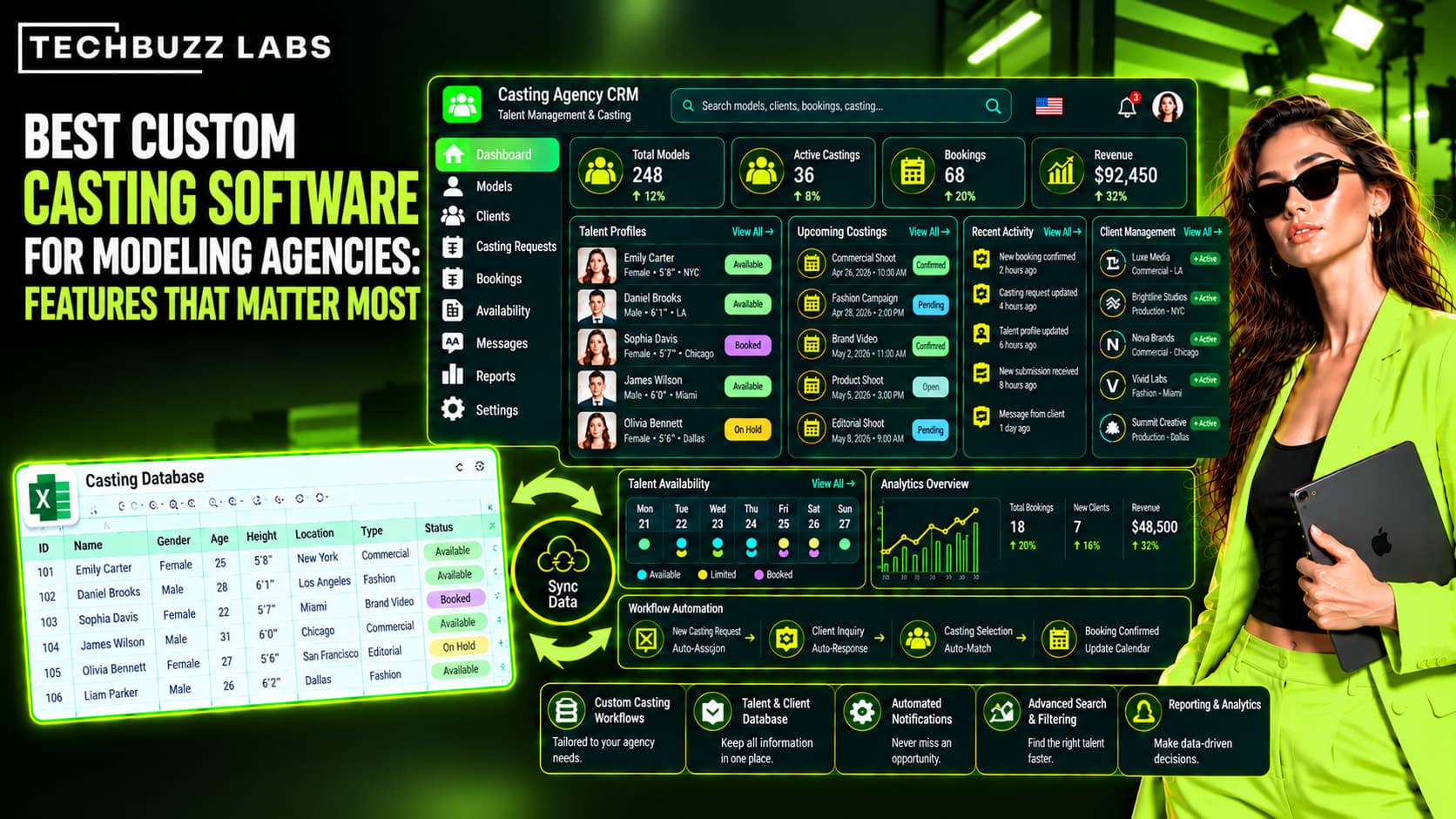
A searchable talent database should be one of the most important features of any talent agent software.
Agents need quick access to model and talent information, including professional profiles, photographs, portfolios, experience, skills, locations, and other relevant details.
Instead of searching through multiple spreadsheets and folders, agents can use a centralized system to find the right talent.
For agencies representing hundreds or thousands of people, this can significantly simplify everyday talent management.
2. Advanced Talent Search and Filters
A large database is only useful if agents can search it efficiently.
Modern talent agent software should provide flexible search and filtering capabilities.
Agents may need to find talent based on location, category, experience, skills, availability, or other agency-specific criteria.
For example, if a client needs commercial models in Los Angeles, an agent should be able to narrow the database quickly rather than manually review every profile.
Efficient search can help agencies respond to casting requests faster.
3. Digital Model Profiles
Every model or talent should have a well-organized digital profile.
Profiles can contain photographs, portfolio materials, professional experience, measurements, skills, location, contact information, and availability.
The system should make it easy for authorized staff to update these records as talent gain experience or update their portfolios.
Keeping information current helps agents provide clients with accurate and relevant talent recommendations.
4. Casting Management
Casting is central to many talent agencies, so software should make it easy to create and manage casting opportunities.
Agents should be able to record project requirements, client information, deadlines, dates, locations, and talent criteria.
The system should also allow teams to track the status of each casting.
For example:
New → Talent Search → Submitted → Shortlisted → Selected → Booked
This provides a clear overview of active opportunities.
5. Client Relationship Management
Talent agents do not only manage talent; they also manage relationships with clients.
A CRM feature allows agencies to organize client information, contacts, communication history, previous projects, and booking activity.
This can help agents understand client preferences and provide more personalized service.
When a repeat client sends a new request, the agent can review previous projects before recommending talent.
6. Availability Management
Availability tracking is another essential feature.
A model may be a perfect fit for a project but unavailable on the required date.
Talent agent software should allow agencies to manage schedules and connect availability with casting and booking information.
This can reduce unnecessary communication and help agents avoid potential scheduling conflicts.
For U.S. agencies operating across markets such as New York, Los Angeles, Miami, and Chicago, centralized scheduling can be especially valuable.
7. Talent Submission Tools
Once agents identify suitable talent, they need to present those profiles to clients.
Software should make it easy to create professional talent submissions using information already stored in model profiles.
Agents should not have to repeatedly collect photographs, experience, and other details from different locations.
Connected submission tools can reduce repetitive work and help agencies respond to clients more efficiently.
8. Booking Management
Casting does not end when a client selects talent.
The agency may need to manage dates, locations, rates, contracts, usage information, and booking status.
Talent agent software should connect bookings with the relevant talent, client, and casting records.
This creates a smoother workflow:
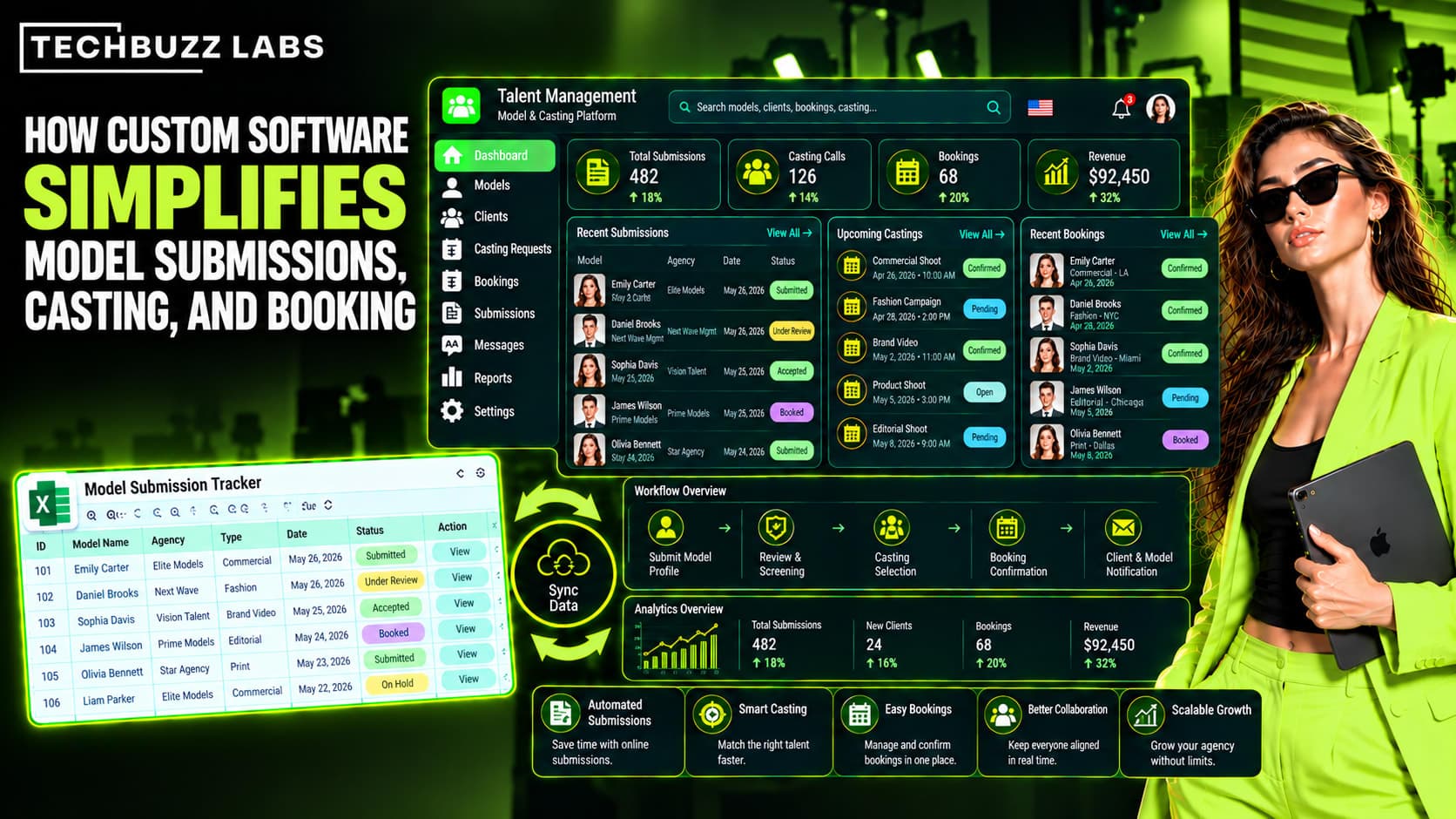
Talent Profile → Casting → Submission → Client Approval → Booking
Connecting these stages can reduce duplicate data entry and provide agents with better visibility.
9. Communication and Notifications
Communication is a major part of agency operations.
Agents may need to contact models about castings, request availability, update clients, and follow up on submissions.
Modern software should provide organized notifications and communication workflows.
Automated reminders can also help agents stay on top of deadlines and follow-ups.
The goal is to reduce the need for manual reminders while keeping important communication organized.
10. Workflow Automation
Automation is becoming increasingly important for modern talent agencies.
Many agency tasks are repetitive, including sending notifications, requesting availability, creating reminders, updating statuses, and following up with clients.
Software can automate selected steps in these workflows.
For example, an agent could receive an automatic reminder when a casting deadline is approaching.
Automation allows agents to spend more time on talent relationships, client development, negotiations, and other high-value activities.
11. Reporting and Analytics
A modern agency should be able to understand how its operations are performing.
Talent agent software with reporting features can provide insights into casting activity, submissions, bookings, client activity, and other metrics.
Managers can use this information to identify trends and operational bottlenecks.
For example, an agency might analyze how many submitted models eventually become bookings or which clients generate the most repeat projects.
These insights can support better business decisions.
12. Role-Based Access and Security
Talent agencies manage valuable business information and personal data, so security should be a priority.
Software should provide appropriate access controls that allow administrators to determine which information different team members can view or modify.
For example, agents may need access to talent and casting records, while certain administrative or financial information may require more restricted permissions.
Agencies should also consider secure authentication, backups, data retention, and appropriate privacy practices when evaluating a platform.
13. Scalability
The software should be capable of growing with the agency.
A system that works for a small roster may become inadequate when the agency represents hundreds or thousands of talent and manages significantly more clients and bookings.
Scalable software should support larger databases, additional users, more casting opportunities, and expanding workflows without creating unnecessary complexity.
This is particularly important for ambitious U.S. agencies looking to expand into new markets.
How TechBuzzLabs Fits Into Modern Agency Technology
TechBuzzLabs focuses on technology solutions for modeling and talent agencies, helping businesses create centralized systems around their specific workflows.
For agencies that have outgrown spreadsheets and disconnected applications, technology can bring together talent profiles, casting, availability, client relationships, submissions, and bookings.
A customized approach can also allow agencies to build software around their existing processes rather than forcing their teams to completely change how they work.
By combining talent management, CRM, casting, automation, and booking capabilities, agencies can create a more connected foundation for growth.
Conclusion
Choosing the right talent agent software is about more than selecting a platform with the longest list of features. Agencies should focus on technology that actually improves the way their teams work.
Important capabilities include a centralized talent database, advanced search, digital profiles, casting management, CRM, availability tracking, submissions, booking management, automation, reporting, security, and scalability.
For modern U.S. talent agencies, these features can help reduce administrative work, improve client communication, respond to opportunities faster, and manage growing talent pools more effectively.
With technology solutions from TechBuzzLabs, agencies can explore a more connected approach to talent and agency management—bringing the essential parts of their workflow together in one modern digital environment.