Talent Booking Software vs. Manual Booking: Which Is Better for Growing Agencies?
In this guide, we'll compare talent booking software with manual booking, explore their advantages and limitations, and explain how agencies can choose the right approach.
Managing talent bookings becomes more complicated as a modeling or talent agency grows. More clients, larger talent databases, multiple casting projects, and overlapping schedules can make everyday coordination challenging. While some agencies continue to rely on spreadsheets, email, phone calls, and manual records, others use talent booking software to centralize their operations.
But which approach is better for a growing agency?
The answer depends on your agency's size, workflow complexity, budget, and long-term goals. Manual booking may be sufficient for a small operation with a limited number of clients, while dedicated software can offer more structure as booking volume increases.
What Is Manual Talent Booking?
Manual talent booking involves managing agency operations using tools that were not necessarily designed for end-to-end talent management. These may include spreadsheets, email inboxes, shared calendars, messaging applications, and paper documents.
An agent might maintain model profiles in a spreadsheet, send portfolios to clients by email, record casting responses in a separate document, and use a calendar to track confirmed bookings.
This approach can work when an agency manages a small roster and relatively few projects. It also allows teams to start with familiar tools without investing in specialized software.
However, as operations expand, keeping information consistent across multiple tools can become increasingly difficult.
What Is Talent Booking Software?
Talent booking software is a digital platform designed to help agencies organize talent information, casting opportunities, schedules, client relationships, and booking records.
Depending on the product, the platform may include:
Centralized talent profiles and portfolios
Search and filtering for casting requirements
Casting submissions and client feedback tracking
Shared booking calendars and availability records
Client relationship management (CRM)
Booking confirmations and automated reminders
Contract, invoice, and payment tracking
Reports on booking activity and agency operations
Not every platform includes all these features, so agencies should evaluate individual products against their requirements.
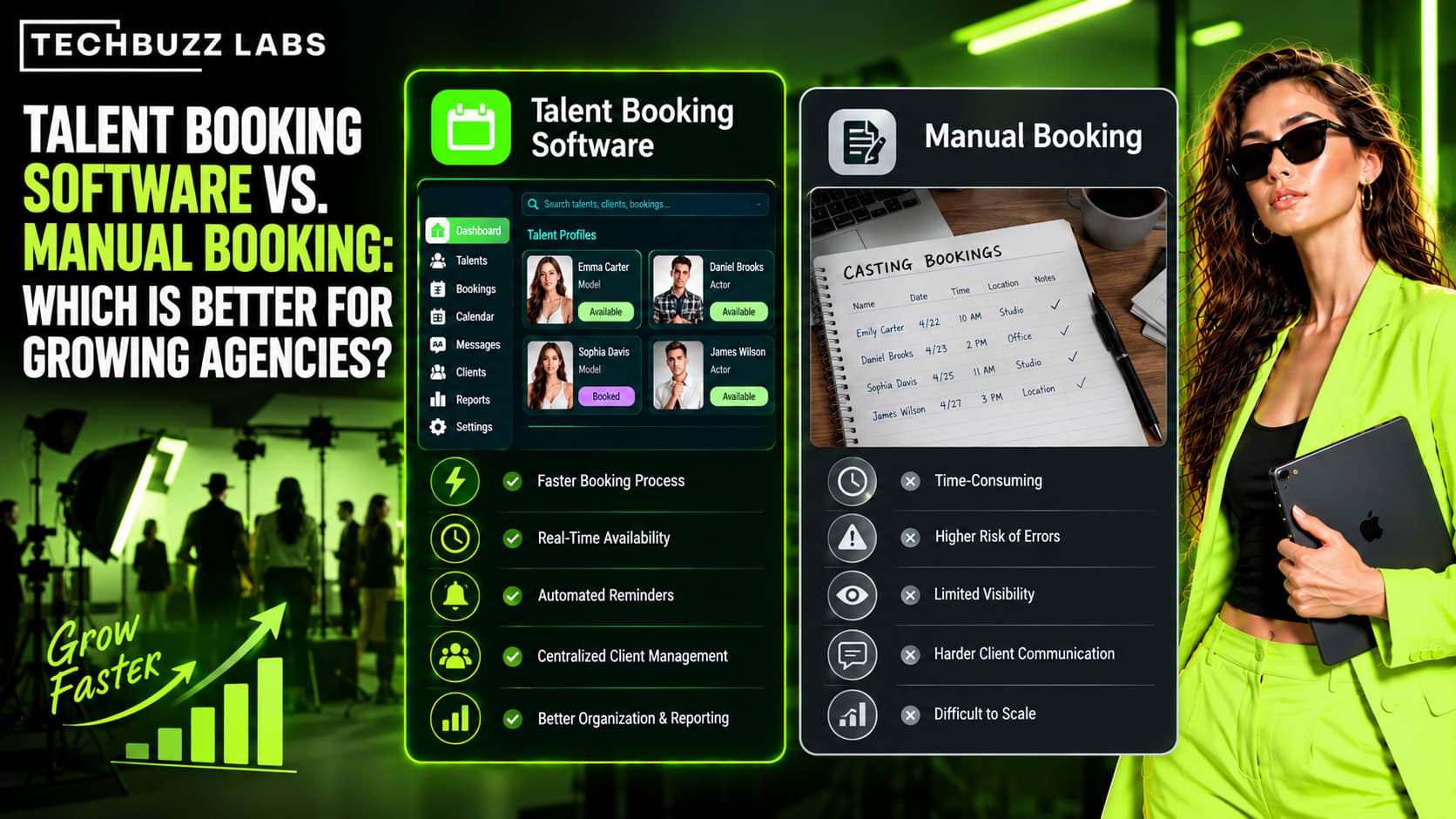
Talent Booking Software vs. Manual Booking: Key Differences
1. Organization and Data Management
Manual booking: Information is often spread across spreadsheets, folders, emails, and calendars. Agents may need to search several places to find a model's latest portfolio or booking history.
Talent booking software: A centralized database can connect model profiles, client records, casting submissions, and booking information.
For a growing agency, centralized records can make information easier to find and update. However, the benefits depend on accurate data entry and consistent use of the system.
2. Casting and Talent Search
Manual booking: Agents may review portfolios individually, search folders, and create shortlists by hand. This can become time-consuming when the talent database expands.
Talent booking software: Search filters and structured profiles can help agents identify suitable talent according to project requirements, skills, experience, location, and other available attributes.
This can improve the efficiency of preparing submissions, although agents still need to review portfolios and determine whether a candidate fits the brief.
3. Scheduling and Availability
Manual booking: Availability may be recorded in separate calendars or communicated through email and messaging applications. If updates are delayed, an agent may unknowingly consider a model for conflicting bookings.
Talent booking software: Shared calendars, availability records, reminders, and booking statuses can give the team a clearer view of upcoming commitments.
Neither approach eliminates scheduling errors automatically. Agencies must keep availability information current and establish clear procedures for confirming bookings.
4. Client Communication
Manual booking: Client conversations may be scattered across email threads, phone calls, and messaging applications. Finding previous project details can require additional effort.
Talent booking software: CRM features can connect client information, communication history, project requirements, and previous bookings.
This helps agents review relevant information before responding to repeat clients and can make follow-ups easier to manage.
5. Administrative Work and Automation
Manual booking: Agents generally handle reminders, status changes, follow-ups, and record updates themselves.
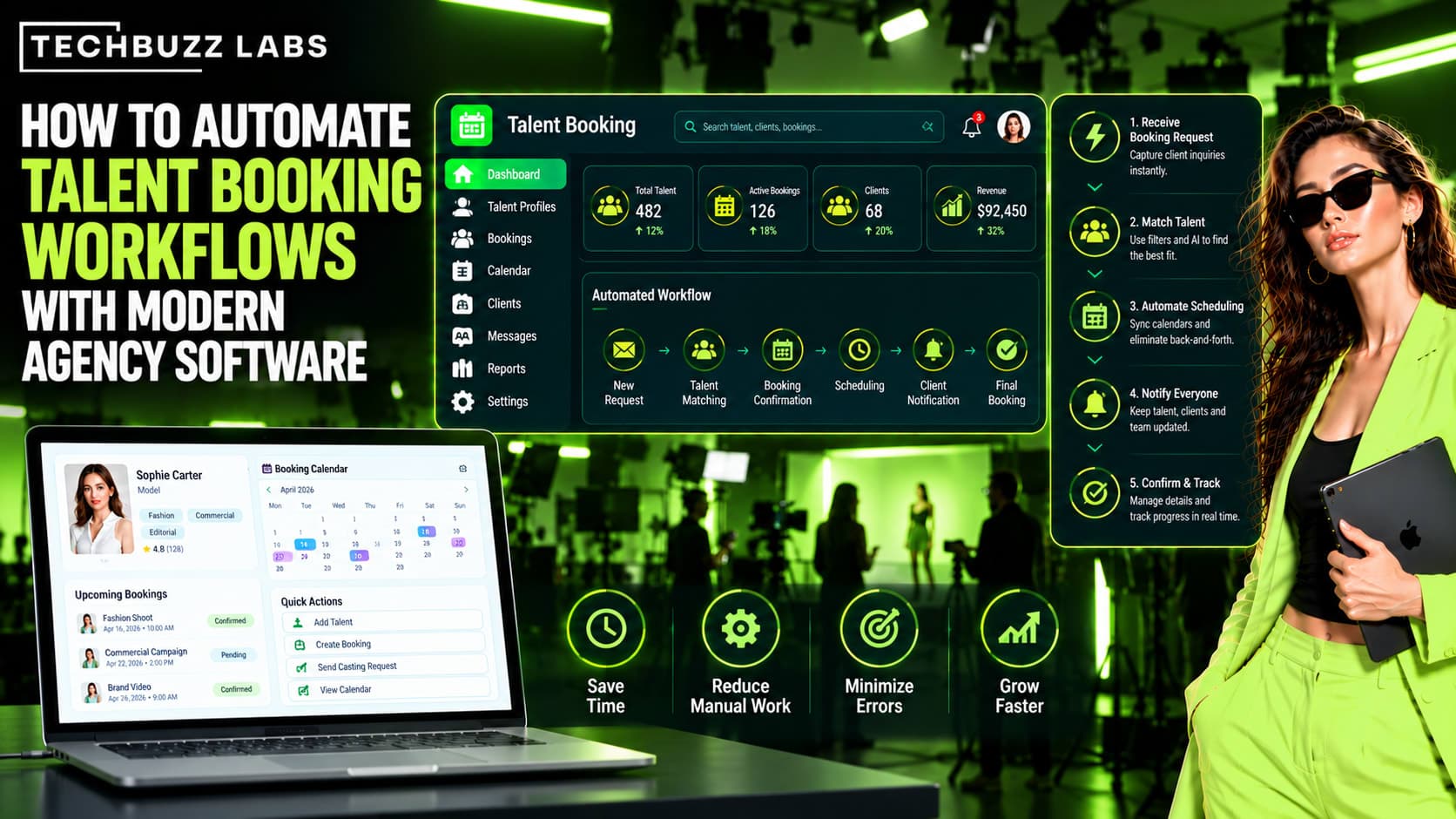
Talent booking software: Depending on its features, the platform may automate notifications, follow-up prompts, booking reminders, and routine status updates.
Automation can reduce repetitive work, but agencies should choose features that address real operational needs rather than adding unnecessary complexity.
6. Cost and Scalability
Manual booking: Familiar office tools may have a low initial cost, making them attractive to new agencies. However, the time spent updating records and coordinating projects can increase as booking volume grows.
Talent booking software: Dedicated platforms may require subscription fees, setup, training, or customization. In return, they can provide a more structured way to manage larger operations.
The best comparison considers total cost, including software expenses and staff time, rather than looking only at the monthly price.
When Is Manual Booking the Better Choice?
Manual booking can be appropriate for agencies that:
Represent a small number of models or performers.
Handle a limited number of bookings each month.
Have straightforward scheduling requirements.
Can maintain accurate records with existing tools.
Are still validating their business model before investing in specialized software.
For these agencies, a well-organized spreadsheet, shared calendar, and clear communication process may provide enough structure.
The important point is to review the process regularly. If the team starts missing follow-ups, duplicating work, or struggling to find current information, the existing approach may no longer be sufficient.
When Should a Growing Agency Switch to Booking Software?
Dedicated software becomes worth evaluating when operational complexity begins affecting the team's ability to work efficiently.
Consider making the transition when:
Your talent database has become difficult to search.
Several agents coordinate the same clients or projects.
Booking conflicts occur because availability is not updated consistently.
Casting submissions and feedback are difficult to track.
Managers lack a clear view of pending and confirmed bookings.
Your team spends too much time on repetitive administrative tasks.
You need more reliable reporting as the business expands.
These signs do not automatically mean you need a large or expensive platform. Start by identifying the biggest bottlenecks and choosing a solution that addresses them directly.
Should You Choose Ready-Made or Custom Talent Booking Software?
If your agency decides to move beyond manual booking, the next step is to evaluate available platforms.
Ready-made software can suit agencies whose requirements align with standard talent management, casting, and scheduling features. It may offer a faster implementation process and predictable subscription pricing.
Custom talent booking software may be more suitable when your agency needs specialized casting stages, unique approval processes, multiple office workflows, or integrations that standard platforms cannot provide effectively.
TechBuzz Labs works with businesses on software and CRM solutions relevant to talent management and agency workflows. Agencies exploring a tailored system can assess how custom technology might connect talent profiles, casting requests, client management, and booking schedules in one workflow.
Before investing, define the required features, estimate the total cost, and compare customization with the practical benefits of an off-the-shelf platform.
Final Verdict: Which Is Better for Growing Agencies?
Manual booking can work well for small agencies with straightforward requirements. However, as talent databases, client relationships, and booking volumes increase, coordinating everything through disconnected tools can become harder to manage.
Talent booking software offers a more structured way to connect casting, scheduling, client communication, and booking records. For agencies experiencing operational bottlenecks, it may provide a stronger foundation for sustainable growth.
The best choice is the one that matches your current needs while supporting future expansion. Review your workflow, calculate the cost of existing manual processes, and test potential software against real booking scenarios before making a decision.
For a growing modeling or talent agency, the goal is not simply to adopt more technology. It is to build a reliable booking process that helps the team spend less time managing information and more time developing talent and client relationships.