The Business Case for an AI App in 2026 ROI, Speed, and What Founders Actually Report
In 2026, AI powered applications are no longer experimental technology projects. They are becoming operational assets for businesses across the United States and Europe.
In 2026, AI powered applications are no longer experimental technology projects.
They are becoming operational assets for businesses across the United States and Europe.
From startups to enterprise companies, founders are investing heavily in AI driven software because the business results are becoming increasingly measurable.
The biggest reasons companies adopt AI applications are speed, automation, customer experience, and operational efficiency.
Businesses are realizing that AI is not simply a marketing trend.
It is becoming infrastructure.
One of the strongest arguments for AI adoption is productivity improvement.
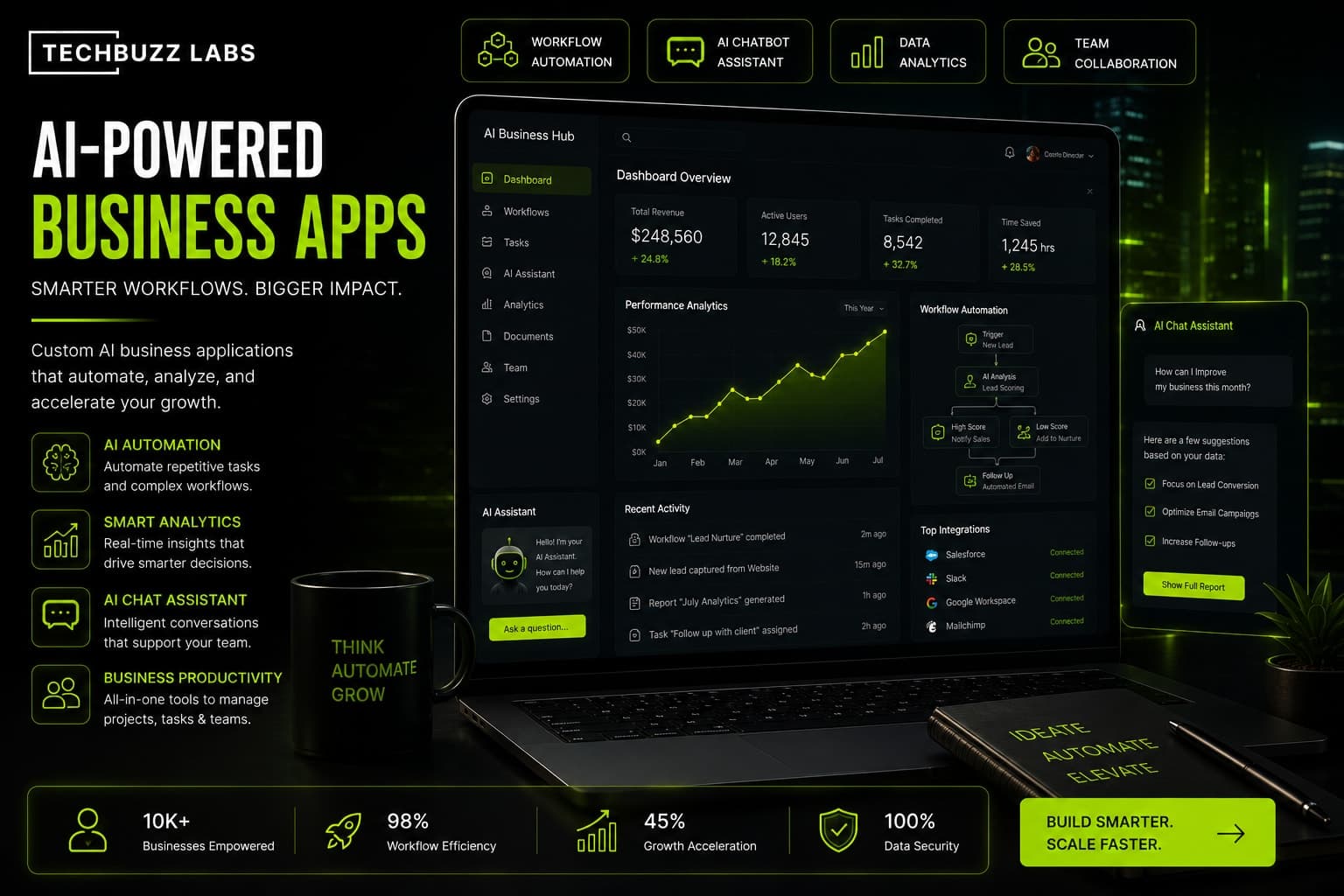
AI powered systems reduce repetitive tasks dramatically.
This includes:
Customer support
Lead qualification
Scheduling
Workflow automation
Internal reporting
Data organization
Content generation
Operational communication
This allows teams to focus on higher value work instead of repetitive administrative tasks.
Another major benefit is faster decision making.
AI powered dashboards and analytics systems help businesses process large amounts of operational data much more efficiently.
This improves visibility and reduces delays.
Customer experience is another major factor.
Users increasingly expect businesses to provide intelligent experiences such as:
AI chat support
Personalized recommendations
Smart onboarding
Automated assistance
Predictive workflows
Companies without these capabilities increasingly appear outdated.
Founders also report significant operational cost reduction after implementing AI assisted workflows.
Instead of hiring additional staff for repetitive processes, businesses automate portions of operational workload intelligently.
This is especially valuable for startups and lean teams.
The rise of no code development is also accelerating AI adoption.
Businesses no longer need massive engineering teams to build AI powered products.
Modern platforms allow startups to integrate AI functionality much faster and more affordably.
In 2026, AI applications are shifting from optional innovation to competitive necessity.
The companies modernizing early are creating major long term advantages.