The Modern Casting Workflow Every Agency Should Adopt in 2026
The casting industry is changing rapidly across the United States. Brands expect faster responses, better talent matches, and smoother booking experiences than ever before.
Why Casting Agencies Need Better Systems
The casting industry is changing rapidly across the United States. Brands expect faster responses, better talent matches, and smoother booking experiences than ever before. Agencies still relying on spreadsheets, email chains, and disconnected tools are finding it harder to compete.
In 2026, the agencies winning more bookings are not necessarily the biggest. They are the agencies with the most efficient systems.
A modern casting workflow helps agencies reduce manual work, improve client satisfaction, and scale operations without hiring larger teams.
Step 1: Build A Centralized Talent Database
Every agency should maintain a single source of truth for talent information.
This database should include:
• Headshots and portfolios
• Measurements and experience
• Availability status
• Contact information
• Social media metrics
• Previous bookings
This allows teams to find suitable talent within minutes instead of hours.
Step 2: Use AI For Talent Shortlisting
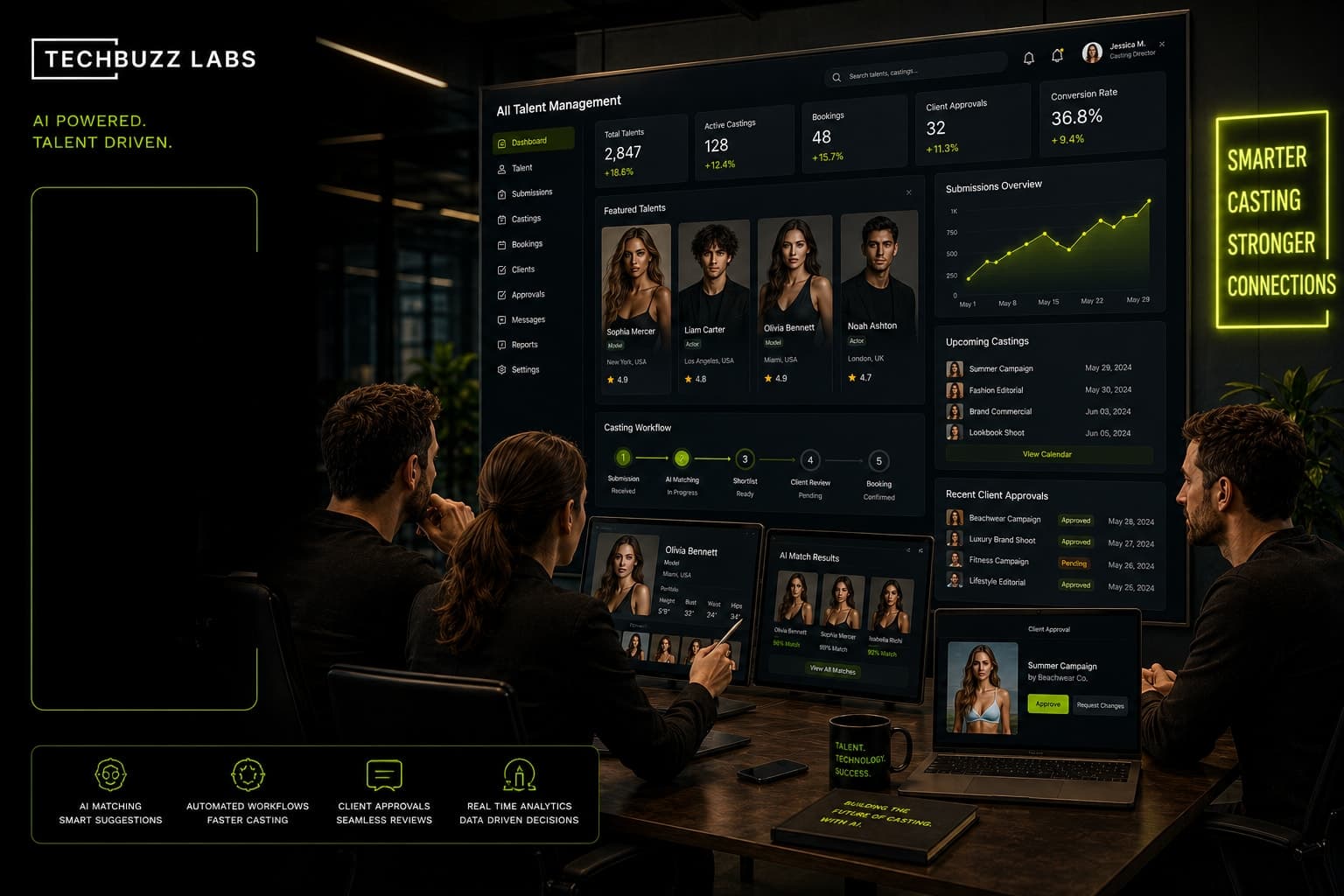
Modern casting software can automatically identify the most suitable candidates based on client requirements.
Benefits include:
• Faster talent discovery
• Reduced manual filtering
• Better talent matches
• Improved booking efficiency
Step 3: Create Digital Talent Packages
Instead of sending PDF files, agencies should use digital profiles.
Advantages include:
• Faster client reviews
• Easy approvals
• Real time updates
• Professional presentation
Step 4: Automate Communication
Modern agencies automate:
• Booking confirmations
• Client updates
• Availability requests
• Reminder notifications
This reduces delays and operational mistakes.
Step 5: Track Performance Data
Successful agencies measure:
• Booking conversion rates
• Talent utilization rates
• Client response times
• Revenue performance
Data driven decisions consistently outperform guesswork.