Top CRM Software Company: How CRM Technology Supports Talent Management
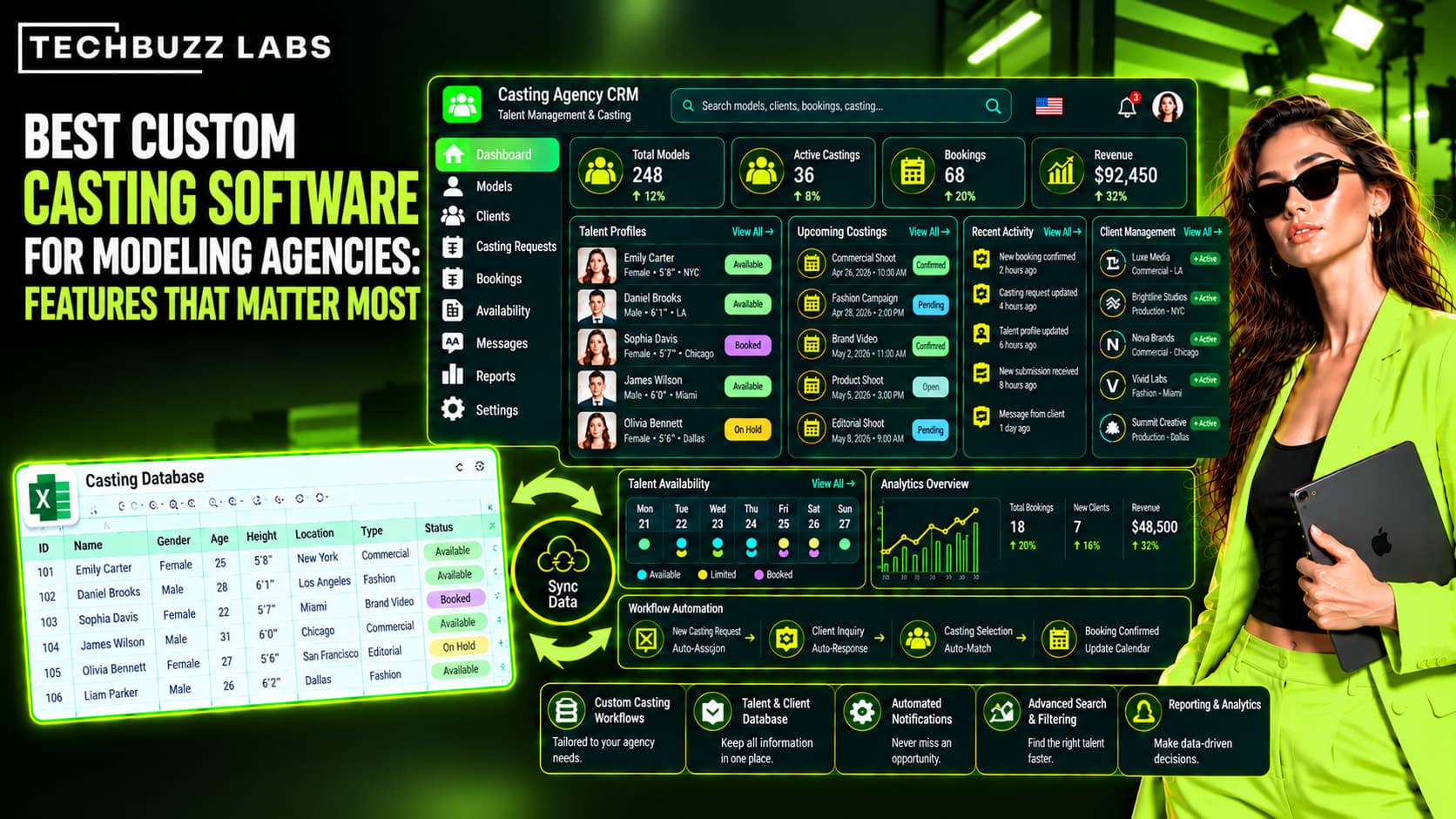
A specialized agency CRM can connect model profiles with casting opportunities, availability, client requests, submissions, communication records, and bookings.

For modern modeling and talent agencies, managing people and relationships is at the center of everyday operations. Agencies need to organize model profiles, portfolios, availability, casting opportunities, client communication, submissions, and bookings while responding quickly to new opportunities.
As a talent roster grows, managing this information through spreadsheets, emails, and separate folders can become increasingly difficult. This is where CRM technology can make a difference. A specialized CRM can connect talent management with casting, client relationships, and booking workflows, creating a centralized system for agency operations.
For agencies in the USA, particularly those working in competitive markets such as New York, Los Angeles, Miami, Chicago, and San Francisco, the right CRM can help teams manage growing talent pools while reducing repetitive administrative work. TechBuzzLabs focuses on technology solutions for modeling and talent agencies and highlights how CRM platforms can support modern agency workflows.
What Is CRM Technology for Talent Management?
Customer relationship management, or CRM, traditionally helps businesses organize customer information and interactions. For modeling and talent agencies, however, CRM technology can be adapted to manage both clients and talent.
A specialized agency CRM can connect model profiles with casting opportunities, availability, client requests, submissions, communication records, and bookings.
Instead of keeping each type of information in a different location, agencies can create a centralized database where authorized team members can access the information they need.
This creates a more connected workflow from talent management to client booking.
1. Centralizing Talent Profiles
One of the most important ways CRM technology supports talent management is by creating centralized digital profiles.
A model's profile can contain professional information such as photographs, portfolio materials, experience, skills, location, availability, and other relevant agency data.
When this information is stored in separate spreadsheets and folders, agents may spend unnecessary time searching for the right files.
A centralized CRM makes it easier to update profiles and access current information when clients request talent. TechBuzzLabs notes that centralized CRM systems can help agencies organize growing talent pools and connect profiles with castings, bookings, availability, and communications.
2. Faster Talent Search
Managing a large talent database is only useful if agents can find suitable talent quickly.
Modern CRM software can provide search and filtering capabilities that allow agents to narrow down profiles according to relevant requirements.
For example, a client may need commercial models in Los Angeles with specific experience who are available on certain dates.
Instead of manually reviewing hundreds of profiles, an agent can use structured data and filters to create a more relevant shortlist.
This can help agencies respond to casting requests faster and potentially improve their client service.
3. Connecting Talent With Casting Opportunities
Talent management and casting are closely connected.
When a client sends a casting request, agents need to understand the project requirements, identify suitable talent, check availability, prepare submissions, and track client feedback.
A CRM can connect these activities.
An agency can create a casting record and associate relevant models with the opportunity. Agents can then track whether talent has been submitted, shortlisted, selected, or not selected.
This provides greater visibility throughout the casting process and reduces the need to manage each stage through separate tools.
4. Managing Model Availability
Availability is an essential part of talent management.
A model may be an excellent fit for a project but unavailable on the required dates. If availability information is outdated or stored separately, agents may need to contact models individually before submitting them.
CRM technology can connect availability with talent profiles, castings, and bookings.
This allows agents to consider scheduling information when searching for suitable talent and can help reduce potential conflicts.
For agencies operating across multiple U.S. markets, centralized availability can make daily coordination more efficient.
5. Strengthening Client Relationships
Talent agencies also need to manage relationships with brands, advertising agencies, production companies, photographers, retailers, and other clients.
A CRM can store client information, contact details, communication history, previous projects, preferences, and booking records.
When a client sends a new request, agents can review previous interactions and understand the relationship before responding.
This can make communication more consistent and help agencies build long-term client relationships.
Instead of treating every casting request as an isolated transaction, CRM technology allows agencies to maintain a broader view of each client relationship.
6. Simplifying Talent Submissions
After identifying appropriate talent, agents need to present their selections to clients.
A manual submission process may require agents to search for photographs, portfolio information, measurements, experience, and other details across multiple files.
With a centralized CRM, these details can already be associated with the model's profile.
Agents can select relevant talent and connect their profiles to a casting opportunity, reducing duplicate data entry.
This can help agencies prepare submissions more efficiently while maintaining consistent information.
7. Connecting Casting With Bookings
The ultimate goal of many casting opportunities is a successful booking.
Once a client selects a model, the agency may need to manage dates, location, rates, usage information, contracts, and other project details.
When CRM technology connects casting and booking information, agents can move a selected model from one stage to another without recreating the entire record.
The workflow can look like:
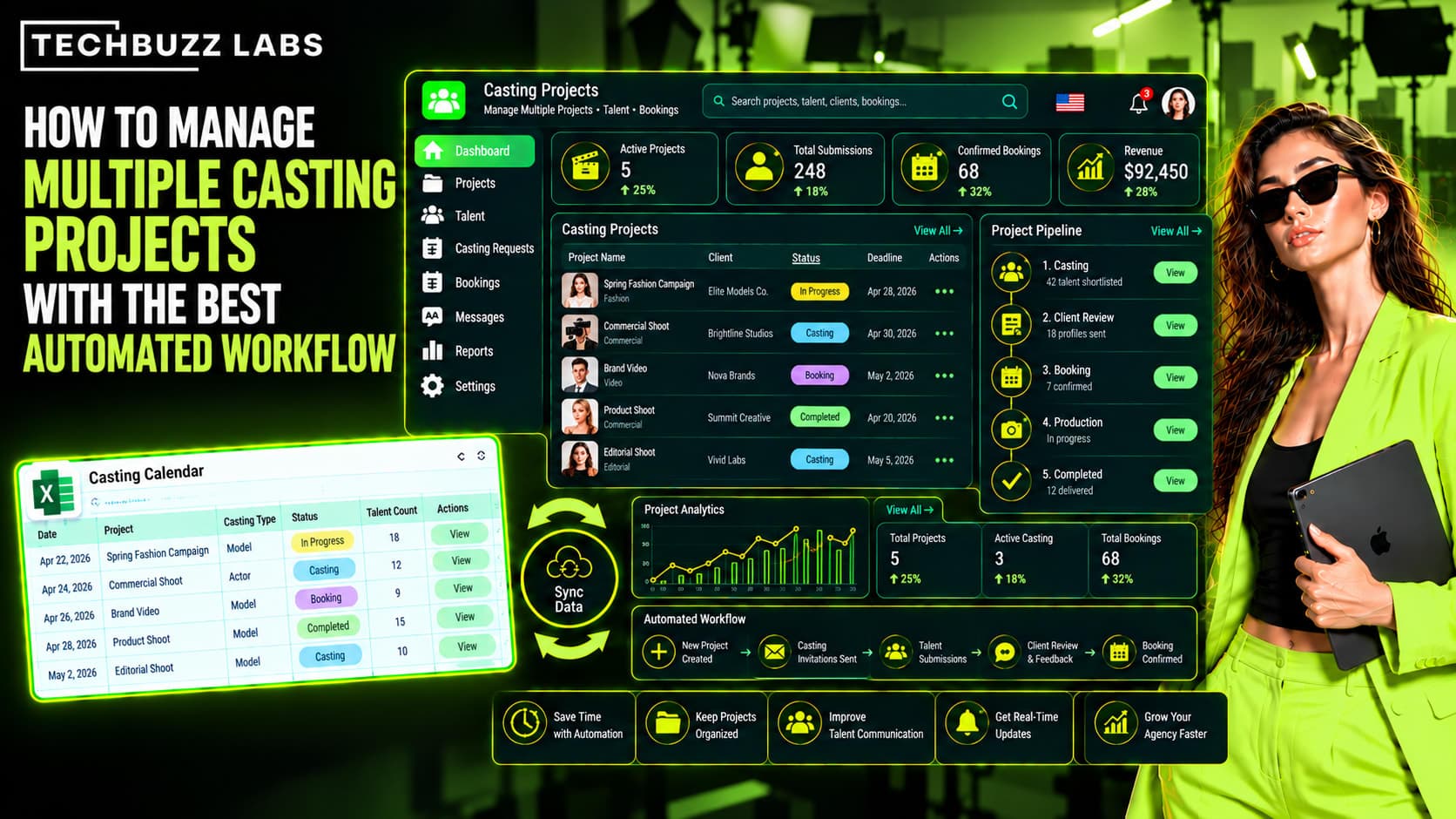
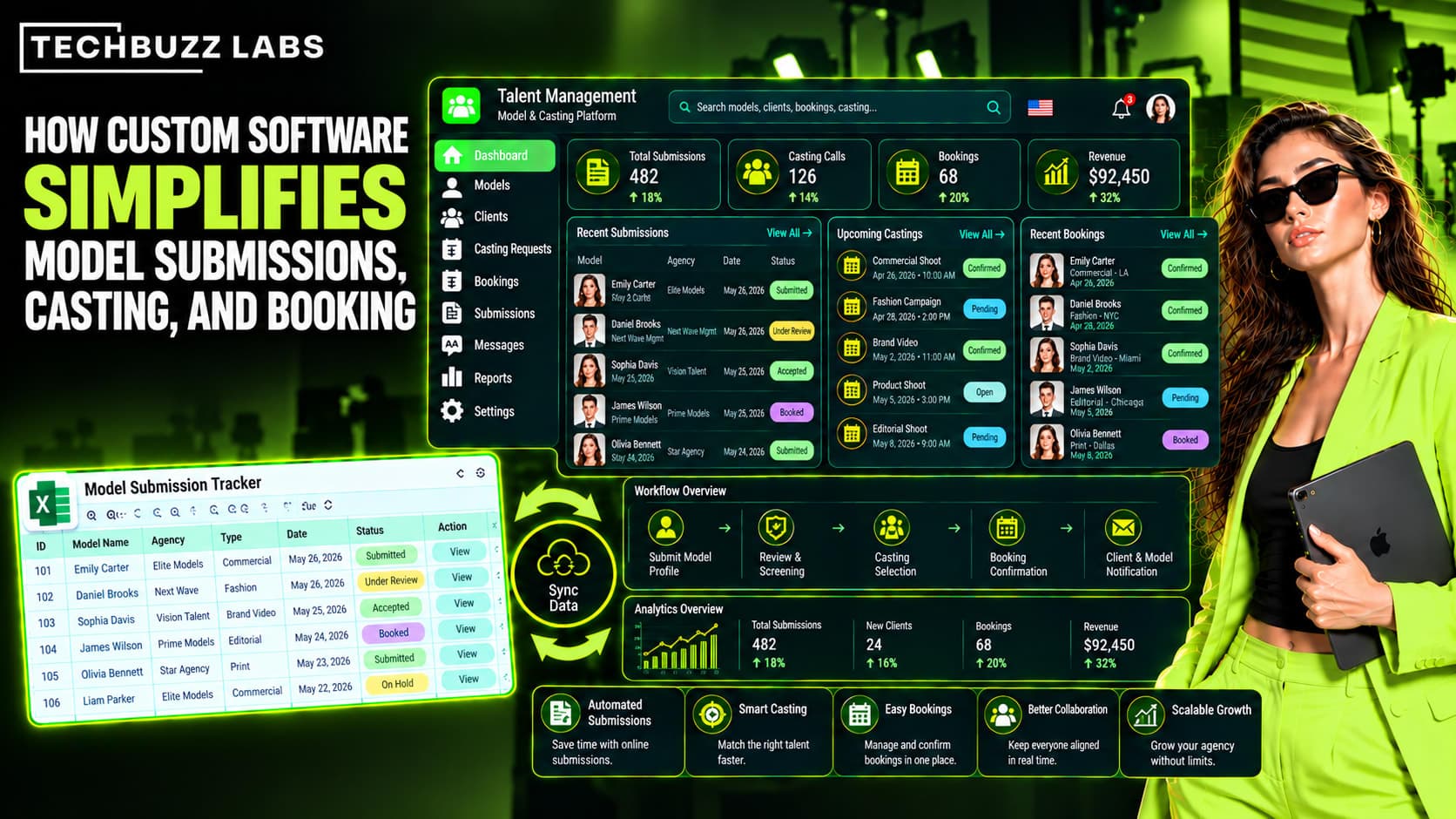
Talent Profile → Casting → Submission → Client Selection → Booking
This connected approach can reduce administrative work and give agents a clearer picture of each project's progress.
TechBuzzLabs describes this type of connected workflow as an important part of modern talent management technology.
8. Automating Repetitive Tasks
Talent management involves many repetitive activities.
Agents may need to send casting notifications, request availability, create reminders, follow up with clients, and update project statuses.
CRM automation can simplify some of these tasks.
For example, the system could generate a reminder when a client needs to be followed up with or notify relevant team members when a casting deadline is approaching.
Automation does not replace professional judgment. Instead, it allows agents to spend less time on routine administrative tasks and more time developing talent and managing important client relationships.
9. Improving Team Collaboration
As an agency grows, multiple agents may work with the same models and clients.
If information is stored in individual spreadsheets or personal inboxes, team members may not have access to the latest updates.
A centralized CRM provides authorized employees with access to shared records.
An agent can review a model's profile, casting history, availability, client interactions, and booking status without having to depend entirely on another employee for information.
This can improve internal communication and reduce delays.
10. Using CRM Data for Better Decisions
CRM technology can also help agencies make better business decisions.
By organizing information about castings, submissions, bookings, clients, and talent activity, agencies can generate useful reports and identify operational patterns.
Managers might analyze which clients generate repeat bookings, which types of casting opportunities have higher booking rates, or where workflow bottlenecks occur.
Instead of relying entirely on assumptions, agency leaders can use organized data to understand how their operations are performing.
Why Choose a CRM Software Company With Agency Expertise?
A general CRM may provide basic customer management features, but modeling and talent agencies have specialized requirements.
They need to manage both sides of their business: talent and clients.
That means a suitable technology solution should understand workflows involving talent profiles, casting, submissions, availability, bookings, and client relationships.
This is why agencies should evaluate whether a CRM software company can support their specific industry and workflow rather than simply choosing a platform based on the number of features it offers.
How TechBuzzLabs Supports Talent Management
TechBuzzLabs focuses on technology for modeling and talent agencies, including CRM, talent management, casting management, automation, and related digital workflows.
Its technology-focused approach recognizes that modern agencies need more than a simple database. They need systems capable of connecting talent information with client requests, casting opportunities, availability, submissions, and bookings.
For agencies that have outgrown spreadsheets and disconnected applications, a centralized technology platform can provide a more organized foundation for managing operations and scaling the business.
Conclusion
CRM technology can play an important role in modern talent management by connecting the information agencies use every day.
From centralized model profiles and faster talent searches to casting management, client relationships, availability, submissions, bookings, automation, and reporting, a specialized CRM can create a more connected agency workflow.
For modeling and talent agencies in the USA, this can mean better organization, faster responses, improved collaboration, and less time spent managing repetitive administrative tasks.
The right CRM software company should provide more than generic customer management. It should understand how talent agencies operate and provide technology that supports the complete workflow.
With solutions and technology expertise from TechBuzzLabs, modern agencies can explore a centralized approach to managing talent and client relationships while building a more scalable foundation for future growth.