Webflow vs WordPress in 2026 Which Platform Actually Wins for Business Websites
Choosing the right website platform has become one of the most important decisions for businesses in the United States. In 2026, two platforms dominate the conversation. Webflow and WordPress.
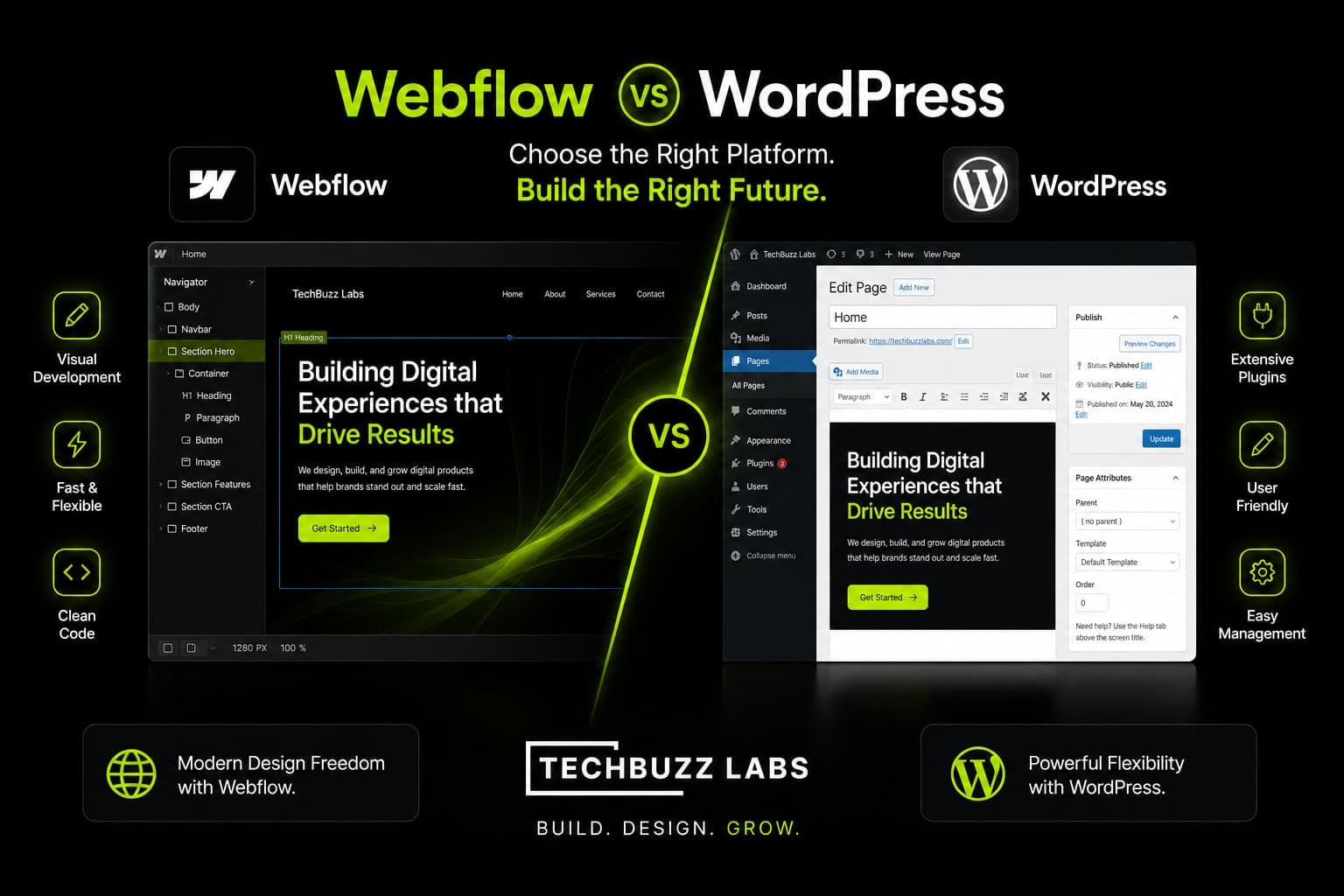
Choosing the right website platform has become one of the most important decisions for businesses in the United States. In 2026, two platforms dominate the conversation. Webflow and WordPress.
Both are powerful, but they serve different needs.
Webflow has gained popularity for its design flexibility and visual development approach. It allows designers and agencies to build modern websites without relying heavily on developers. This makes it a strong choice for businesses that prioritize clean design, fast deployment, and control over layout.
WordPress, on the other hand, remains the most widely used content management system. Its strength lies in flexibility through plugins, large community support, and long term scalability.
The key difference comes down to control and complexity.
Webflow offers a streamlined experience. It combines design, hosting, and content management in one platform. This reduces technical overhead and makes it easier for teams to manage websites without dealing with multiple tools.
WordPress provides deeper customization. With the right plugins and development support, it can handle complex websites, large content structures, and advanced functionality.
From an SEO perspective, both platforms perform well when used correctly.
Webflow offers clean code and strong performance out of the box. WordPress requires optimization but provides more advanced SEO plugins.
For small to medium businesses, Webflow is often the better choice in 2026.
It allows faster development, easier maintenance, and modern design standards.
For larger businesses or content heavy platforms, WordPress still holds an advantage due to its flexibility.
The decision should be based on business goals.
If you need speed, design control, and simplicity, Webflow is a strong option.
If you need deep customization and a large scale content system, WordPress may be the better fit.
In 2026, the platform that wins is the one that aligns with your business strategy.