What Data Should a Modeling Agency Store in Its CRM?
For modeling agencies in the USA, the right data structure can help agents find talent faster and move opportunities toward bookings more efficiently. TechBuzzLabs focuses on technology solutions for modeling and talent agencies, helping agencies build centralized systems around their workflows.

A modeling agency's success depends heavily on how well it manages information. From model profiles and portfolios to client relationships, casting opportunities, availability, and bookings, agencies handle a large amount of data every day. As a talent roster grows, keeping this information in spreadsheets, emails, and separate folders can become difficult.
A CRM for modeling agencies provides a centralized place to organize this information and make it accessible to authorized team members. But what exactly should an agency store in its CRM?
1. Model Profile Information
The foundation of a modeling agency CRM is its talent database.
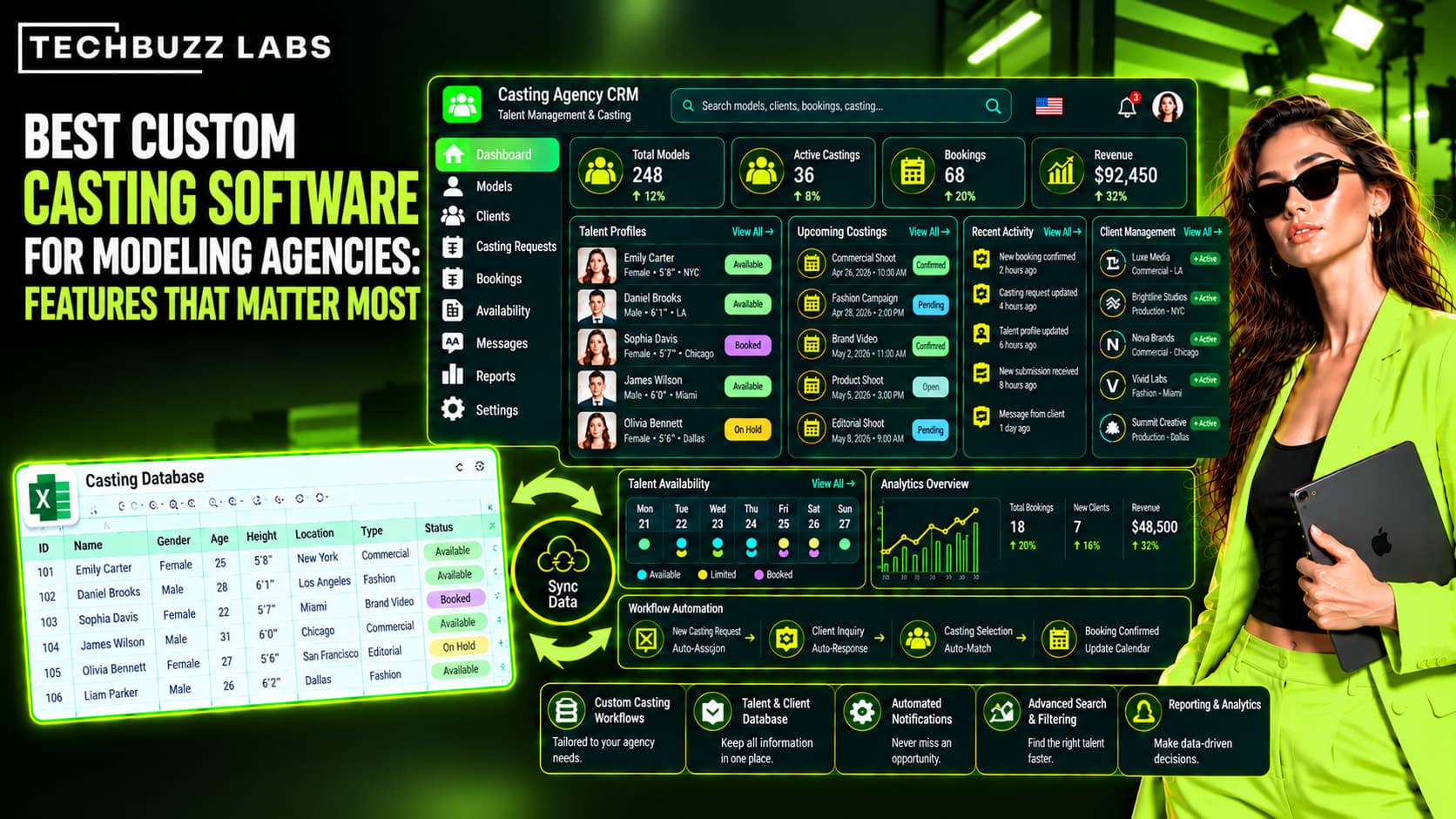
Each model should have a structured profile containing relevant professional information. This can include the model's name, professional name, location, contact information, modeling categories, experience, skills, and other agency-specific details.
A well-organized profile allows agents to quickly understand who the model is and whether they may be suitable for a particular opportunity.
For agencies managing large talent pools, structured profiles also make searching and filtering significantly easier.
2. Portfolio and Digital Assets
A model's visual portfolio is one of the most important parts of their professional profile.
A CRM can organize relevant portfolio assets such as photographs, headshots, comp cards, videos, and other approved promotional materials.
Keeping these assets connected to the model's profile means agents do not have to search through separate folders whenever a client requests talent.
Agencies should also maintain clear organization around current and outdated assets so that client submissions use the most relevant materials.
3. Measurements and Professional Details
For many modeling opportunities, clients may request specific physical or professional information.
Depending on the agency's business model, CRM records can include details such as height, clothing or shoe sizes, hair and eye information, experience, skills, and modeling categories.
The exact information stored should depend on legitimate business requirements and should be handled appropriately.
Keeping standardized fields allows agents to search the talent database more efficiently when responding to client requirements.
4. Availability and Scheduling Data
Availability is essential for successful casting and booking management.
A model may be an excellent fit for a project but unavailable on the required date.
A CRM can store availability information and connect it with casting and booking schedules.
Agents can then check whether a model is potentially available before submitting them to a client.
This can reduce unnecessary communication and help minimize scheduling conflicts.
5. Casting Information
A modeling agency CRM should also store information about casting opportunities.
A casting record might include the client, project type, location, dates, requirements, submission deadline, selected talent, and current status.
The agency can track stages such as:
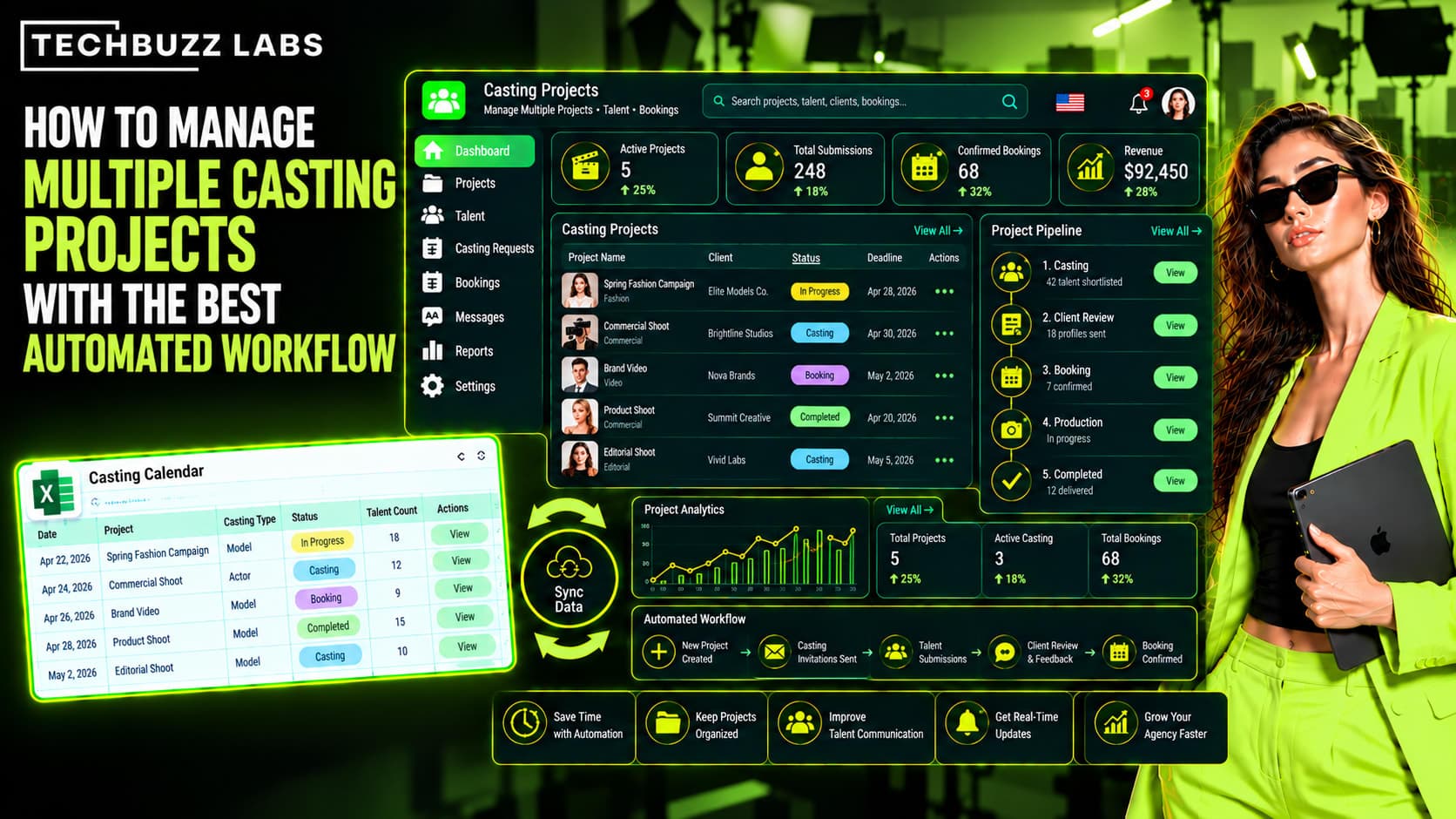
New Casting → Talent Search → Submitted → Shortlisted → Selected → Booked
Keeping this information centralized gives agents a clear picture of active opportunities.
6. Client Information
Client data is another important CRM category.
Agencies may work with brands, advertising agencies, photographers, production companies, retailers, and other organizations.
A client record can contain business information, relevant contacts, communication history, previous projects, preferences, and booking activity.
This allows agents to understand the relationship before responding to a new request.
For example, if an established client regularly requests commercial models in a particular market, agents can review previous activity before preparing a new submission.
7. Communication History
Important communication should be organized around the relevant client, model, or project.
Depending on the CRM's capabilities, this may include notes, emails, follow-up records, casting updates, and other business communications.
A centralized history helps team members understand what has already been discussed.
This is particularly valuable when multiple agents work with the same client.
Instead of asking colleagues for background information, an authorized team member can review the relevant CRM record.
8. Submission Data
Agencies should also track which models have been submitted for each casting.
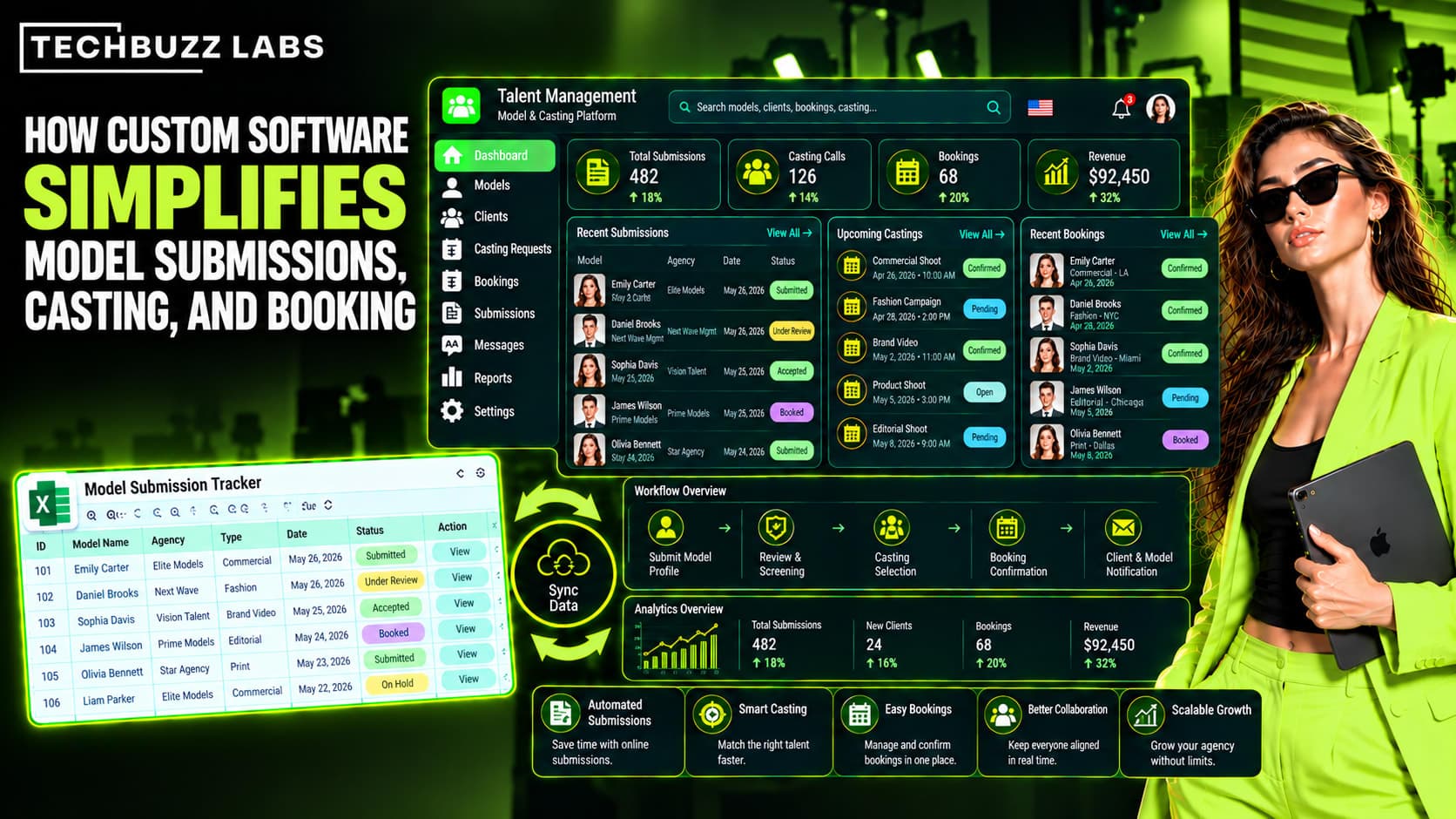
Useful information can include the casting opportunity, submitted models, submission date, client response, shortlist status, and final outcome.
This creates a history of the agency's casting activity.
Over time, the data can help agencies understand which types of talent are being submitted most frequently and which opportunities result in bookings.
9. Booking Information
Once a model is selected, the CRM should connect the booking with the relevant talent and client records.
Booking information may include project dates, location, client, model, booking status, rates, usage information, and other operational details.
Keeping booking information connected to the original casting provides a complete view of the project.
It also makes it easier to reference previous work when managing future opportunities.
10. Contracts and Important Documents
Depending on the agency's operations, the CRM may also store or link to relevant business documents.
These could include agreements, contracts, releases, onboarding documents, or other authorized files.
Access to these documents should be controlled through appropriate permissions.
Agencies should also establish clear policies around document retention, access, and security.
11. Agency Performance Data
A CRM can store more than individual talent and client information.
It can also help agencies analyze operational performance.
Useful metrics may include the number of casting requests, submissions, bookings, active clients, booking conversion rates, and response times.
For example, managers could compare the number of submissions an agency makes with the number of bookings generated.
These insights can help identify workflow bottlenecks and opportunities for improvement.
12. Data Security and Access Control
Not every employee should necessarily have access to every piece of CRM information.
A professional modeling agency should establish appropriate permissions based on employee roles.
For example, an agent may need access to talent profiles and casting information, while financial or administrative data may require more restricted access.
Agencies should also consider secure authentication, backups, data retention, and privacy practices when selecting CRM software.
The goal should be to make information accessible to the right people without unnecessarily exposing sensitive business or personal information.
How TechBuzzLabs Can Help
TechBuzzLabs focuses on technology solutions for modeling and talent agencies, helping businesses organize information and workflows through centralized digital platforms.
For an agency that has outgrown spreadsheets and disconnected tools, a customized CRM can bring together talent profiles, client records, casting opportunities, availability, submissions, and bookings.
Rather than forcing an agency to adapt its operations to a generic system, a customized approach can be designed around the agency's specific workflow and information requirements.
This can make it easier for agents and managers to find the information they need while creating a more scalable operational foundation.
Conclusion
A modeling agency CRM should be more than a simple contact database. It should connect the information that drives the agency's entire workflow.
Important categories can include model profiles, portfolios, professional details, availability, casting information, client records, communication history, submissions, bookings, documents, and performance data.
For U.S. modeling agencies, organizing these records in one centralized system can improve efficiency, collaboration, and decision-making.
The most effective CRM is one that reflects the agency's actual workflow while providing appropriate security and room to scale. With technology solutions from TechBuzzLabs, modeling agencies can build more connected systems for managing talent, clients, castings, and bookings—turning scattered information into a structured operational resource.