Why Businesses Are Replacing Generic Software With Custom AI Powered Business Apps in 2026
In 2026, businesses across the United States, Finland, Germany, Sweden, the Netherlands, and other technology driven European countries are changing how they manage operations.
In 2026, businesses across the United States, Finland, Germany, Sweden, the Netherlands, and other technology driven European countries are changing how they manage operations. Companies that once relied on generic software subscriptions are now investing in custom AI powered business applications designed specifically around their internal workflows.
This shift is happening because businesses are realizing something important.
Generic software works for generic problems.
Modern businesses do not have generic workflows anymore.
As industries become more digital, operational complexity is increasing. Teams are managing remote communication, customer support, analytics, automation, approvals, onboarding, and internal collaboration across multiple systems every single day.
For many companies, this creates operational friction.
Employees waste hours switching between tools, repeating manual tasks, updating spreadsheets, and managing disconnected workflows.
This is why custom business software is becoming one of the fastest growing technology investments in 2026.
Businesses no longer want software that forces them to change how they work.
They want systems built around how they already operate.
Why Generic Software Is Losing Value
For years, companies adopted large software platforms because they appeared convenient. A single subscription promised project management, communication, CRM functionality, reporting, and automation.
But over time, businesses discovered a major problem.
Most platforms only partially solve operational needs.
Teams often end up paying for dozens of tools while still relying heavily on manual work.
This is especially common in industries with specialized workflows such as creative agencies, logistics companies, healthcare services, real estate firms, recruitment agencies, consulting businesses, and SaaS startups.
In the United States and Europe, companies are now prioritizing operational efficiency much more aggressively because labor costs and competition continue increasing.
Every unnecessary task affects productivity.
This is where custom AI powered applications create a massive advantage.
Instead of adapting to rigid software structures, businesses build systems around their exact processes.
The Growth of AI Powered Workflow Automation
Artificial intelligence is one of the biggest reasons custom software adoption is accelerating globally.
Businesses in Finland and Northern Europe especially are investing heavily in AI automation because of their strong digital infrastructure and innovation focused economies.
AI powered applications can now automate tasks that previously required full time employees.
Examples include:
Customer support automation
Lead qualification
Workflow approvals
Document generation
Scheduling systems
Sales follow ups
Reporting dashboards
Internal communication
Data organization
Predictive analytics
The goal is not replacing employees.
The goal is removing repetitive operational work so teams can focus on strategy, creativity, and growth.
In 2026, businesses are looking for software that actively helps teams operate faster and smarter.
This is why AI powered internal tools are becoming increasingly valuable.
Custom CRM Systems Are Replacing Traditional Platforms
Another major trend is the rise of custom CRM development.
Traditional CRM platforms often include hundreds of features businesses never use. At the same time, they lack important workflow customization required by modern teams.
This creates frustration.
Companies in the USA and Europe are now building custom CRM systems tailored specifically around sales processes, onboarding systems, client communication, and reporting structures.
A custom CRM allows businesses to:
Track leads more efficiently
Automate follow ups
Monitor team activity
Generate custom reports
Organize customer communication
Centralize operational data
Improve client onboarding
Integrate AI automation
This flexibility creates major productivity improvements.
Instead of forcing teams into rigid systems, businesses create workflows that match how employees already operate.
Why No Code Development Is Accelerating This Trend
One of the biggest reasons custom business applications are becoming more accessible is the rise of no code development platforms.
In previous years, building custom software required large engineering teams and massive budgets.
That is no longer true.
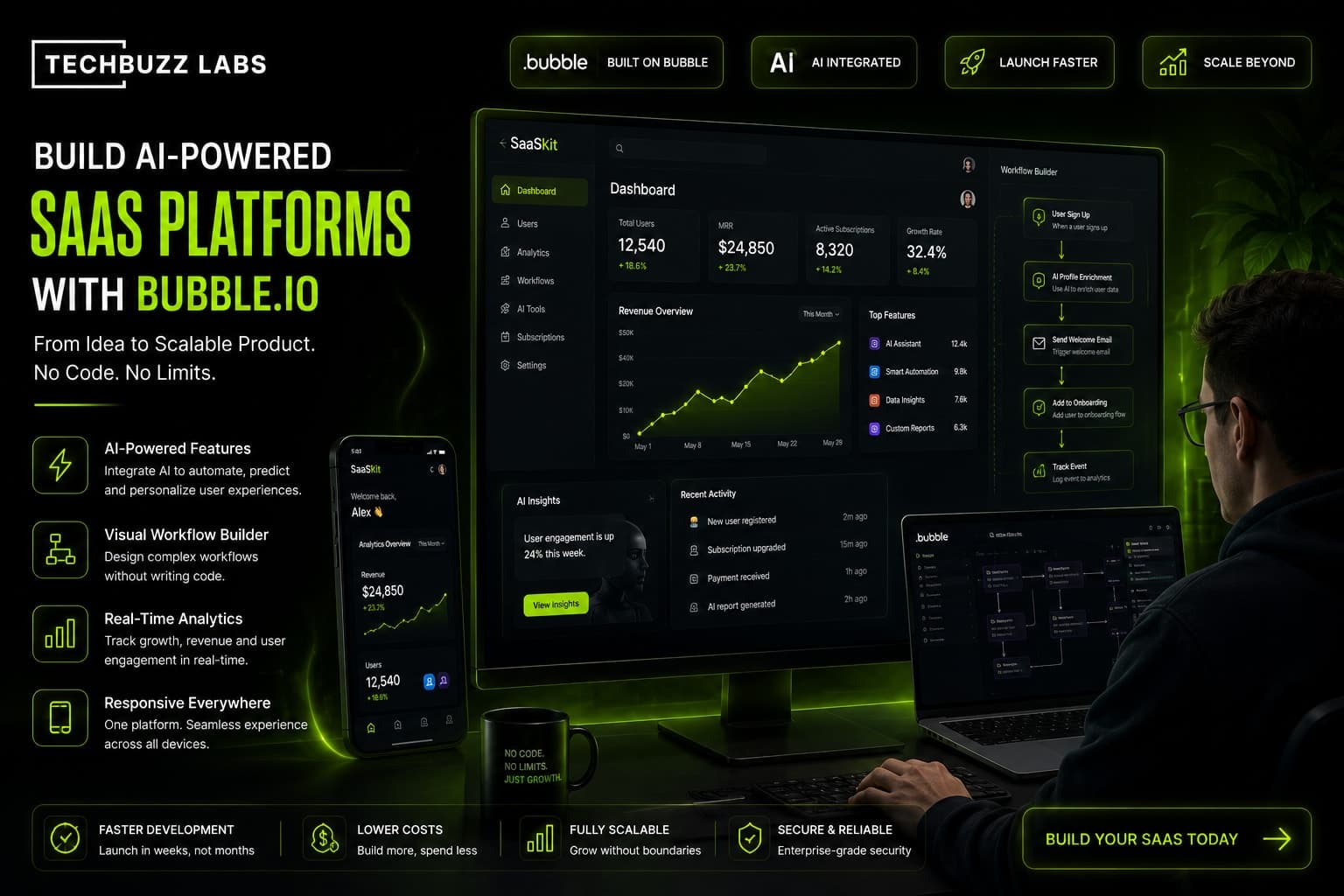
Platforms such as Bubble now allow businesses to develop powerful internal systems, SaaS products, portals, and automation tools much faster and more affordably.
This is especially important for startups and mid sized businesses.
Companies no longer need to spend hundreds of thousands of dollars validating operational software ideas.
Instead, they can launch quickly, improve systems continuously, and scale gradually.
In Finland and other European startup ecosystems, no code development has become extremely popular because businesses prioritize speed, efficiency, and lean operations.
The same trend is happening rapidly in the United States.
Businesses are realizing that operational speed often matters more than technical perfection during early growth stages.
Internal Business Apps Are Becoming Essential
In 2026, businesses are increasingly building internal applications specifically for their teams.
These applications include:
Workflow dashboards
Approval systems
Employee portals
Booking systems
Inventory management
Task automation
Sales management
Client collaboration systems
Internal reporting platforms
Knowledge management systems
The reason is simple.
Internal efficiency directly impacts profitability.
Companies that reduce operational friction move faster, communicate better, and scale more efficiently.
This is especially important in high competition markets such as the USA, Germany, and Northern Europe.
Operational efficiency is becoming a competitive advantage.
AI Powered Customer Experience Is Now Expected
Another major shift happening in 2026 is customer expectation.
Users now expect businesses to provide fast digital experiences powered by intelligent systems.
This includes:
AI chat support
Smart recommendations
Personalized dashboards
Automated notifications
Instant onboarding
Predictive customer support
Intelligent search
Businesses without these capabilities increasingly appear outdated.
This is why many companies are integrating AI functionality directly into customer facing applications.
In technology focused European countries such as Finland, Sweden, and the Netherlands, digital experience standards are especially high.
Customers expect speed, clarity, and automation.
Businesses investing in AI powered customer systems are improving retention and customer satisfaction significantly.
The Real Advantage of Custom Business Software
The biggest advantage of custom software is not technology alone.
It is alignment.
Generic platforms attempt to serve everyone.
Custom systems are built around one business and its exact operational structure.
This creates better usability, faster adoption, and stronger workflow efficiency.
Employees work faster because systems feel natural.
Management gains better visibility because data is centralized.
Customers receive better experiences because workflows become smoother.
In 2026, this operational advantage matters more than ever.
Businesses competing globally need systems that help them adapt quickly.
The Future of Business Operations
The future of business software is becoming increasingly personalized.
Companies no longer want oversized software suites filled with unnecessary features.
They want focused operational systems designed around their exact needs.
Artificial intelligence is accelerating this transition because businesses can now automate tasks at scale without increasing operational overhead.
For startups, agencies, SaaS companies, and modern service businesses, custom AI powered applications are becoming one of the smartest investments available.
This trend is only getting stronger across the United States and Europe.
Businesses that modernize their internal systems today will operate faster, scale more efficiently, and compete more effectively over the next decade.