Why Talent Agencies Need a Client Portal in 2026 and How to Build One Without Developers
In 2026, talent agencies across the United States are evolving far beyond traditional spreadsheets, endless email threads, and scattered communication channels.
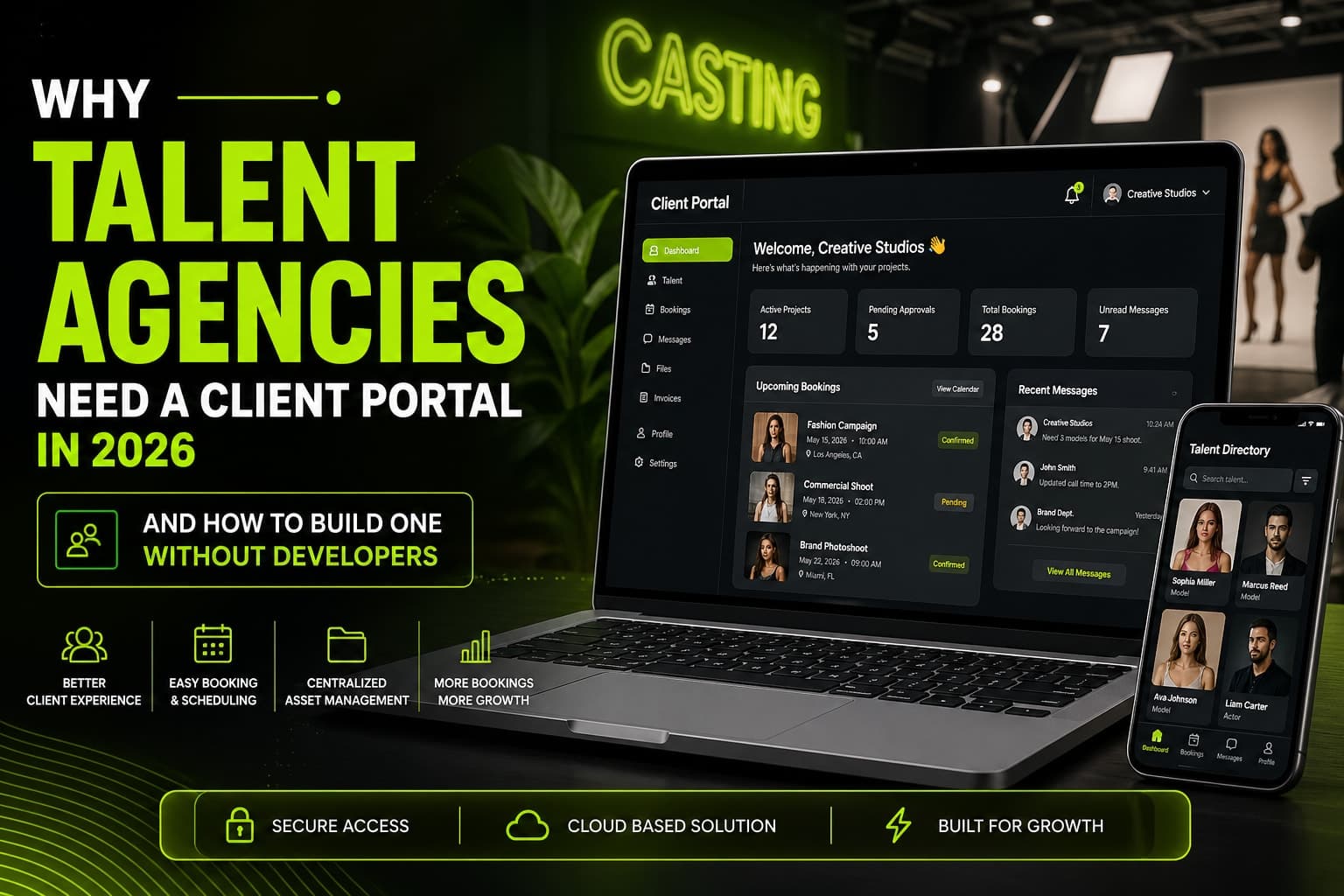
In 2026, talent agencies across the United States are evolving far beyond traditional spreadsheets, endless email threads, and scattered communication channels. Clients now expect a faster, more professional, and transparent experience when working with casting agencies, modeling firms, and talent management companies.
This is exactly why client portals have become one of the most searched business app solutions for agencies in the USA.
A client portal is no longer just a luxury feature for enterprise firms. It has become an essential digital tool for boutique talent agencies, casting directors, and model management teams who want to streamline bookings, improve communication, and build stronger client trust.
The modern client expects immediate access to talent profiles, booking confirmations, schedules, invoices, and campaign updates. When this information is handled manually through messages, calls, and spreadsheets, the process quickly becomes inefficient.
A client portal solves this by creating a centralized online dashboard where clients can log in and view everything they need in one place.
For example, a brand looking to book talent for a commercial shoot can instantly access available models, review portfolios, approve selections, and track scheduling updates. This creates a seamless professional workflow that improves response time and increases booking conversion rates.
One of the biggest benefits of a client portal is better client retention.
When clients feel that your agency is organized and technologically advanced, they are more likely to return for future campaigns.
This is especially important in competitive creative markets across the USA where agencies are constantly competing for recurring brand partnerships.
Another major advantage is operational efficiency.
Instead of your team spending hours every day answering repetitive questions like talent availability, portfolio links, or booking status, the portal handles most of that communication automatically.
This frees up time for business growth, client acquisition, and talent onboarding.
In 2026, many agencies believe building a client portal requires a full development team.
That is no longer true.
Modern no code app builders now make it possible to create a fully functional client portal without writing a single line of code.
Platforms like Bubble, Glide, and Softr allow agencies to build secure dashboards, login systems, talent directories, file sharing sections, and booking forms with simple drag and drop interfaces.
This dramatically reduces development cost.
For small agencies and startups, this means you can launch a custom portal in weeks instead of months.
A basic portal should include client login access, searchable talent portfolios, booking request forms, calendar views, and payment or invoice sections.
For USA based agencies looking to scale in 2026, client portals are quickly becoming a core part of business automation and digital transformation.
The agencies that adopt this early will deliver a better client experience and close more long term partnerships.