Best Talent Booking Software to Simplify Casting, Scheduling, and Client Management
For modeling and talent agencies in the United States, selecting the right platform can support a more efficient booking process and provide a foundation for future growth.
Managing a talent or modeling agency requires coordination across multiple activities. Agents must maintain talent profiles, respond to casting requests, check availability, schedule bookings, communicate with clients, and keep project information updated. When these responsibilities are spread across spreadsheets, emails, and separate applications, everyday operations can become difficult to manage.
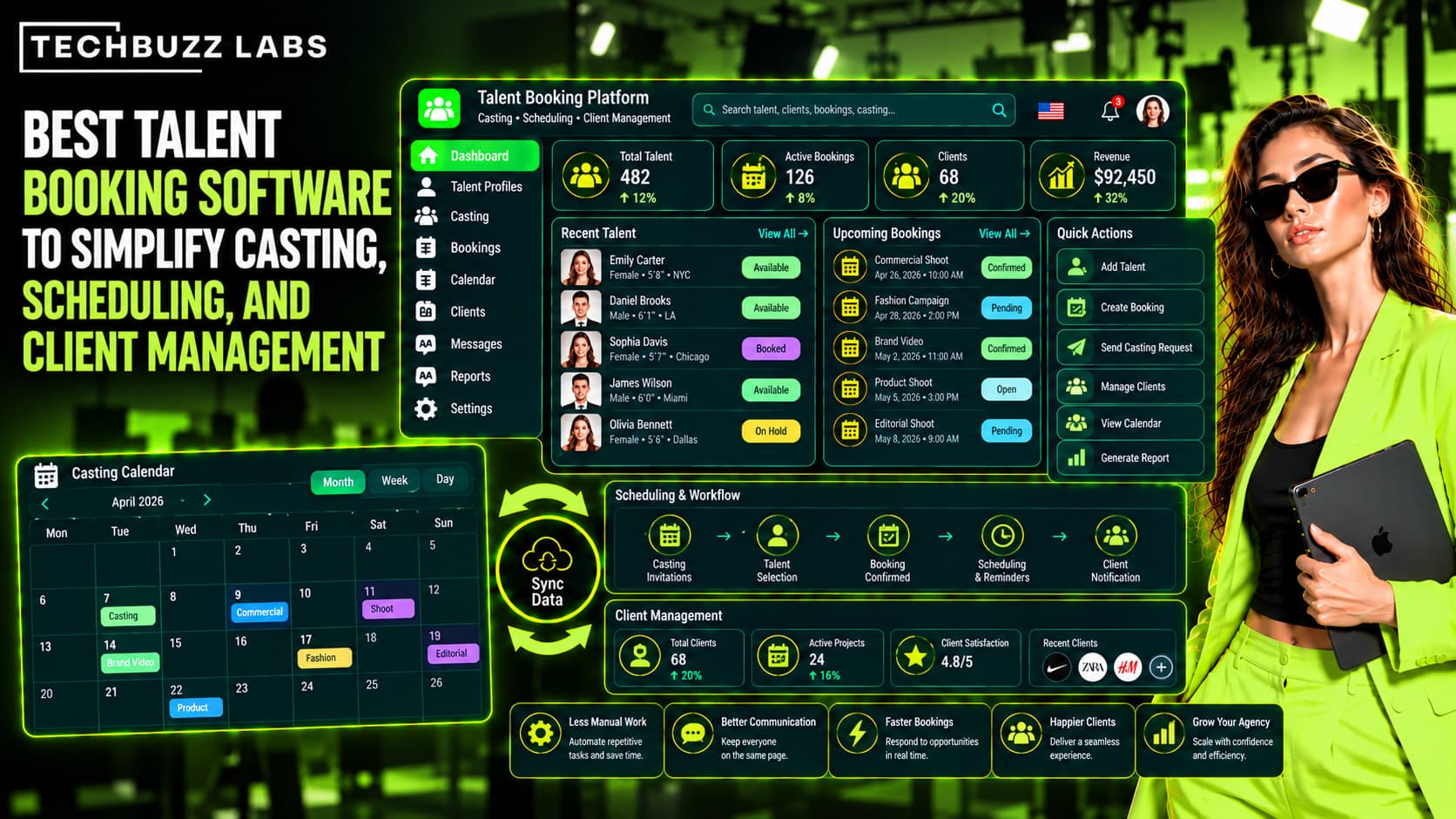
The best talent booking software helps agencies bring these activities together in one organized system. By connecting casting workflows, scheduling, talent information, and client relationships, agencies can reduce manual administration and improve visibility across their operations.
What Is Talent Booking Software?
Talent booking software is a digital solution that helps agencies manage talent records, client requests, casting opportunities, schedules, and confirmed bookings. Depending on the platform, it may also include CRM functionality, communication tools, contract management, invoicing, and reporting.
Unlike a basic calendar or contact database, a comprehensive booking platform connects different stages of the agency workflow. Agents can move from receiving a client brief to identifying suitable talent, tracking submissions, confirming availability, and managing the final booking.
The goal is to keep essential information accessible and reduce the need to switch between disconnected tools.
1. Simplify Casting With Centralized Talent Management
Casting is one of the most important processes for modeling agencies. Clients may have specific requirements related to experience, location, portfolio, skills, availability, or project type.
Without a centralized talent database, agents may spend unnecessary time searching through folders and outdated records.
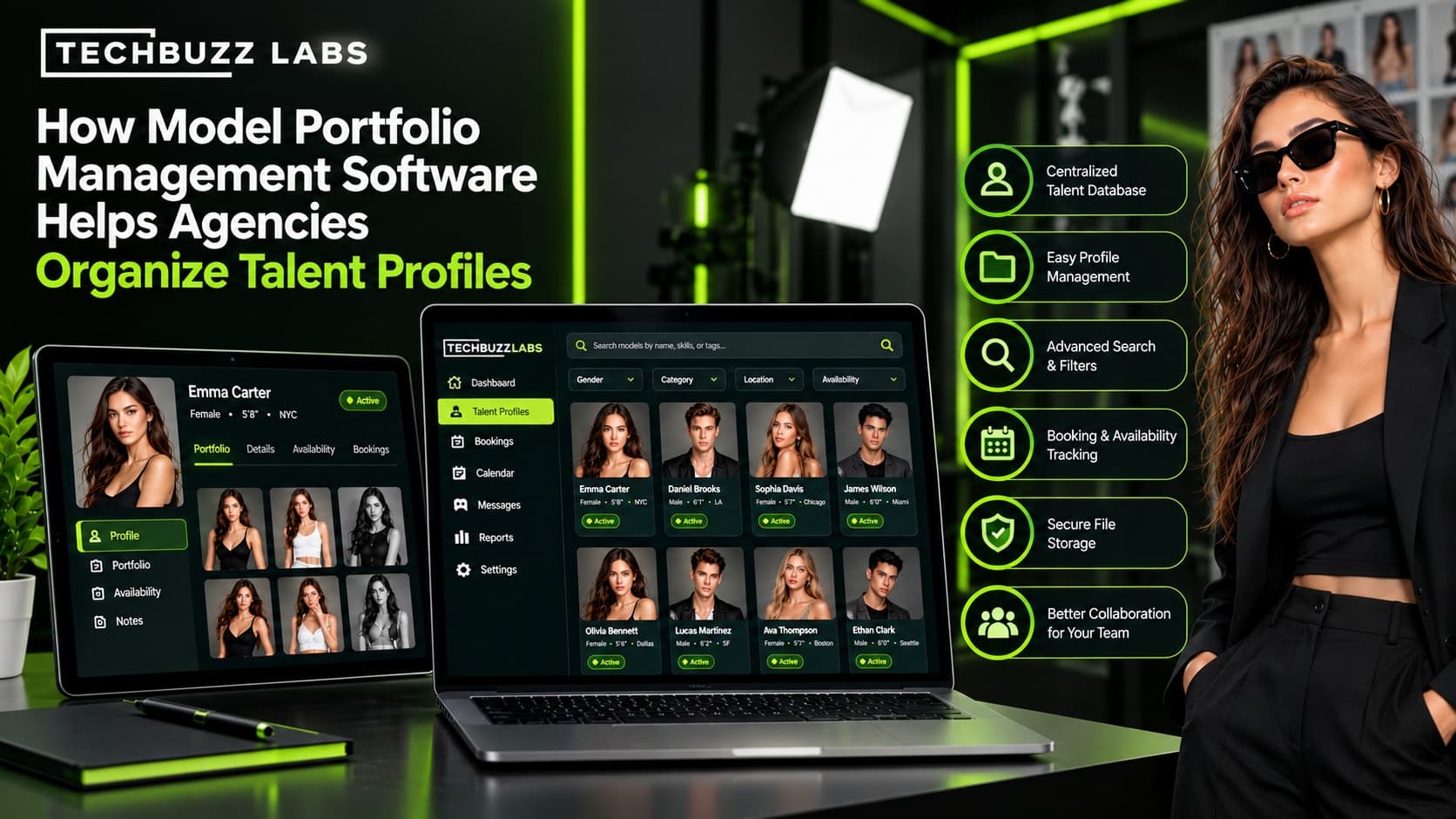
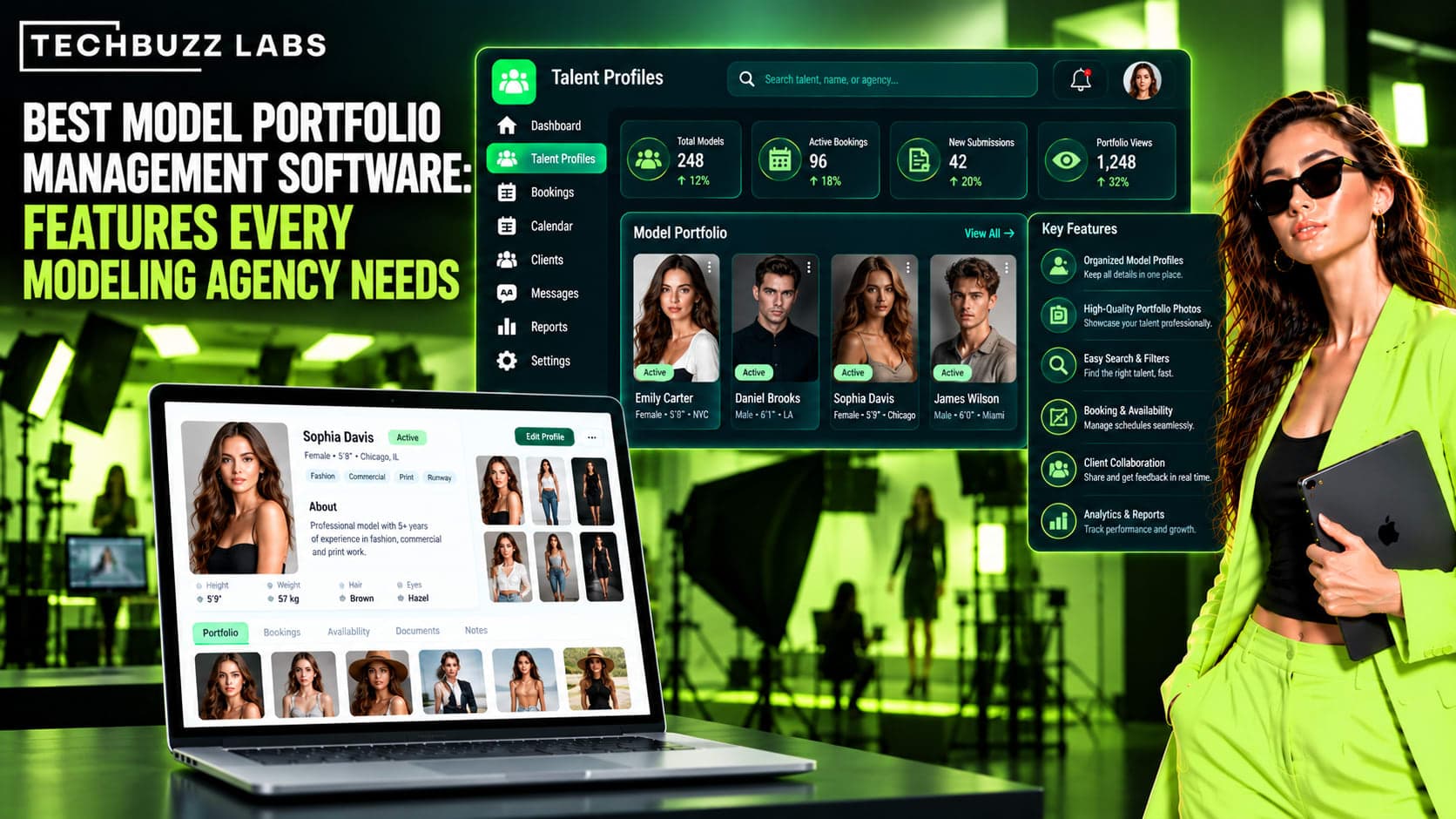
Talent booking software can organize model profiles, photographs, measurements, experience, contact information, and booking history in one place. Search and filtering tools help agents identify suitable candidates more efficiently.
The platform should also support casting briefs, submissions, shortlists, deadlines, and client feedback. This makes it easier to monitor casting opportunities and understand which submissions need attention.
For more information, explore TechBuzz Labs' guide to the best casting management software for talent and modeling agencies.
2. Improve Scheduling and Availability Tracking
Scheduling conflicts can affect client relationships and create unnecessary pressure for agents. A model may be considered for multiple projects, while different team members may be coordinating overlapping schedules.
A talent booking system with shared calendars and availability tracking can help agencies manage these situations.
Important scheduling features include:
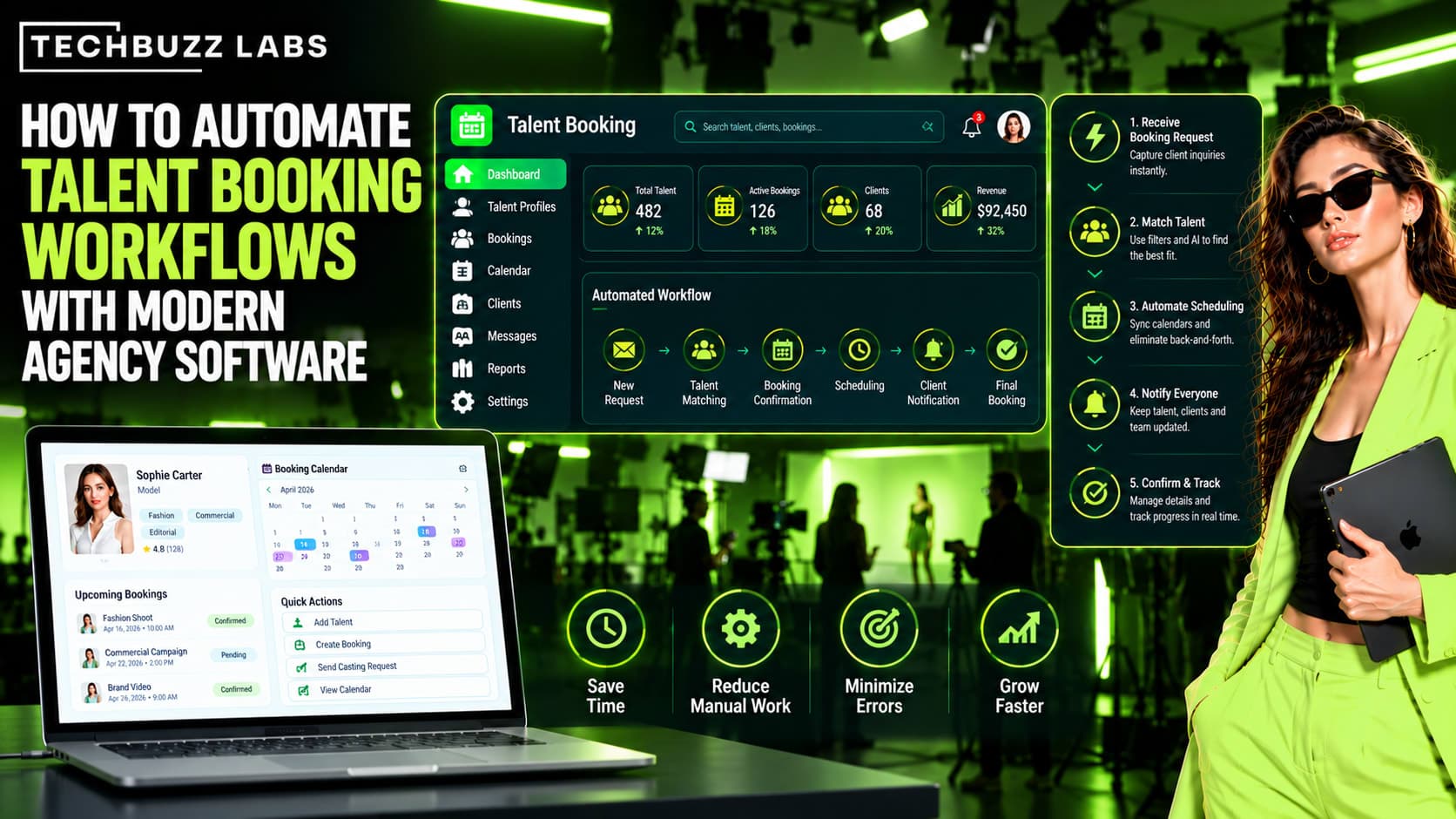
Shared calendars for bookings and casting events
Availability records for individual talent
Booking confirmations and status updates
Reminders for upcoming commitments
Project dates, locations, and call-time details
Calendar integrations where supported
These features help teams coordinate schedules and identify potential conflicts before confirming a booking. Their effectiveness depends on keeping availability records accurate and up to date.
3. Strengthen Client Management With CRM Features
Client relationships are central to the long-term success of talent agencies. Agents need to understand client preferences, remember previous projects, respond to inquiries, and maintain consistent communication.
A talent booking platform with customer relationship management (CRM) features can store client contacts, project requirements, communication history, booking records, and follow-up tasks.
When an existing client requests talent for a new campaign, agents can review previous bookings and preferences instead of starting from scratch.
CRM functionality can also help managers monitor pending inquiries, identify opportunities for follow-up, and understand client activity. By connecting client records with casting and booking workflows, agencies can reduce information gaps and deliver a more consistent service experience.
4. Automate Repetitive Agency Tasks
Administrative work can take time away from talent development and client acquisition. Modern booking software may automate routine tasks such as reminders, notifications, follow-up prompts, and booking-status updates.
For example, when a casting submission moves to a new stage, the system may notify the relevant team member. A booking reminder may also help agents prepare for an upcoming project.
Some platforms offer AI-assisted search or talent matching, helping agents discover profiles that align with a client's brief. Agencies should evaluate these capabilities carefully and ensure that final decisions remain guided by professional judgment and project requirements.
Automation should make the workflow easier to manage, not introduce unnecessary complexity.
5. Choose Software That Can Grow With Your Agency
The right platform should meet your current needs while accommodating future business growth.
Before selecting a solution, evaluate its ability to support a larger talent database, additional users, multiple locations, more simultaneous projects, and increasingly complex booking workflows.
Also consider data security, user permissions, backup procedures, data export options, and integrations with existing email, calendar, and accounting tools.
Pricing deserves attention as well. Compare subscription fees, setup costs, data migration, training, integrations, and ongoing support rather than focusing only on the advertised starting price.
Agencies with straightforward requirements may prefer ready-made software. Businesses with specialized approval processes or unique casting workflows may benefit from custom talent booking software designed around their operations.
6. How TechBuzz Labs Can Support Agency Workflows
Technology solutions can help modeling and talent agencies connect processes that would otherwise remain separated across different systems.
TechBuzz Labs focuses on software and digital solutions for business operations, including technology approaches relevant to talent management, agency CRM, and casting workflows.
For agencies considering a more tailored approach, custom software can be planned around the way their teams manage talent profiles, client inquiries, casting submissions, scheduling, and bookings.
Before investing, identify the workflow problems you want to solve, document the required features, and compare the benefits of customization with the cost and implementation time. A clearly defined scope helps ensure that the final system supports real operational needs.
You can also read TechBuzz Labs' article on how talent management software connects casting, booking, and client workflows.
Final Thoughts
The best talent booking software does more than organize appointments. It connects casting, talent management, scheduling, and client communication so agencies can manage their work with greater clarity.
When comparing platforms, prioritize practical features, ease of use, accurate availability tracking, CRM capabilities, automation, security, and scalability. Test shortlisted solutions against real booking scenarios before making a final decision.
With the right system and a well-planned workflow, modeling and talent agencies can reduce administrative friction, coordinate projects more effectively, and devote more attention to building lasting client relationships.